
The question arrived the way it usually does, in the middle of a site walk. A school facilities manager stood between a climbing frame and a slide and asked whether the surface under them would actually catch a fall, or just look like it would. Parents had been asking the same thing all summer, and the playground had to pass a board review before term started.
That pressure is exactly what this guide is for: how fall-height ratings get matched to real equipment, what a safe system contains, and what heat and upkeep honestly look like. We will also name the projects where playground artificial grass is the wrong answer, because a supplier that never says so is selling, not advising. Every roll we ship is tufted, coated and inspected on our own production line. Padding and face yarn come off the same floor, which is why this guide keeps returning to one idea: the system decides safety, not the brochure.
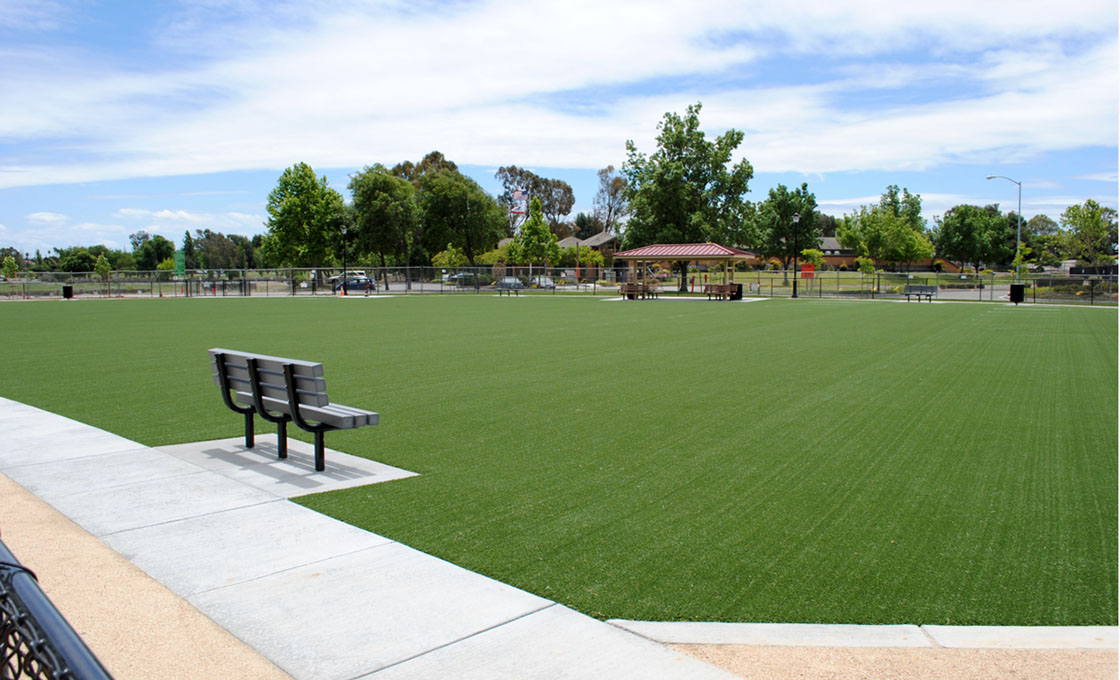
Is Artificial Grass Safe for Playgrounds?
Here is the blunt version: the turf itself is not the safety rating. The system is. Natural grass hides hard soil under a green face and turns to mud in the rainy season. Keeping it presentable takes pesticides, water and mowing hours that most school budgets no longer have.
What makes playground artificial grass safe under a climbing frame is everything stacked beneath the fibers. That means a shock-absorbing pad or engineered infill, a free-draining base and seams fixed so nothing shifts. Take one layer out and the surface is decor, not protection. A fall onto a properly built system is a different event from a fall onto packed dirt. Our view is simple: schools and parks should buy for the fall, not for the look.
How Critical Fall Height Ratings Work
Start with the one number that matters. A published critical fall height rating is the maximum fall a surface was tested to protect against, measured with an instrumented headform dropped from set heights. Think of it as the load sign on a bridge: the sign is not the strength, but it is the tested promise you are allowed to rely on.
The rating belongs to the whole build-up, not to the carpet on top. Industry figures put systems of roughly 2.1-3.1 inches in total build-up at around a five-foot rating, and thicker builds of 3.3-4.3 inches at around seven feet. That is why padding enters the conversation so fast in this product class. How a bonded foam layer changes the equation is covered in our guide to 5mm padded turf benefits.
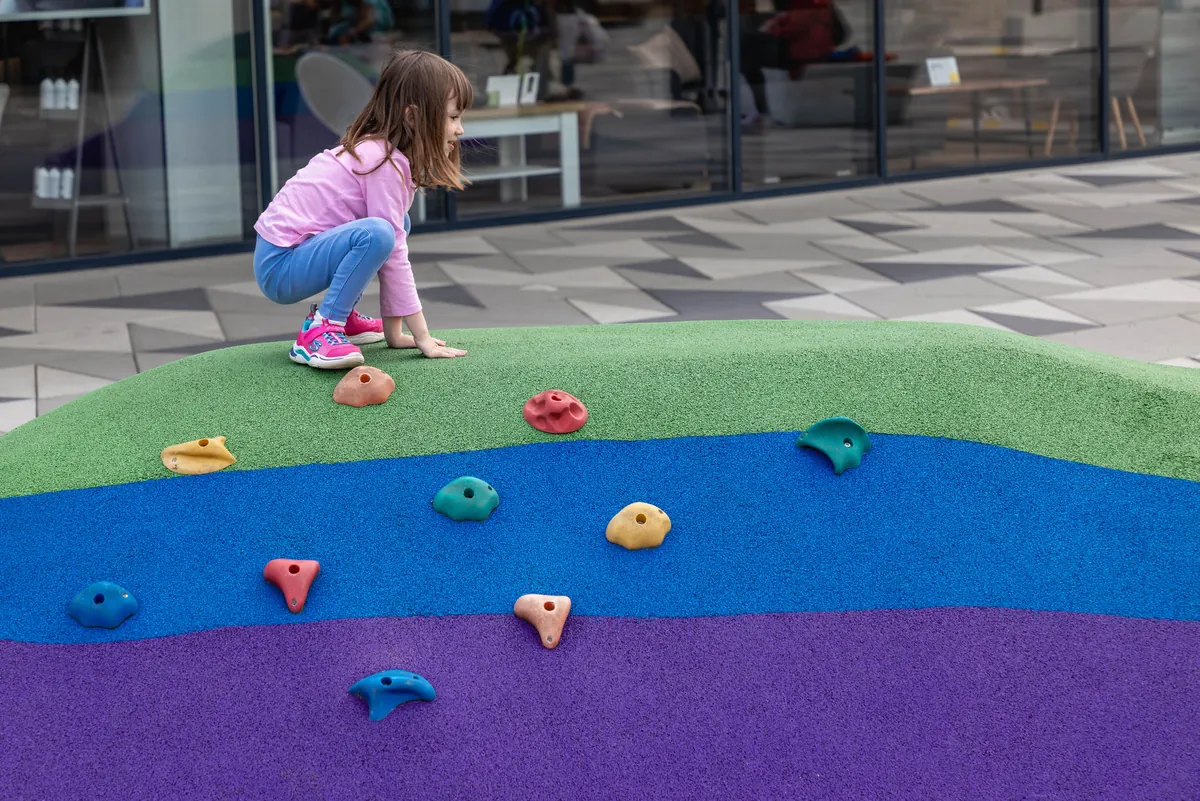
Matching the rating to your site is a three-step exercise that rarely takes an hour. Walk the equipment with a tape measure and record the highest point a child can stand or sit. Ask each bidder for a written test report showing the installed build-up rated at or above that height. Accept nothing verbal, and nothing quoted for a different build-up than the one being installed.
This is the one place we tell buyers to be difficult. Certification logos pasted into a brochure are marketing until they arrive as test data for your exact system, so make the written report a condition of purchase. Any supplier serving schools or parks produces these reports as routine; hesitation is information.
What Goes Into a Safe Playground Turf System
Five components do the work. The face yarn should be a soft polyethylene blend that will not abrade skin on a slide. Underneath, the backing holds the fibers under years of foot traffic; our production runs PP+Net and PU backings, tufted and coated on the same eight-step line. Perforations in that coating let water through, the least glamorous and most important feature on the list.
Cushioning arrives by one of two routes: shock-absorbing infill brushed between the fibers, or a bonded pad under the turf. Infill choice deserves scrutiny, because United States federal research detected a range of metals, volatile organic compounds and bacteria in recycled tire crumb infill. Ask every bidder for a material declaration for whatever goes under the children. Cheaper quotes that skip this paperwork are usually expensive in ways that do not show up until a parent meeting.
Price follows the same logic. Every artificial turf installation trades cost between labor and materials, and a padded build shifts it toward the factory where the quality is controlled. Our playground artificial grass range covers both builds, and the face weights, deniers and tufting densities behind them are explained in our quality factors in artificial turf guide. Base layers and sub-base drainage are a foundation topic of their own.
| Decision factor | Infilled system | Padded no-infill system |
|---|---|---|
| How the rating is reached | Shock-absorbing infill depth over the base | Bonded foam layer engineered under the face |
| Underfoot feel | Firm, field-like | Noticeably softer on landing zones |
| Upkeep | Granule top-ups and periodic brushing | Grooming and rinsing only |
| Mess risk | Infill tracks into shoes and classrooms | Nothing to track |
| Cost shift | More field labor and refill material | More material cost at the factory |
| Moving or resizing | Infill must be removed before lifting | Lifts as a roll for reuse |
| Drainage path | Percolates down through the infill layer | Passes straight through to the pad |
| After heavy rain | Brushing needed to redistribute fill | Back in use once the base drains |
| Best fit | Large open play fields | Play zones under equipment |
How Hot Does Playground Turf Get?
Yes, it gets hot, and any supplier who says otherwise has not stood on one in July. Artificial turf retains heat from the sun and can be much hotter than natural grass under prolonged sun exposure. That is why the noon barefoot test is worth doing on any sample day. A teacher touching the surface at one in the afternoon will tell you more than a datasheet.
Heat is a planning problem before it is a product problem. Shade sails over the climbing frame, lighter yarn colors on the sunniest runs, and a quick rinse before peak hours each knock real degrees off the surface. Infill choice matters too, because rubber-heavy fills hold heat longer than mineral ones. Schedule the intense play for morning sessions and the surface rarely becomes the complaint. Our honest line: heat disqualifies a lazy layout, not the product.
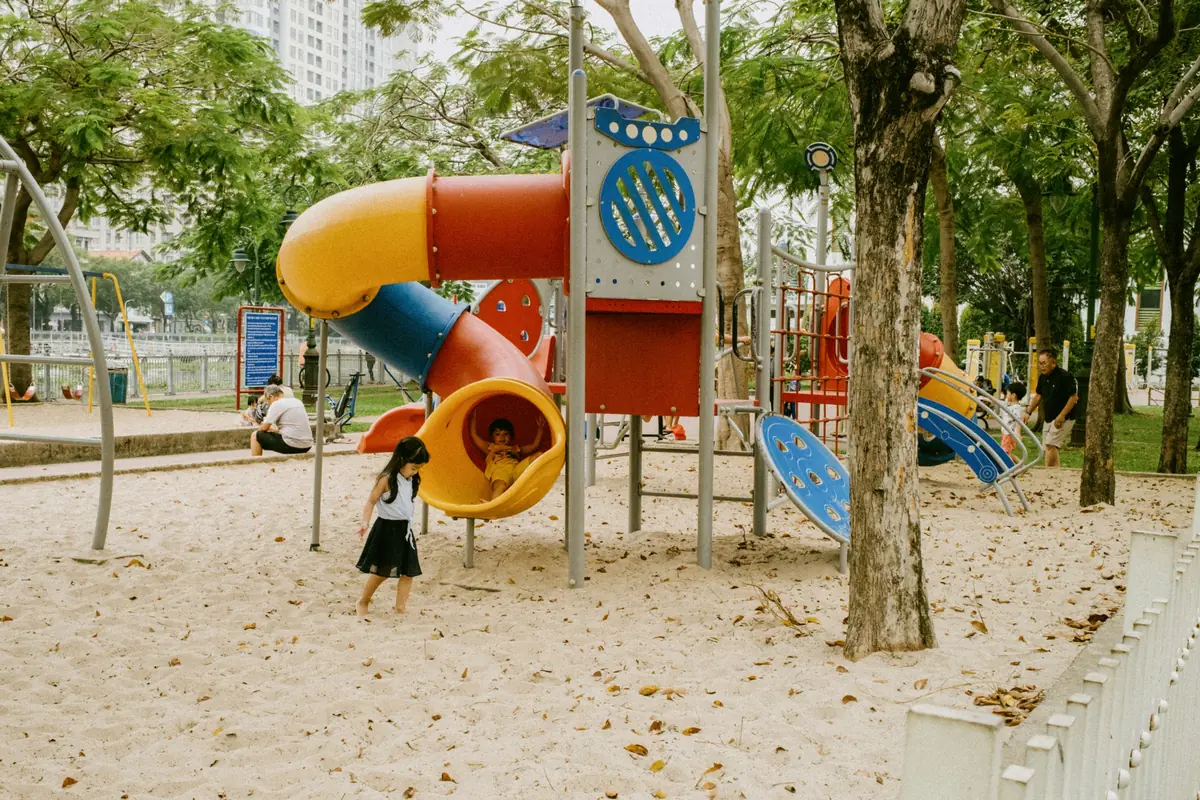
What Playground Artificial Grass Really Costs
Budgets talk, so here is the factory-direct language. Playground artificial grass builds run $8-40 per square meter indicatively, sitting inside our full range of $7-60 depending on padding, grade and yarn. Treat both numbers as starting points for a conversation, because an exact quote follows the spec sheet, not the other way around.
For comparison, United States trade pricing runs $6-20 per square foot for the product alone, before installation labor, and patch repairs average about $12 per square foot. Numbers from different markets are not directly convertible, but the ratio is instructive: the surface is a mid-budget line item, and the base, pad and labor decide the total. Compare quotes that price the same scope, not the same roll width.
That is why we quote a full artificial turf installation as one number, pad, base prep and seams included. Longevity does the rest of the math: a commercial surface lasts up to 10-15 years, which spreads the spend across roughly a decade of school calendars. Mulch needs recurring top-ups and replacement; turf spreads its cost across the years instead.
The Maintenance Promise vs the Reality
Low maintenance is true the way a garden is low maintenance compared with a farm. The reality list is short but real. A blower or stiff broom handles leaves, a rinse clears dust, and a quick check confirms the drains still run after storms. Periodic grooming in the busiest zones keeps the fibers upright instead of flattened.
Wear concentrates where feet pivot: the landing zone at the slide bottom and the few steps past each swing. Infilled systems also need their granules topped up on a schedule, which is a real cost the first quote often hides. Static builds in dry climates and clears with a water spray or an anti-static treatment.
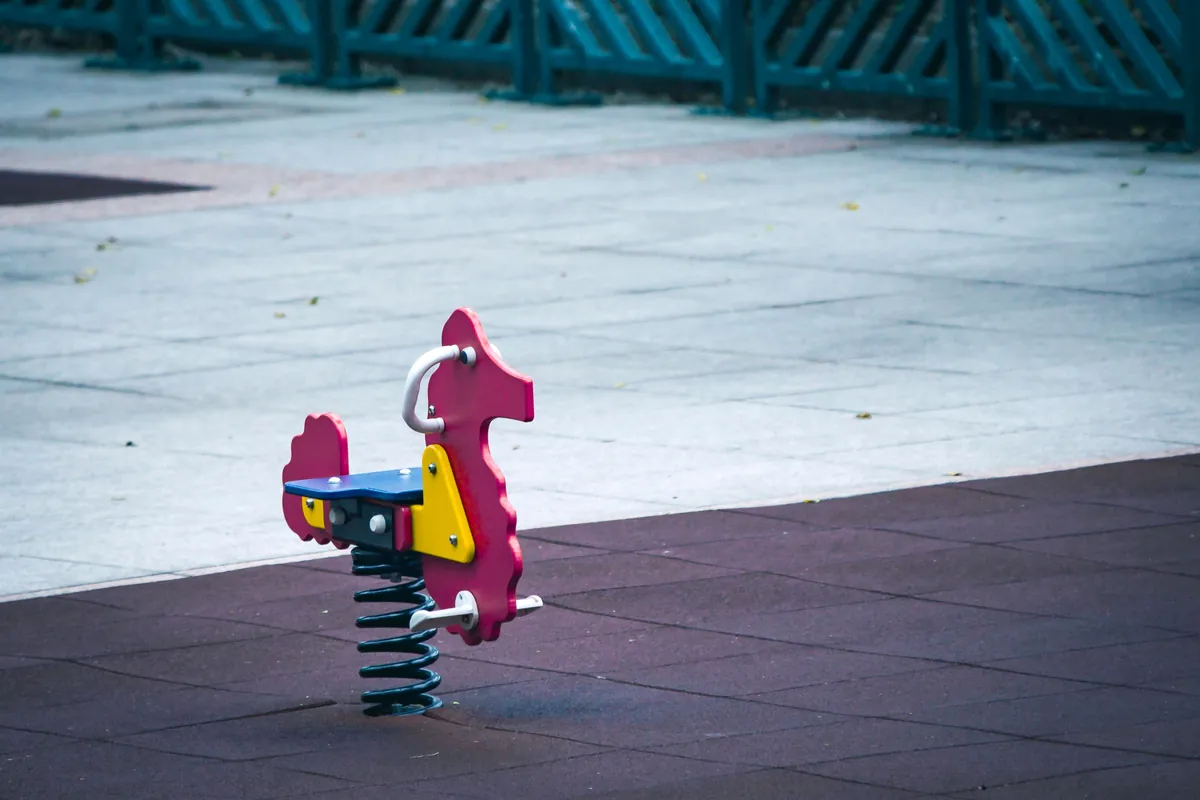
Plan the upkeep into the layout before delivery, because water management decides how an artificial turf installation ages. Roll width is the quiet lever: 2m x 25m rolls cover 50 square meters and suit small plots, while 4m x 25m covers 100 and is the safe default. The 5m x 25m roll spans 125 square meters with fewer seams across a large play field. The rolls we cut to order can also arrive tailor-made, which removes interior seams where wear would otherwise start.
None of this is heavy work, but it is scheduled work. Sites that keep the small routine spend far less over a decade than the ones that call only when something looks tired. Put the routine in the tender document so the installer prices for it. A surface promised as maintenance-free is a red flag, not a bargain.
One practical way to hold the schedule without hiring it out is to attach the routine to something the site already does. A school that inspects equipment monthly can add a five-minute rake and a rinse check to the same walk-through. A park crew that blows paths in autumn can pull airborne debris off the pile in the same pass. The sites that stay safe and look new are rarely the ones with the most elaborate plan. They are the ones where the small tasks already have an owner and a date.
Talk Through Your Playground Spec
Send the equipment list and site plan, and we will come back with a build-up recommendation, the matching test data and indicative container pricing. Samples go out before contracts are discussed.
Where Playground Turf Is the Wrong Choice
There are projects where we tell buyers to walk away, and it is better to hear it before the purchase than after. If no bidder will put a written rating in front of you that meets your equipment height, do not buy the turf. A surface without paperwork is a promise without a witness.
Budget failure is the second honest reason. A site that cannot fund the pad, the base work and the drainage is better served by engineered loose-fill than by a turf system installed thin. The third is vandalism pressure at unstaffed sites, where repair economics favor surfaces that can be patched cheaply and often.
Everything else is solvable with planning, which is the difference between this product and most purchases in the category. Name the constraints early and the system gets designed around them. Name them late and they get discovered after delivery.
How Schools and Contractors Should Buy
Buy the way the rating is tested: in writing. The request list is four items long. It covers a spec sheet for the exact build-up, the fall-height test report for that build-up, and a material declaration for the infill or pad. The fourth item is a seam and roll plan drawn for your actual footprint. Suppliers who answer all four quickly are the shortlist; the rest are a lesson.
Sample before you talk containers. Free 20 x 20 cm swatches, usually three or four pieces with freight paid by the buyer, ship by DHL or FedEx. They reach most destinations in 4-6 days and remote areas in 7-9 days. When we pack samples, we include the build-up note for each one, because a swatch without its spec is a color card, not evidence. Custom constructions add 10-15 days of production and are worth the wait for anything installed under equipment.
Wholesale buyers work the same loop at container scale, and it is why projects with Relyir usually start with a sample pack rather than a price list. Match the roll width to the area, keep the seam plan with the delivery paperwork, and brief your artificial turf installation crew before the truck arrives. The buyers who skip that last step pay for it in visible seams.
Frequently Asked Questions
How much does playground artificial grass cost?
Playground artificial grass costs $8-40 per square meter indicatively from the factory, inside a full range of $7-60 depending on padding and grade. Exact pricing follows your spec sheet.
What fall height rating should I ask for?
Measure the highest point a child can fall from on your equipment. Then require a surface whose published critical fall height rating meets or exceeds that number, delivered as a written test report.
Does playground turf get too hot in summer?
Yes, it runs much hotter than natural grass in direct sun. Shade sails over play zones, lighter yarn colors and a quick rinse before peak hours keep it manageable.
Do I need infill under playground grass?
Not always. Infilled builds reach the rating through shock-absorbing granules; padded builds bond a foam layer instead and skip the mess. Match the build-up to your equipment height.
How long does playground artificial grass last?
With routine grooming, rinsing and drainage checks, commercial playground surfaces last up to 10-15 years. High-traffic zones wear first and can be refreshed without replacing the whole field.
 English
  Arabic
  French
  German
  Portuguese
  Russian
  Spanish