
Most artificial turf installations separate the grass from the cushioning: you buy the turf, then buy the infill, then spend an afternoon brushing sand and rubber into the pile. 5mm padded turf collapses that into a single product by bonding a foam layer directly to the backing during manufacturing. The surface arrives as one roll, with the shock absorption already engineered in.
This page explains what the 5mm specification actually describes, where padded turf outperforms an infilled system, and just as importantly, where it is the wrong choice. The numbers here come from published product data and installer guidance, and the limits are stated plainly rather than marketed around.
What 5mm Padded Turf Actually Is
The 5 millimetres refers to a foam underlay bonded between the turf’s primary backing and a secondary stabilisation layer. The foam is typically a cross-linked polyethylene or polypropylene product, chosen because it compresses under impact and springs back without taking a permanent set. The grass face itself is standard synthetic turf, usually tufted at a short pile height, before the foam is laminated underneath as part of the same production run.
That manufacturing detail is the whole point. With a traditional infill system, cushioning is a field-installed property: someone spreads and brushes in sand or rubber until the surface feels right. With padded turf, the cushioning is calibrated at the factory and sealed into the product. You cannot tune it after installation, which is an advantage when you need every square metre to perform identically, and a limitation when a site needs a bespoke feel. Thinner 3mm pads and much thicker pads exist for niche uses such as golf tee lines, but 5mm is the general-purpose standard for indoor and multi-use surfaces.
Built-In Shock Absorption for Gyms and Playgrounds
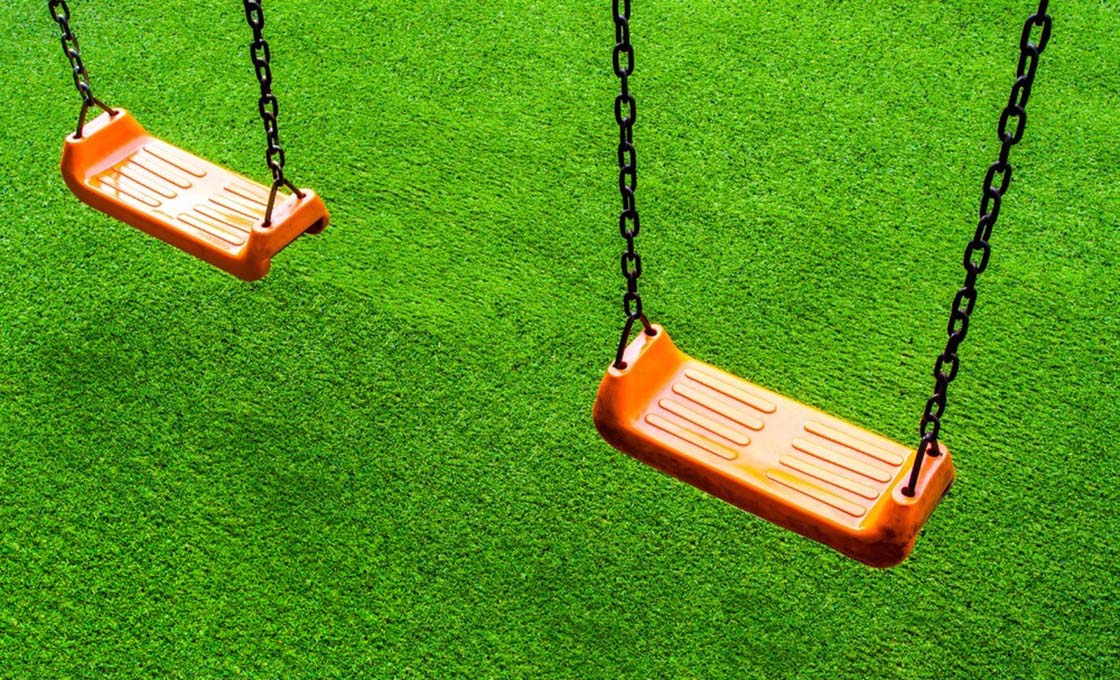
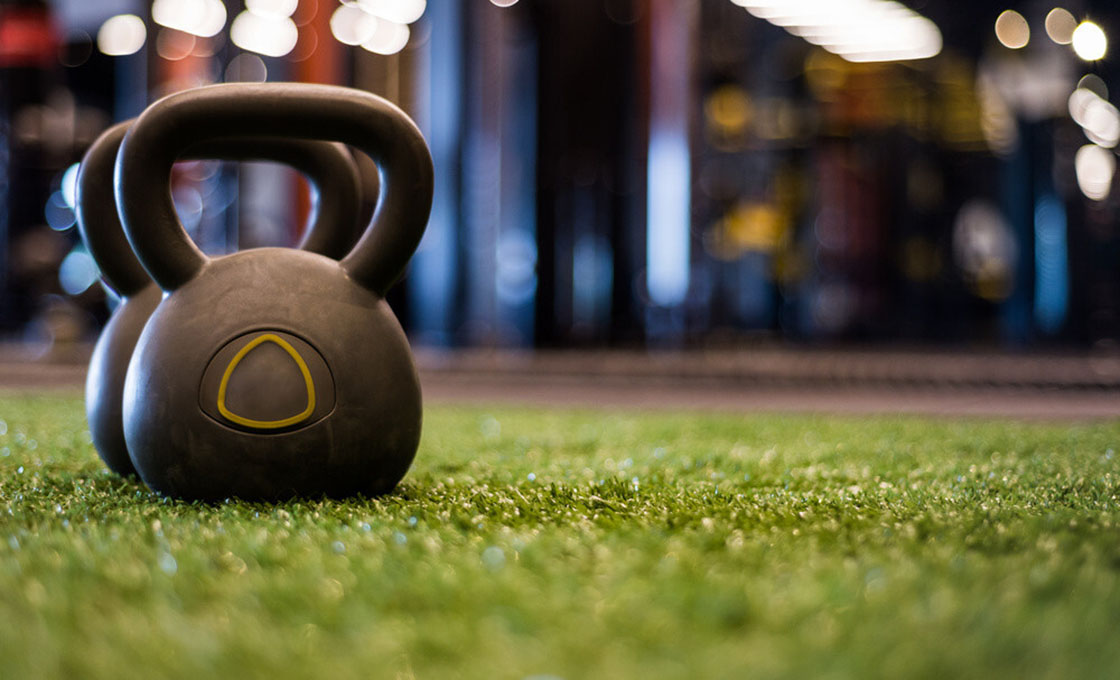
The foam layer absorbs impact energy that would otherwise pass straight through the pile into the hard surface below. In a gym, that means dropped weight plates meet some resistance instead of bare concrete, and floor work is kinder on joints and elbows. Under playground equipment, it takes the sharp edge off everyday tumbles. For anyone who has laid standard turf directly over concrete and wondered why it still feels like pavement, the foam layer is the missing part.
The honest caveat matters here: 5mm of padding is a comfort and fatigue specification, not a certified fall-height rating. Playgrounds with elevated equipment often require engineered safety surfacing tested to a specific critical fall height, and a foam-backed turf does not replace that. If your project has a compliance requirement, treat padded turf as the surface layer and spec the certified system underneath it separately.
Softer Landings for Pets, Kids and Long Sessions
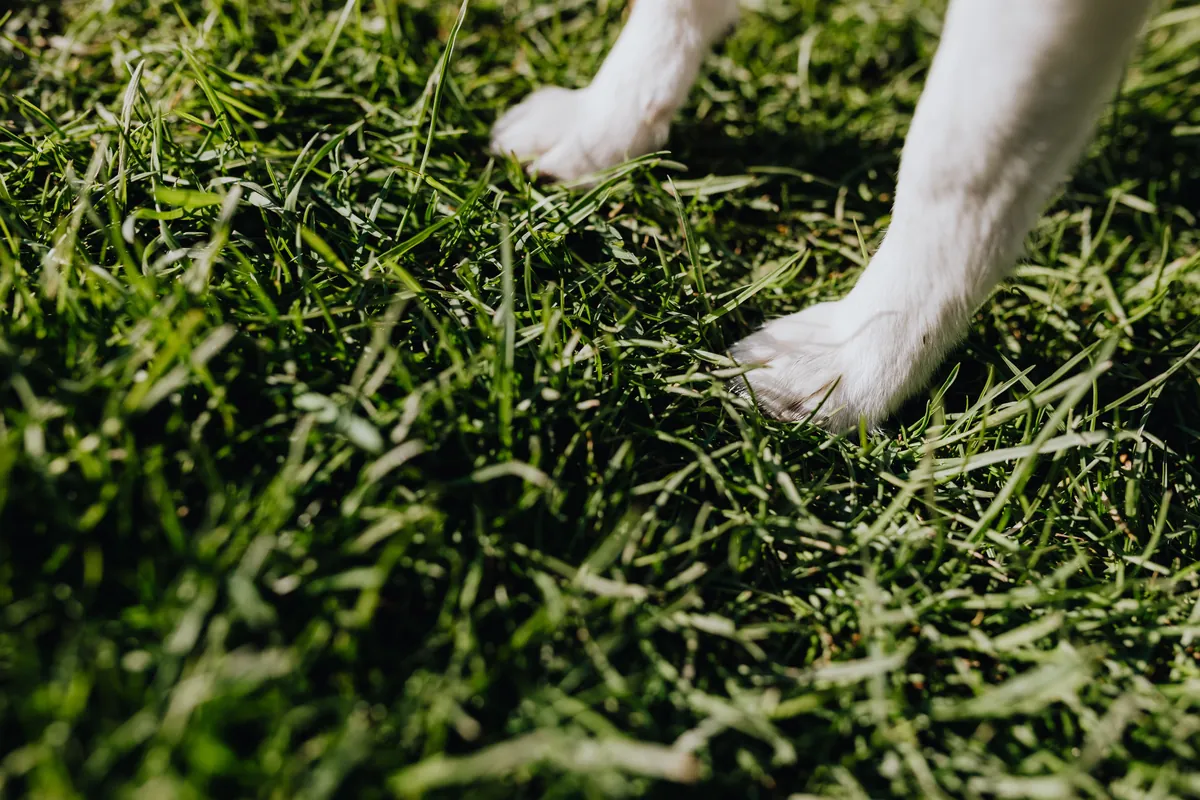
Comfort is easier to notice than to measure. Standing on unpadded turf over concrete for a full coaching session feels very different from standing on the same pile over foam. It is the same difference as a kitchen mat under a long shift at a counter. Dogs make the same vote with their feet: padded surfaces are easier on joints and paws during extended play, which is why pet facilities and vet runs often specify them. If you are weighing a pet area build, it pairs naturally with a dedicated artificial grass for dogs specification.
Two quieter benefits ride along with the foam. First, there is no infill to flick up, so nothing marks shorts, socks or pet fur the way crumb rubber famously does. Second, the foam adds a modest thermal break between pile and sub-base, which keeps the surface marginally cooler in direct sun. The cooling effect is real but small, and no supplier should sell you padded turf as a heat solution.
No Infill Means Fewer Installation Steps
An infilled installation has a whole second phase after the turf goes down: material is delivered, spread, brushed in, and then checked for even coverage. Padded turf simply stops at the laying stage. The roll goes out over the prepared base, seams and edges are fixed, and the surface is ready for use the same day. For a small gym floor or a backyard project, that removes the single most labour-intensive step in the build.
It also removes several failure modes at once. Brushed-in infill migrates, washes away in heavy rain, and gets tracked out of doors on shoes, so it needs topping up to keep the surface performing as specified. None of that maintenance exists with padded turf.
Removal and relocation are easier too. An infilled system can weigh 5 to 10 pounds per square foot once filled and usually becomes waste when lifted. A padded roll, by contrast, can be taken up and re-laid, which protects the residual value of the installation.
Padded vs Unpadded: The Practical Trade-offs
The table below puts the two systems side by side on the decisions buyers actually argue about. Read it as a specification comparison, not a ranking; the right answer depends entirely on what the surface has to do.
| Factor | 5mm Padded Turf | Unpadded + Infill |
|---|---|---|
| Cushioning source | Factory-bonded foam, uniform across the roll | Field-installed infill depth and type |
| System weight | Light; lifts as a roll | 5 to 10 lb per sq ft once filled |
| Installation steps | Roll out, seam, fix, done | Add infill spreading, brushing and QC |
| Cleanliness | No granules to shed or track | Crumb rubber migration is common |
| Ball roll sports | Poor; foam dampens roll speed | Good; tuned with infill depth |
| Relocation value | Re-liftable and reusable | Usually scrapped at removal |
| Material cost | Higher per square metre | Lower turf cost, plus infill labour |
On cost, the honest summary is that padded turf shifts money from site labour into material. Material pricing runs roughly $7-60 per square meter across the artificial grass market depending on construction, with padded products sitting toward the upper half of that band. Treat any figure as indicative until a supplier quotes your exact specification. For small and medium projects the total installed cost often lands close to an infilled build once you subtract the infill material and the labour to install it.
Feel the Padding Before You Order
Specification sheets cannot tell you how a foam-backed surface responds underfoot. Order a free 20 x 20 cm sample, feel the cushioning yourself, and compare it against your current surface before committing to a roll.
Where 5mm Padding Is the Wrong Choice
The same foam that makes padded turf comfortable makes it unsuitable for precision ball sports. A bocce ball or a golf ball needs a firm, consistent surface to roll predictably. A foam layer acts like a brake, with a slight sponge under the ball’s path. That is why bocce courts and putting greens are built on compacted, unfilled-or-minimally-filled surfaces rather than padding. If your project lives or dies by ball behaviour, padded turf is the wrong specification, full stop.
Two further cases deserve a mention. Some surfaces must be tunable after installation, say to adapt to a new sport or a change in use. An infilled system allows that; a padded one does not. And where budget is the only constraint and the surface sees light, occasional use, paying the padded premium buys comfort that occasional users may never notice. 5mm padded turf earns its price on surfaces that are used hard and often, not on show pieces.
Installation Notes: Seams, Transitions and Roll Widths
Padded turf prepares the same way as any synthetic lawn: a graded, compacted base with drainage thought through before the first roll is laid. The foam changes three details at the margins. Seams are taped and glued rather than sewn, because a needle and thread will not reliably bite through 5 millimetres of foam. Transitions to adjacent surfaces need roughly 5 millimetres of extra allowance, which matters at doorways, ramps and edging. And the base works slightly gentler in return: the foam smooths minor imperfections, though nothing in the foam excuses a badly prepared sub-base.
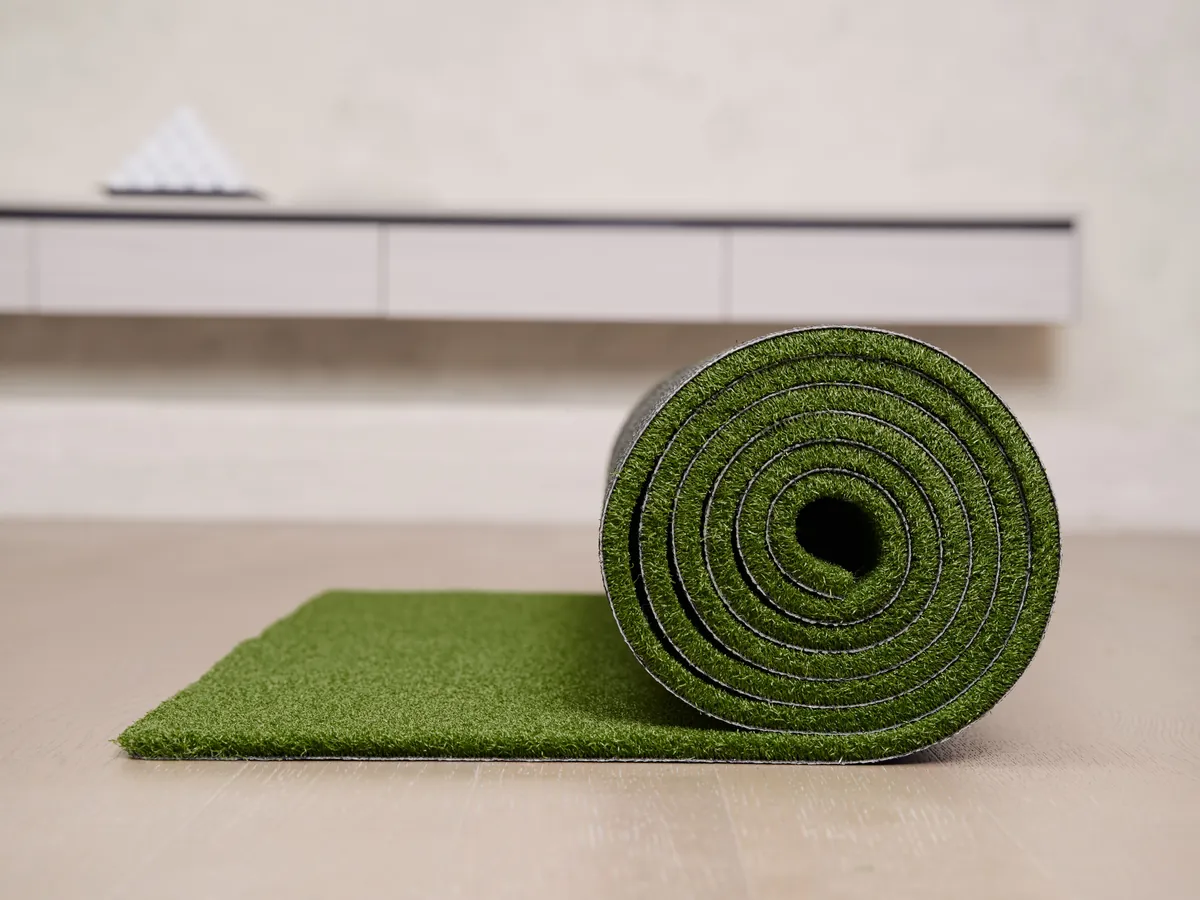
Roll logistics are unchanged by the padding. Standard rolls come in 2, 4 and 5 metre widths by 25 metres long, covering roughly 50, 100 and 125 square metres respectively. A made-to-order artificial grass roll can also be produced to your exact dimensions without internal seams, which suits gym floors and odd-shaped rooms particularly well. Backing options carry over from standard construction, including PP+Net and PU systems.
Before ordering, close the specification loop with samples and lead times. Free 20 by 20 centimetre samples ship by DHL or FedEx in 4 to 6 days, or 7 to 9 days to remote destinations. That lets you feel the foam density first hand before committing. Custom specifications add 10 to 15 days of production before dispatch, which belongs in the project schedule from day one rather than discovered at the end.
Frequently Asked Questions
Does 5mm padded turf need infill?
No. The bonded foam layer provides the cushioning that infill would normally supply, so the surface is installed without any brushed-in material and needs no infill top-ups afterwards.
Is padded turf safe for playgrounds?
It cushions everyday tumbles and is far more forgiving than unpadded turf over concrete, but it is not a certified fall-height surface. Elevated structures still need engineered safety surfacing beneath.
Can padded turf be used outdoors?
Yes, when manufactured with UV-stabilised yarn and a foam layer rated for outdoor exposure. Confirm both properties with the supplier before ordering, and plan normal drainage under the base.
How does padded turf compare on cost?
Material costs more per square metre, but you remove the infill material and the labour to install and top it up. On small to medium projects the installed totals are often comparable.
 English
  Arabic
  French
  German
  Portuguese
  Russian
  Spanish