Most buyers compare pile height and color charts, then discover after a season of flattening and fading that the curled layer they never asked about decided the outcome. The blades get all the attention. The band underneath them quietly settles how the surface ages.
We build turf rolls, and on our bench the cross-section gets read before any price list. Every synthetic thatch material decision starts there, with three polymers splitting one job under a single canopy. That split is the subject here – what each polymer does, how fiber form changes the answer, and how to verify a quotation sheet before you sign.
First, Look at the Cross-Section: Meeting the Curly Layer
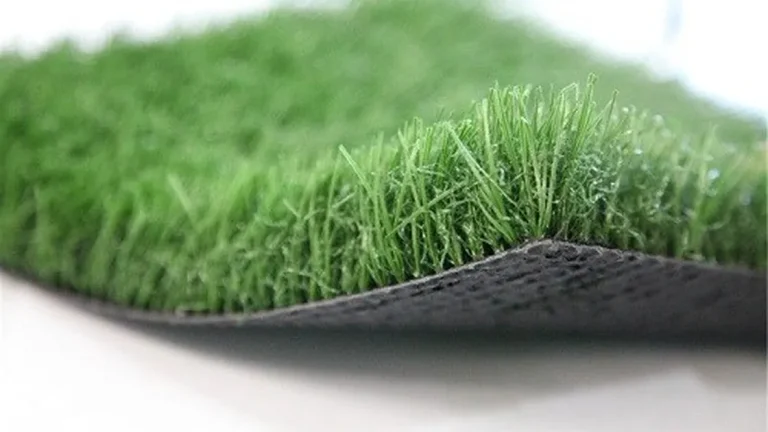
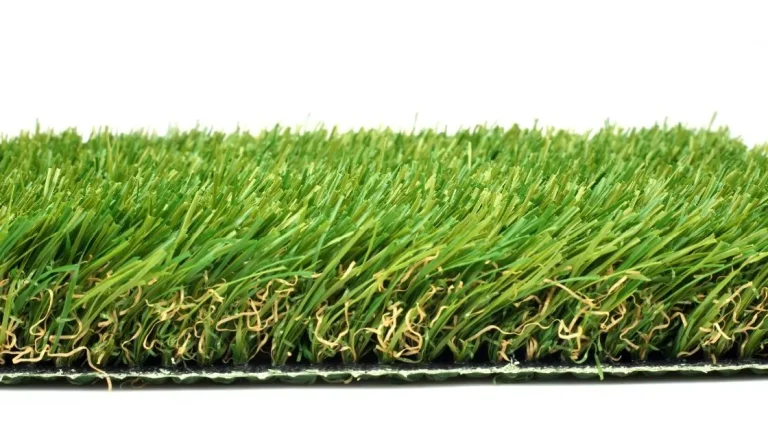
Cut a roll edge open and three layers show at once – straight green canopy on top, a curled brownish band beneath, backing at the base. The middle band is the thatch layer. It is the part of a synthetic lawn buyers see least on a sample card and feel most after a season of use.

One boundary first – what thatch does for the turf system, fiber by fiber is a topic with its own page. This one stays with the material itself. The question under the curl is which polymer it is, and why the industry keeps answering the same way.
Run a thumb through the curl and the question writes itself – the synthetic thatch material under every canopy is the same polymer, chosen for reasons worth knowing. The map below shows why three plastics share the job instead of one.
The Material Map: Three Polymers, One Division of Labor
Material choice here is not a search for one best plastic – it is a division of labor. The industry split is remarkably consistent, and it matches what we roll ourselves – polyethylene blades over polypropylene thatch, with nylon held back for reinforcement. Any serious synthetic thatch material conversation starts from that map.
| Material | Hand feel | Toughness | Heat and moisture behavior | Common role |
|---|---|---|---|---|
| Polypropylene | Firmer than polyethylene | Good resistance to fatigue | More heat-resistant than polyethylene | Thatch layer and backing mainstay |
| Polyethylene | Softest, most grass-like | Tough yet flexible | Nontoxic and chemically resilient | Face blade mainstay |
| Nylon | Firmest of the three | Strongest, with the best recovery memory | Absorbs moisture in humid air | Premium sports surfaces and reinforcement |
Material decides feel and grade, while fiber form – covered further down – decides how that feel lands as function. Treat them as two separate questions at the quotation table. A sheet that answers only one of the two is half a specification. Buyers who ask both together rarely meet a flattening surprise later.
Polypropylene: The Default Thatch Fiber
Polypropylene owns the curl for a chain of practical reasons. Its stiffness locks the crimp shape, so the band keeps its loft through traffic, and the polymer carries good resistance to fatigue. Per the Wikipedia polypropylene entry, it is slightly harder and more heat-resistant than polyethylene – a useful trait in the layer that sits closest to reflected heat. It also sits in a lower cost grade, which is the quiet economic reason it became the default.
Per the Wikipedia polypropylene entry, its Thermal characteristics section puts commercial PP melting between 160 and 166 °C – headroom that helps where light bounces off walls and glass. Per the Wikipedia polypropylene entry, the same section notes PP turning brittle below 0 °C, which is why cold-climate thatch feels stiffer underfoot in winter.
UV protection is a pass line, not a bonus. The real weakness of polyolefins is photo-oxidation – polypropylene and polyethylene degrade under sunlight unless stabilized. Documented cases include a road cone that cracked prematurely without an anti-UV additive and a polypropylene shelter that cracked within months. Whether stabilizer is compounded into the yarn is a pass-fail question, so ask it that way.
Polyethylene: The Soft Touch of the Canopy
Polyethylene is the soft face of the system. Per the Wikipedia polyethylene entry, all its forms are nontoxic and chemically resilient, which explains much of its popularity across industries. In turf it plays the blades – most synthetic thatch material pairings on a quotation put PE on top because it bends and recovers like grass.
The softness is not weakness – flexible chains give the polymer its toughness, and the not-prickly handfeel buyers ask after is PE answering. Where the canopy meets skin, paws or small hands, PE is the grade to open with.
- Face blades. Straight monofilament yarn in the canopy, where softness and recovery are judged first.
- Blended with PP curls. A soft canopy over a firm skeleton – the common industry combination, and ours.
- Low friction. The first material grade to ask about for pet areas and playgrounds, where contact is constant.
- Grades within the polymer. PE comes in several density families, so two PE yarns can feel different before anything else on the sheet differs.
Nylon: Strength You Pay For Twice
Nylon is the toughest of the three, with the best recovery memory when something heavy sits on the pile. The strength is paid for twice – once in a higher material grade, and once in feel, because hardness brings an abrasive hand. That is why nylon serves premium sports surfaces, putting greens and reinforcement zones rather than whole residential lawns.
Humidity adds a selection variable of its own. Per the Wikipedia nylon entry, nylons are hygroscopic – they take up and give off moisture with the air around them. In humid climates that behavior belongs on the checklist, because it changes how the yarn feels and recovers across a season.
Seasoning, not the meal. The answer is not to avoid nylon entirely – treat it as a seasoning. A small share reinforcing the thatch, or a nylon-blended premium zone, buys strength where it matters while the rest of the lawn stays on a softer, friendlier budget.
Fiber Forms: Monofilament, Fibrillated and Curly Thatch
Material and form are two separate axes, and the form decides where the function lands. The same polymer can arrive as a straight monofilament, a split tape or a heat-set curl. Reading any synthetic thatch material spec means reading both axes, never one.

Monofilament vs Fibrillated Tape
A monofilament is an independent single yarn, so its cross-section can be molded – C, S, V, W and diamond profiles all exist for good reasons. Shape controls resilience, light reflection and how the blade springs back, which makes monofilament the appearance mainstay of the canopy. A fibrillated tape is a film split into a netlike yarn, and that open structure grips infill well. Sports and landscape faces commonly blend the two – monofilament for looks, fibrillated for structure.
Curly Thatch: Form Follows Its Job
Thatch yarn is texturized into a permanent curl, and the curl is what lets it work under the canopy. Curls prop the blades from below, cushion each step and hold infill against migration. Curl density is a balance – more curl adds support and density, less keeps the surface open. Two rolls with identical polymers can still play differently, purely on this balance.
Matching Material to Venue: Pets, Landscape and Play
Selection works backward from how the venue is used. A pet yard, a landscape lawn and a playground load the same three polymers differently, so the weighting changes with each. Most quotations fall into one of these three patterns.

Pet Areas
Face yarn goes polyethylene first for a soft paw feel, while the thatch layer carries a high polypropylene share for support under traffic and digging. Nylon is a cautious pick around urine zones because it draws moisture from the air. Selection is the whole answer here – the material decision does the work before anything is laid.
Landscape Lawns
Polyethylene monofilament over polypropylene thatch is the default combination for landscape work, and most quotations should start there. UV stabilization is the first parameter to confirm, because a landscape is judged on decade-scale appearance retention. Unprotected polyolefins fail early and visibly, which is why the warning above matters most in this line.
Playgrounds
Skin feel and wear resistance must arrive together – PE face yarn leads again, and the thatch layer supplies density and cushion feel. Cold regions add one more check, because polypropylene stiffens sharply once temperatures drop toward freezing. Do a low-temperature handfeel check on samples before committing; small hands judge turf more strictly than spec sheets do.
How to Read Material Specs Before You Buy
After the map comes verification. A quotation sheet proves itself through questions, not adjectives, and five checks turn material claims into answers you can hold. Every synthetic thatch material decision can be settled with them before an order is signed.
Ask material per layer
Face and thatch each deserve a named polymer. A one-word answer for the whole roll is a reason to keep asking.
Ask fiber form
Monofilament or fibrillated face, and the curl share in the thatch. Form predicts flattening better than color does.
Ask about UV
Whether stabilizer is compounded into the yarn at extrusion matters more than any color chart. That follows from the polyolefin reasons covered earlier.
Do the handfeel check
Fold a sample and watch the curl recover, then palm the face and the thatch separately. The difference is the spec you are actually buying.
Confirm size and customization
Match roll widths to your layout. Common widths run 2m, 4m and 5m by 25m long, with custom sizes cut for awkward spaces.
None of these parameters is exotic – yarn color, shape, density, height and backing are all configurable before the roll exists. Sending project parameters to the supplier converges faster than comparing lookalike samples ever will. Our artificial grass rolls built to your project material spec are configured exactly that way, layer by layer, in the roll specification.
Which Material Combination Fits Your Project?
Face yarn and thatch polymer, fiber form and curl ratio go into the roll spec – send project parameters and confirm the material combination on free samples before you order.
Three Myths About Thatch Material
Three misjudgments keep costing buyers money, and each is easy to clear before an order. They survive because they sound like common sense. A minute apiece is enough to retire them.
Myth 1: More Thatch Is Always Better
Thatch supplies support and density, so the instinct says add more of it. Oversupply sacrifices loft and closes the drainage paths the surface depends on. The ratio is an engineering decision, not pile-stuffing – enough curl to hold the system up, never so much that the structure drowns.
Myth 2: Thatch Is Just Cheap Filler
The curl carries three jobs at once – propping blades, cushioning steps and holding infill in place. Buyers who treat it as filler remember it the first season the pile flattens. The quiet layer decided the outcome, exactly as the cross-section at the top of this page suggested.
Myth 3: You Can Swap the Thatch Material Afterward
Blades, thatch and backing are formed together at manufacture, one textile from start to finish. The combination is decided before ordering, not corrected after delivery. That is exactly why material verification happens before the order – there is no second chance at the loom.
Material Choice Is System Choice
Read the cross-section once more and the curly layer resolves into three stacked decisions – which polymer, which form, and how the blend is engineered. Material sets the ceiling for feel and longevity. Form decides where the function lands. The blend decides how efficiently the budget gets there.
One move before ordering. Take a 20cm x 20cm physical sample, fold it, palm it, and flip it over to inspect the backing weave. A ten-minute handfeel check beats a ten-page spec sheet every time.
Treat material choice as system choice and the order sheet reads differently. The canopy, the curl and the backing stop being line items and become one engineered decision. Ask the layered questions, verify on a sample, and the surface you specified is the surface that arrives.
Frequently Asked Questions
What is synthetic thatch made of?
Mostly polypropylene. The curly layer in a synthetic thatch material system is usually PP yarn, with nylon reinforcing premium products and polyethylene reserved for the straight face blades.
Why is polypropylene used for the thatch layer?
Because stiffness locks the crimp shape. Polypropylene thatch resists fatigue and tolerates heat better than polyethylene, and its firmer hand sits under the canopy where fingers rarely reach.
Does the thatch layer make turf hotter?
The polymer itself sets no temperature. UV stabilization and reflected-light exposure drive surface heat, so asking about UV treatment tells you more than asking about color.
Is nylon thatch worth it?
For premium sports surfaces and humid climates, yes – nylon strength and recovery earn their place. For ordinary landscape lawns, a polyethylene-plus-polypropylene combination already performs, and nylon serves better as reinforcement.
How do I verify material claims before ordering?
Ask for the polymer of each layer, the fiber form and the UV treatment. Then fold a physical sample and watch the curl recover – a handfeel check settles what a datasheet claims.