

Three different booking sheets land on the sports hall office desk in the same week. There is a netball league on Tuesday, five-a-side football on Thursday, and a primary school tennis festival on Saturday. One court has to serve all three, and the surface under every point, goal and rally has not been chosen yet.
The best surface for multi sport courts is not a single product; it is the surface whose compromises match your sport mix. We build artificial turf installations for exactly these trade-offs, and our team walks court specifiers through the same five candidate surfaces every week.
The Trade-Offs Behind Every Multi Sport Court
A multi sport court asks its surface to behave like several different products at once. Tennis wants a consistent, predictable bounce. Hockey wants a lower, truer roll, while five-a-side football wants grip for sharp turns and a surface that forgives slides. One of those demands can be optimised; all of them cannot.
Concrete examples make the conflict easier to see. A netball league shares its grip priorities with tennis, so the two coexist comfortably on macadam. Add football to the same timetable and the demands split: players want forgiveness underfoot while netball still wants bounce, and no single wearing course delivers both at full strength.
The cost of guessing is not abstract either. A surface that suits one sport but punishes the rest tends to lose the bookings it should win. Re-papering a court midway through its life means paying for the surface twice, so getting the selection right the first time is the cheapest line in the whole project.
Sport England’s guidance for multi-use games areas states the conflict plainly. Surfaces need some form of shock absorbency for player protection, yet too much cushioning is detrimental to tennis, basketball and netball. Any artificial turf installation, like any macadam or polymeric layer, is therefore a set of trade-offs rather than a list of features.
Our view, formed across years of reading court specifications and quoting against them, is simple. The best surface for multi sport courts is decided by the booking sheet, not the brochure. Name the sports, the weekly hours and the fallback days first, and the shortlist builds itself. Skip that step and even a premium surface becomes an expensive mismatch.
The Candidate Surfaces Worth Comparing
Ask three contractors about the best surface for multi sport courts and you will hear five answers, because five surface families genuinely compete for the job. Per Sport England’s published guidance, porous macadam sits under about 80% of the UK’s tennis courts. Polymeric rubber, sand-filled or sand-dressed turf, needlepunch turf and 3G long-pile turf cover the rest of the shortlist.
Each family is built differently. Macadam is a porous asphalt laid and colour-coated on site, while polymeric is rubber granules bound in resin over a macadam base. The turf options range from short sand-dressed carpets to needlepunch, a fibre-bonded sheet prized for hard wear, up to 3G systems carrying rubber crumb infill.
The turf family itself splits further than most briefs expect. Sand-filled carpets carry a deeper dressing of sand that supports the pile under heavy use. Sand-dressed carpets use a shorter, denser pile with a reduced quantity of sand, and are primarily suited to courts where hockey is the primary sport. Needlepunch carpets add sand stability within the pile, which suits the churn of a school timetable.
Colour is a selection item too, not a cosmetic one. Macadam can be formed from pigmented material or painted after installation, and Sport England notes that pigmented macadam costs more initially but keeps its colour longer in high-use areas. On a court booked seven days a week, that difference shows within a few seasons.
Macadam also carries an internal split of its own. Dense macadam is the more durable form, but its inability to drain is a major constraint on sports use, which is why porous macadam is the sports standard. The coating decision only matters once the drainage decision is right.
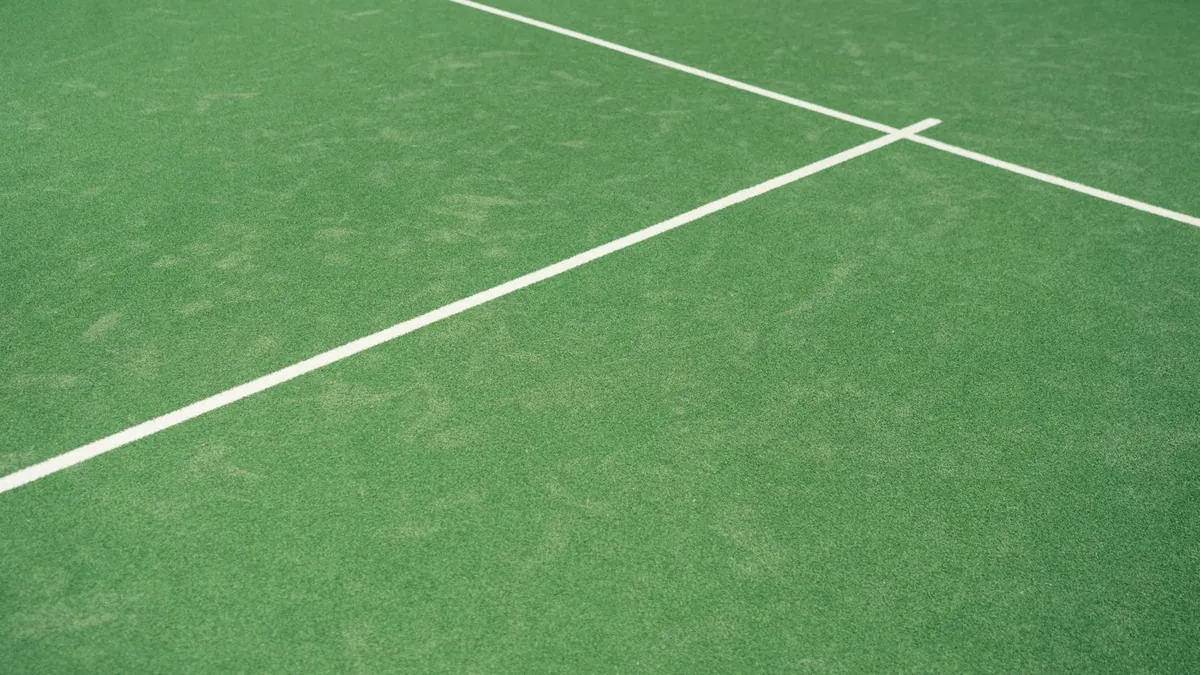
Roll format matters once turf wins the shortlist. Artificial grass comes in 2 m, 4 m and 5 m widths by 25 m, and wider rolls cross a court with fewer seams. Check the standard roll widths and roll construction before you fix a layout.
| Surface | Sport England type | Best-fit sport mix | Ball behaviour | Typical upkeep |
|---|---|---|---|---|
| Porous macadam, colour coated | Type 1 or Type 2 | Tennis, netball, basketball, general play | Fast, high, very consistent | Pressure washing, moss treatment |
| Polymeric rubber on a macadam base | Type 3 or Type 4 | Netball, basketball, five-a-side training | Medium bounce, cushioned take-off | Periodic cleaning, coating care |
| 2G sand-filled or sand-dressed turf | Type 5 | Hockey, five-a-side football, shared tennis | Low, true roll | Drag brushing, infill top-ups |
| Needlepunch turf | Fibre-bonded sheet | Mixed school programmes, athletics practice | Low-moderate, forgiving | Hard-wearing, routine brushing |
| 3G long-pile turf | Third generation | Football, rugby training | Grass-like with crumb infill | Brushing, infill and seam checks |
One nuance hides behind the table. Needlepunch behaves more like a textile than a grass carpet, which is why it is a fixture in artificial turf installations where athletics training shares the programme with ball games. The other turf families trade some of that toughness for sport-specific ball response.
Matching Each Surface To Your Sport Mix
The honest answer to what is the best surface for multi sport courts starts with the suitability matrix rather than the product sheet. Sport England’s table rates macadam as the preferred surface for tennis, netball and basketball and unsuitable for hockey, while sand-filled turf is preferred for hockey and unsuitable for tennis. Polymeric sits between them, with Type 3 specified around netball as the principal sport and Type 4 around five-a-side football.
Conflicts deserve more weight than overlaps. Using a polymeric surface for ball contact sports rapidly reduces its slip resistance, which is why Sport England advises against combining five-a-side football and netball on the same polymeric court. A grip level that flatters netball players can quietly punish the footballers who share the surface.
Two worked mixes show how the matrix bites. A netball-and-basketball programme lands on Type 3 polymeric or Type 2 macadam, where grip and bounce point the same way. A hockey-and-football programme moves straight to Type 5 turf, because both sports want a low roll and stud-friendly traction. Mixed timetables usually end somewhere between the two, which is where the turf families earn their place.
The same logic excludes some candidates outright. A 3G surface carries a longer pile suited to small-sided football and rugby, and published MUGA guidance notes that it is not suitable for netball or tennis. Ruling a family out this early is progress, not loss; it shrinks the field to surfaces that can actually serve the timetable.
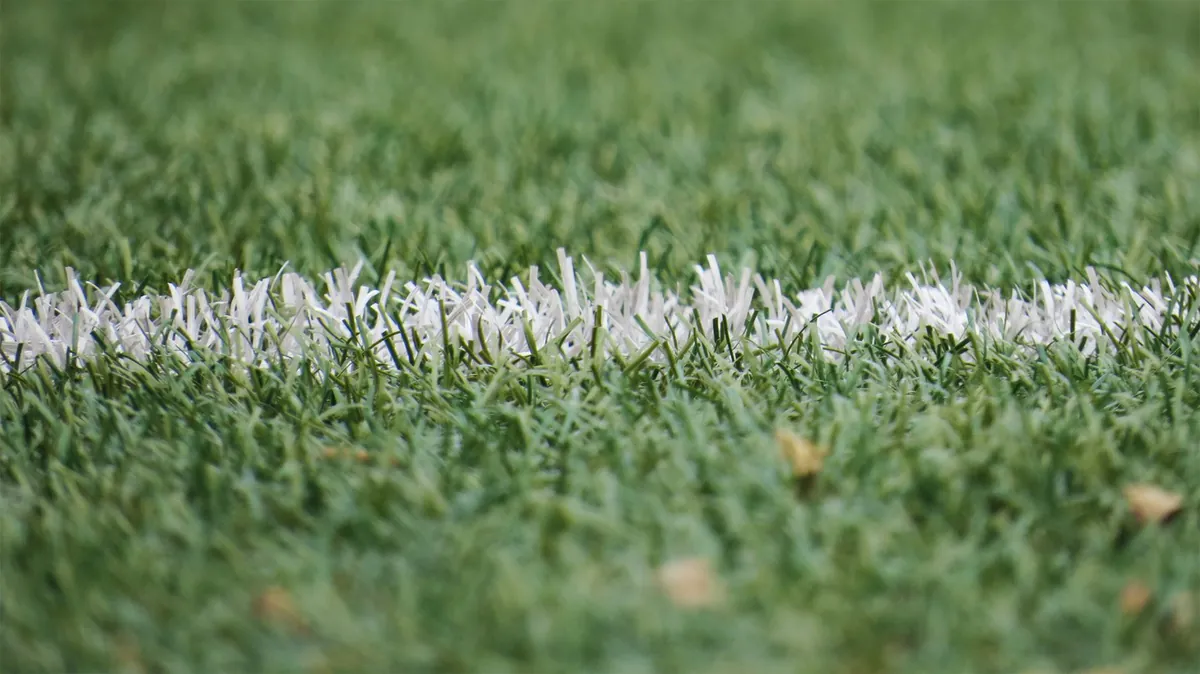
Markings deserve a place in the comparison too. Polymeric and macadam take painted or resin-bound lines, which public-scheme guidance treats as vital to functionality, with contrasting colours keeping every sport readable from the touchline. Turf handles markings differently: lines are inlaid into the carpet at manufacture, so the layout is fixed at specification stage. Decide the sport list before the line list, because the surface you choose decides what the markings can do.
Turf shortens those conflicts. A sand-filled carpet can carry tennis, netball and football on one court without badly compromising any of them. An artificial turf installation accepts inlaid lines for every sport in a single layout. Review the sports turf surfaces built to a stated pile, density and backing spec while you weigh the matrix.
Where An Artificial Turf Installation Wins Multi Sport Courts
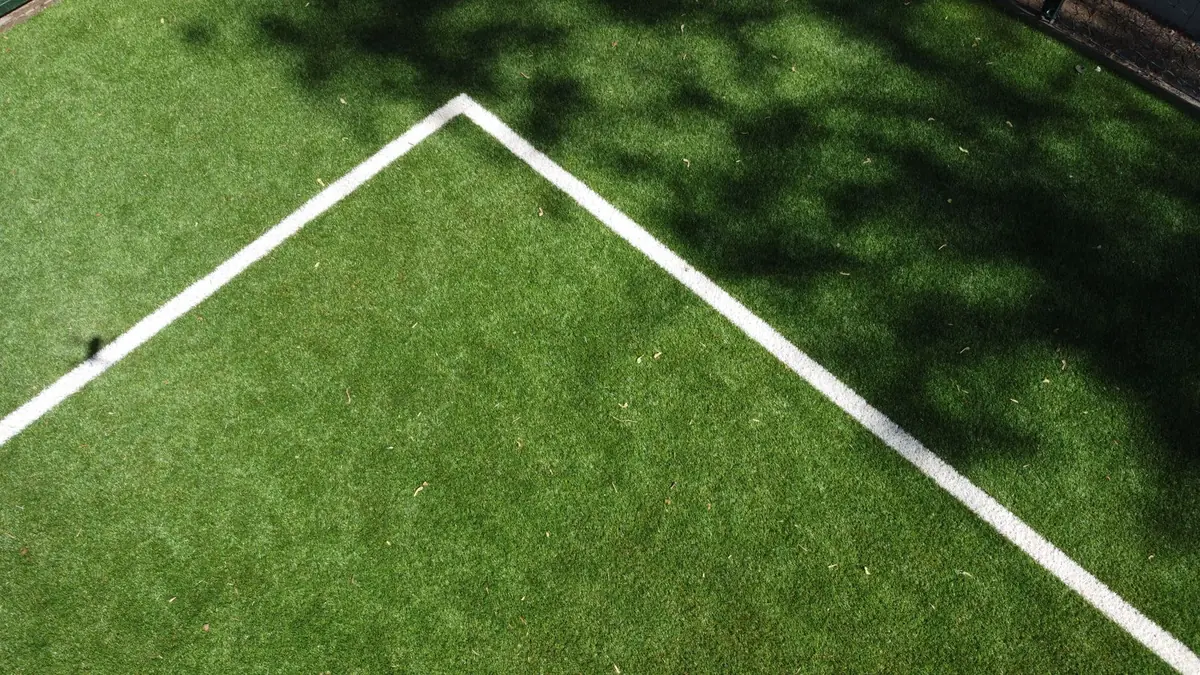
There is a pattern in where the best surface for multi sport courts turns out to be turf: programmes weighted toward pitch sports. Football training, hockey, lacrosse and rugby sessions all favour a surface that rolls the ball low and forgives slides. That is precisely the brief an artificial turf installation is built around.
Modern court turf is specified, not guessed. Pile height sets the ball behaviour, sand dressing keeps the fibres upright, and 3G systems add rubber crumb where impact matters. Published industry ranges put hockey surfaces at 32 mm against 60 mm for rugby. Because the lines are inlaid rather than painted, one court switches sports without a repainting rota.
That switchability is the quiet economic case. A surface that hosts Monday hockey, Wednesday football and Saturday tennis turns dead hours into hire income, and an artificial turf installation holds its playing characteristics through all of it. The court dimensions, line zoning and sport-switching layout behind that flexibility are covered in our companion guide.
Widths and colours turn the specification into a layout. Wider rolls cross the playing area with fewer seams, and offcuts concentrate at the edges where they can be trimmed rather than hidden. Because yarn colour is part of the roll specification, playing zones and run-off areas can be separated by shade instead of paint. A shade built into the pile survives seasons of brushing far better than a painted line.
Drainage completes the case, and it is the reason we watch perforation patterns on every roll that leaves our line. A turf court that sheds water keeps its booking sheet; one that holds it does not.
Struggling To Match One Court To Every Sport?
Mismatched surfaces cost bookings and player trust. We build each artificial turf installation to your sport mix: pile height, density, colour, backing and roll size. Send us your court drawings.
Shock Absorption Slip Resistance And Ball Bounce
Safety and playability pull against each other, and the pull is measurable. Sport England notes that shock absorbency protects players, yet excess cushioning damages the bounce that tennis, basketball and netball depend on. Grip levels pull the same way, because each sport reads the surface differently underfoot.
Slip ratings make the conflict concrete. Published MUGA specifications give Type 1 macadam a TRRL 60 rating for general multi-sport, and Type 2 macadam TRRL 75 for netball grip. Type 3 polymeric carries TRRL 75, while Type 4 polymeric runs TRRL 55 for tennis and basketball. Choosing among them is the moment the best surface for multi sport courts becomes a rankings exercise rather than a shopping one.
| Specification | Slip rating | Principal sports |
|---|---|---|
| Type 1 macadam | TRRL 60 | General multi-sport, tennis, basketball |
| Type 2 macadam | TRRL 75 | Netball, where extra grip matters |
| Type 3 polymeric | TRRL 75 | Netball as the principal sport |
| Type 4 polymeric | TRRL 55 | Tennis, basketball |
Cushioning can be added beneath as well as within. Sport England’s specifications include MUGA turf areas surfaced with a shockpad under sand-filled, sand-dressed or needlepunch carpets, which is how one base structure serves sports with different impact needs. Treat the pad as a selection decision with the same weight as pile height, because it changes both ball behaviour and underfoot feel.
Ball behaviour differs as much as grip across the shortlist. Published tennis-surface guidance notes that artificial grass plays faster than acrylic, with a lower bounce and slightly more slide, and that joint impact is lower than on hard courts. For older players and high-volume programmes, that softer ride often matters more than raw pace, while bounce-hungry sports push the decision back towards the hard surfaces.
Think of the decision like picking a squad rather than a star player. No single surface covers every position, but a short, dense, sand-dressed carpet paired with the right base comes closest for mixed court-and-pitch programmes. Where cushioning must be tuned to a specific sport mix, the custom pile heights, densities, colours and backing systems exist for exactly that reason.
Drainage Upkeep And Year Round Reliability
Porous surfaces earn their keep in the rain. Macadam, needlepunch and filled turf all let water pass through the wearing course, which is why play resumes quickly after a storm. The failure mode is clogging, not the concept: when dirt blocks the pores, water stops draining through and the court turns waterlogged and unsafe.
Picture the Saturday test. A junior tournament is scheduled, Friday night delivers two hours of rain, and the facility manager walks the court at seven in the morning. On a free-draining porous surface the fixture goes ahead; on a silted-up one, the day turns into refunds and a deep-clean bill.
Upkeep splits by family. Turf wants drag brushing to redistribute sand and rubber infill, plus periodic deep cleaning and infill top-ups, while hard courts want pressure washing, brushing and moss or algae treatment. Either way, the artificial turf installation and the macadam court both stay reliable only if the pores stay open.
Open-access sites carry a heavier load than supervised ones. Public courts absorb footfall from anyone who wanders on, which is why public-scheme guidance points to polymeric and macadam for consistent use. The maintenance rota matters even more the moment the gate has no lock.
What A Multi Sport Court Build Costs
Budget conversations go better with published numbers. Per Sport England facility cost figures cited by the contractor S&C Slatter, a new multi-use games area generally lands between £150,000 and £500,000. Size and surface type are the main drivers. Cost narrows the field before performance does, but it does not decide the best surface for multi sport courts on its own.
| Project scope | Published figure | Main driver |
|---|---|---|
| Small macadam MUGA with fencing and lighting | About £160,000 | Compact footprint, hard surface |
| Small sand-dressed MUGA with fencing and lighting | From about £400,000 | Turf system and specification level |
| Full new-build range | £150,000 to £500,000 | Size, surface type, groundworks |
| Refurbishment of an existing court | £40,000 to £80,000 | Infrastructure already in place |
Refurbishment changes the arithmetic. Because foundations, fencing and floodlighting already exist, refreshing an old court usually costs £40,000 to £80,000. On-site construction for a new build typically runs 2-6 weeks once planning is granted. Commercial artificial turf carries a service life of up to 10-15 years, so the surface decision compounds over a decade or more.
Funding shapes the bracket as much as the scope does. Where capital spend is not available, published guidance points to Sport England programmes such as the community asset fund. Grants from local and regional councils, plus operating leases for schools, spread the cost further. None of that changes which surface fits the sport mix, but it changes when the project can realistically start.
Mistakes That Sink Multi Sport Surface Projects
Five selection errors account for most of the failed briefs we are asked to rescue. Each one is avoidable at specification stage, long before money is committed.
Buying For One Sport Only
A surface optimised for tennis pushes hockey towards the margins, and the reverse is just as true. If the second sport matters, it belongs in the brief from day one, because retrofitting grip or pile later means resurfacing rather than adjustment.
Ignoring Slip Rating Conflicts
Grip levels that suit netball can undercut football, and Sport England specifically warns that ball contact sports strip slip resistance from polymeric surfaces. Check the ratings against every sport on the booking sheet, not just the noisiest one.
Treating Drainage As A Later Problem
Pores blocked by silt turn a porous court into a pond, and standing water eventually forces deep cleaning or full resurfacing. Base falls, outfalls and a maintenance rota belong in the specification, not on the punch list.
Skipping The Sample Stage
Colour, ball response and fibre density read differently in daylight than on a screen, which is why every artificial turf installation we supply starts with swatches on site. Confirm the specification on the sample first, then order against it.
Copying A Specification From Another Site
A specification written for a different sport mix, climate or footfall travels badly. Two courts can sit a street apart and still need different surfaces, so treat every borrowed document as a starting question rather than a finished answer.
A Checklist Before You Fix The Surface
Run this sequence and the shortlist narrows itself, usually inside a week.
List The Sports And Weekly Hours
Write down every sport, its sessions per week and the season it peaks in. Usage intensity is the single biggest driver of surface lifespan, so the hours belong at the top of the brief.
Screen Candidates Against The Sport Matrix
Match each sport to the surfaces rated suitable for it and keep only the survivors. Where two sports conflict on the same row, plan the compromise deliberately rather than discovering it mid-season.
Set The Slip And Bounce Priorities
Decide which sport sets the grip ceiling and which sets the bounce floor. Those two decisions eliminate more candidates than any brochure claim ever will.
Separate New Build From Refurbishment Budgets
Published UK figures put new builds between £150,000 and £500,000 and refurbishments between £40,000 and £80,000. Knowing which bracket you are in changes which surfaces are even discussable.
Verify The Spec On A Physical Sample
Order a swatch, lay it out and play on it before committing. You can order a sample swatch and check pile, colour and density in daylight before the specification is signed off.
Plan The Maintenance Rota Before Handover
Decide who brushes, who checks infill levels and who clears the drains, and write it down before the surface arrives. A porous court stays porous only while someone keeps the pores open.
That is the sequence our own team runs with schools and contractors. The best surface for multi sport courts is rarely the most specified one; it is the one whose trade-offs your booking sheet can live with.
Frequently Asked Questions
What is the best surface for multi sport courts?
There is no single best surface for multi sport courts; the sport mix decides. Court sports like tennis and netball point to macadam or polymeric, while hockey and five-a-side football point to sand-filled or needlepunch turf.
Can one court host tennis, netball, basketball and football?
Yes. A sand-filled turf surface can carry tennis, netball and football on a single court, and inlaid line markings keep every sport readable without repainting between sessions.
Which surface drains fastest after rain?
Porous macadam, needlepunch and filled turf all drain through the surface. Slow drainage usually means the pores are clogged, so schedule deep cleaning before the court turns waterlogged.
How much does a multi sport court cost to build?
Published Sport England figures cited by S&C Slatter put new builds between £150,000 and £500,000, while refurbishing an existing court usually runs £40,000 to £80,000.
Is more shock absorption always better?
No. Sport England guidance warns that too much cushioning hurts tennis, basketball and netball performance, so cushioning should be matched to the sport mix rather than maximised.
How do I verify a turf surface before a bulk order?
Order free 20 by 20 cm samples, usually three to four pieces. They ship by DHL or FedEx in 4 to 6 days, with courier freight covered by the buyer.


 English
  Arabic
  French
  German
  Portuguese
  Russian
  Spanish