
How to choose the right artificial grass for hockey is not about picking a turf type by name. It is about matching the level of play, surface category, pile height, backing, irrigation, and roll width to how your facility will actually be used. When those variables drift apart, the first signs are slow ball roll, brittle fibre, delaminated seams, and an irrigation bill nobody budgeted for. We help facility developers, clubs, schools, municipalities, and EPC sports contractors close that gap before the first roll ships.
The answer is a working framework, not a product list. We walk through daily stresses, level-of-play matrix, surface categories, pile and density, backing, drainage, roll-width math, irrigation, UV, custom branding, factory sourcing, cost drivers, and a pre-buy questionnaire. Use it as a checklist the next time you ask how to choose the right artificial grass for hockey on your own pitch.
What Hockey Turf Must Withstand Daily
How to choose the right artificial grass for hockey starts with a stress map. Hockey is fast, low-impact, and continuous. The surface takes thousands of foot strikes per square metre, plus the lateral drag of drag-flicks and sweep shots, plus ball impact. We start here because every later decision is anchored in this map.
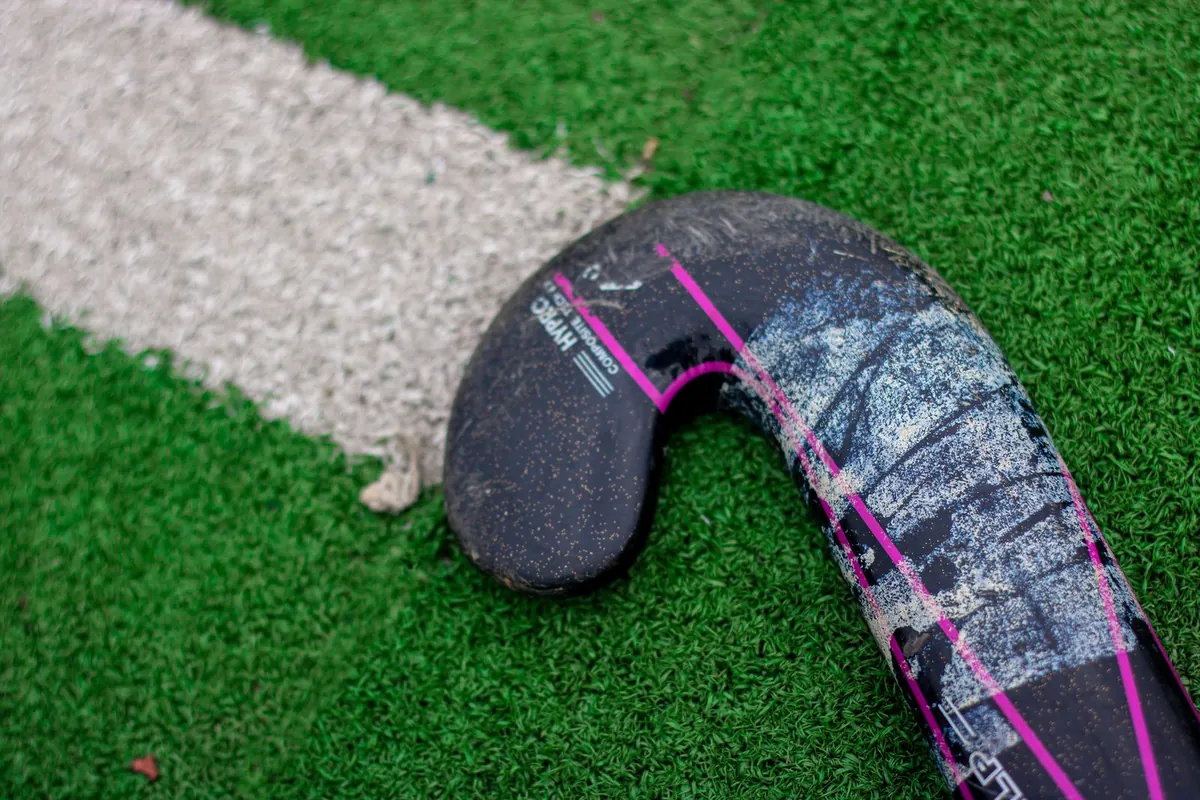
Four daily stress vectors matter most. Ball roll at high speed pushes infill across the pile and tests stitch rate. Sweep shots and drag-flicks apply twisting lateral force on the fibres. Goal circles and the 23-metre area concentrate foot traffic. Irrigation water plus rainwater keeps the backing in a wet-dry cycle year-round.
The decision lever is to write those vectors into a brief before requesting samples. If you run two squads a day with weekly penalty-corner drills, you are not the same buyer as a community club training twice a week.
Match Turf to the Level of Play
The biggest lever in how to choose the right artificial grass for hockey is the level of play. Pile height, density, surface category, and irrigation needs each track this axis. We treat level of play as the input and the spec as the output.
| Level of play | Surface category | Pile height | Stitch density | Irrigation |
|---|---|---|---|---|
| Recreational / schools | Sand-filled | 18 to 25 mm | ≥12,000 /m² | None |
| Club / high school | Sand-dressed | 13 to 18 mm | ≥12,000 /m² | Light, optional |
| Academy / training centre | Sand-dressed or water-based | 11 to 15 mm | ≥12,000 to 18,000 /m² | Programmed |
| Elite / international play | Water-based | 8 to 13 mm | Up to ~63,000 /m² | Mandatory |
Recreational and school fields tolerate sand-filled because ball speed is secondary to durability. Clubs move to sand-dressed for a faster surface at modest cost. Academies split between sand-dressed for daily training and water-based for match simulation. Elite and international play sit on water-based where the highest ball speed and player control live.
Most mis-specs we see in retrofit work start with skipping this step and ending up with a sand-filled field where sand-dressed was wanted, or the reverse.
Sand-Filled vs Sand-Dressed vs Water-Based
The three surface categories are not labels; they are three different playing systems. Each defines pile height, infill weight, ball speed, and operating cost. Treating them as interchangeable is the fastest way to under-spec a hockey facility.
| Attribute | Sand-filled | Sand-dressed | Water-based |
|---|---|---|---|
| Pile height | 20 to 25 mm | 13 to 18 mm | 10 to 13 mm |
| Sand infill | Full pile depth | Thin top layer | None |
| Ball speed | Slower, cushioned | Medium to fast | Fastest |
| Player control | Lower bounce | Higher bounce | Highest, true feel |
| Irrigation needed | No | Light, optional | Pre-match watering |
| Operating cost | Lowest | Medium | Highest, water plus system |
| Typical buyer | Schools, community fields | Clubs, high schools | Elite academies, national play |
Sand-filled fits lower training hours, multi-sport use, and a tight budget. Sand-dressed is the workhorse for clubs that want closer-to-match pace without the irrigation bill. Water-based fits high training hours and a budget that covers irrigation infrastructure.
The wrong choice usually fails on more than one axis, which is why retrofit projects keep returning to this matrix.
Pile Height and Density for Hockey Use
Pile height and stitch density do most of the work on a hockey surface. Shorter pile gives faster ball roll; taller pile gives more fibre cushion under foot. Density holds the pile upright against drag-flick force. The right combination depends on level of play.
Elite systems cluster around 8 to 13 mm pile with stitch rate near 34 per 10 cm. Training systems sit at 13 to 18 mm with stitch rate near 23 per 10 cm. Schools running multi-sport programmes often push past 18 mm for added fibre durability. Density scales with level: around 12,000 stitches per m² is a common floor, and elite water-based systems reach up to roughly 63,000 per m².
We recall a trial between an 8 mm water-based elite panel and an 18 mm school-style panel under the same boot. The 8 mm panel felt like a hard carpet under foot, the 18 mm panel gave a soft step, and the ball behaved like two different sports. That walk crystallised why level of play, not pile alone, drives the spec.
Backing and Subfloor That Hold Up
Backing is the layer most buyers miss when asking how to choose the right artificial grass for hockey. The pile gets the attention, but the backing is what holds the pile in place, sheds water, and survives the wet-dry cycle. Pick the wrong backing for the wrong surface and the field delaminates well before its expected life.
| Backing | Subfloor fit | Durability | Best fit |
|---|---|---|---|
| PP+Net | Concrete or asphalt, indoor | Standard | Indoor or dry climate |
| PP+non-woven | Asphalt with elastic layer | Improved tear | Clubs and schools |
| PP+Grid cloth | Asphalt with shockpad | High dimensional stability | Academy training |
| PU optional | Asphalt or concrete, water-based | Hydrolysis-resistant | Water-based pitches |
For water-based fields where the surface stays wet for hours each day, PU is the safer choice. Latex-backed carpets can hydrolyse and delaminate inside 18 months under constant irrigation. PU optional costs more upfront but removes the biggest failure mode we see on water-based installations.
Subfloor matters as much as backing. Asphalt gives the most stable base for high stitch rates. Concrete is the default for indoor venues. An elastic shockpad softens the ride for joints and adds vertical deformation headroom. Backing, subfloor, and shockpad form one decision, not three.
Shock Absorption and Joint Safety
How to choose the right artificial grass for hockey shows up in joint safety, not just ball roll. Ankle and knee complaints are the leading injury note on hockey surfaces. Most trace back to a shockpad that was value-engineered out of the spec. A 10 mm EPDM or foam shockpad under the carpet cuts impact force on joints and smooths vertical deformation.
The widely cited performance band is shock absorption at or above 55 percent and vertical deformation at or below 11 mm under standard impact. Hitting those numbers requires the right pairing of carpet, backing, and shockpad, plus a subfloor that does not deflect more than the system can absorb. We have seen fields pass the bench yet fail in play because the subfloor was too stiff.
Joint safety is a written number, not a feeling. We put shockpad thickness, density, and the expected performance band alongside the carpet spec on every quote.
Drainage and How the Field Behaves After Rain
Outdoor hockey fields live or die by drainage. A pitch that pools for an hour after rain gets complaints, cancelled bookings, and algae around the goal circles. Two numbers tell you most of what you need: a permeability target for the system, and a perforation pattern for the backing.
| Element | Target | Why it matters |
|---|---|---|
| System permeability | ≥ 20 mm per hour | Drains a 30 mm storm in under two hours |
| Backing perforation | Holes near 10 cm spacing | Moves water off the playing surface |
| Subfloor | Graded aggregate with perimeter drain | Carries water off the pitch edge |
| Surface evenness | No standing water after standard rain | Prevents algae and slip complaints |
For outdoor fields in wet regions, we ask the installer to size the drainage to a 1-in-10 year storm, not an average month. The cost difference is small relative to one cancelled tournament. For indoor fields, drainage is simpler but the perforated backing still matters for wash-down water.
The drainage layer is where most retrofit jobs fail first. Water finds the lowest path, and a poorly graded subfloor turns minor surface water into a chronic puddle at the goal mouth. Get the drainage layer right at install, then the carpet and backing can do their job.
Roll Width and Seam Placement
Roll width is a planning decision more than a product decision. It drives seam count, offcut waste, and install labour. We carry three stock roll sizes: 2 m by 25 m, 4 m by 25 m, and 5 m by 25 m. Custom widths are available for buyers who want a no-seam pitch.
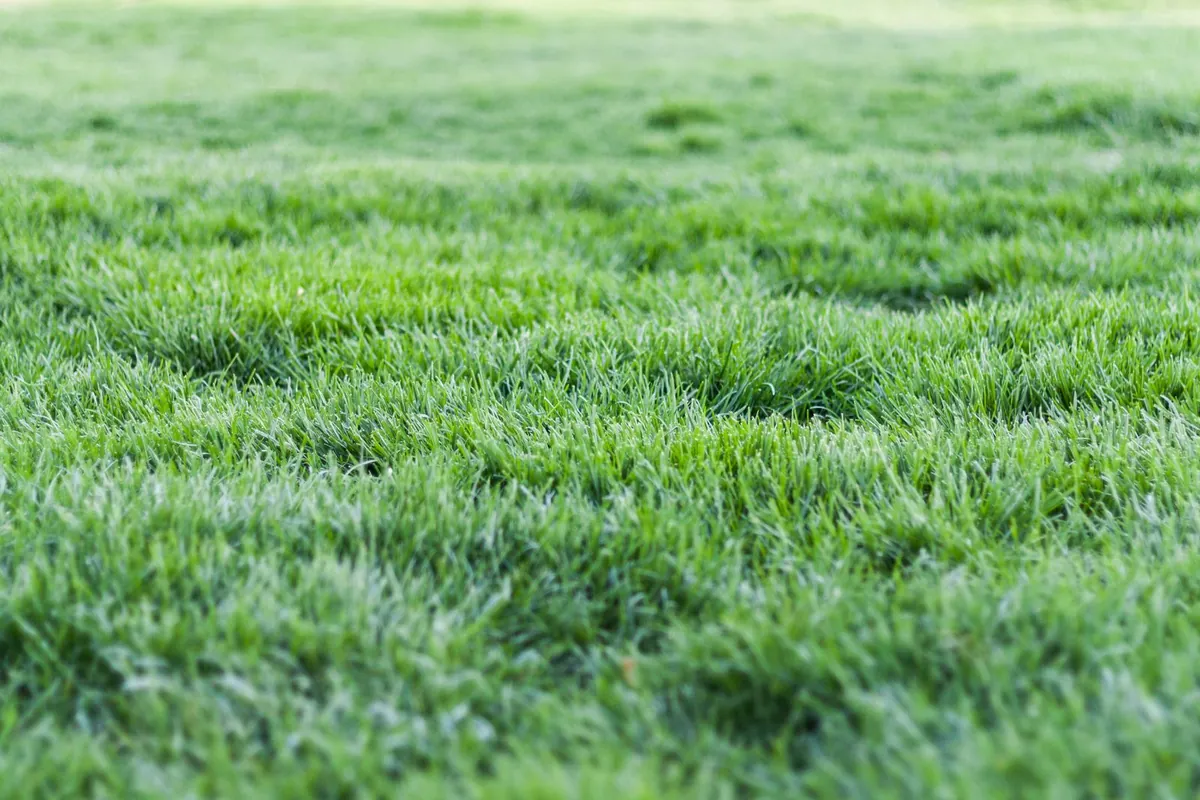
A standard hockey pitch is 91.4 m by 55 m under international hockey federation guidance. Laid in 5 m rolls, the 91.4 m direction needs about 11 cross-rolls and zero longitudinal seams. The same pitch in 4 m rolls needs 14 cross-rolls. In 2 m rolls, the same pitch needs 23 cross-rolls.
More seams means more joint tape, more adhesive, more labour, and more places a seam can lift in year three. We treat roll width as part of the total cost of ownership, not a separate line item. The math is simple: fewer rolls, fewer seams, longer service life.
Seam placement matters too. We avoid seams under the shooting line, the 23-metre line, or the goal-mouth area where wear concentrates. Planning the roll layout on paper before the carpet leaves the warehouse is faster and cheaper than re-cutting seams on site.
Choosing a Hockey Pitch Irrigation Setup
Water-based hockey fields need water on the surface before every match and most training sessions. The water lowers surface friction, slows the ball to a predictable pace, and protects players from carpet burn on tackles. Picking the irrigation setup is a separate decision from picking the carpet, but the two have to be sized together.
Three systems cover most facilities. Long-throw canons sit at pitch corners and water fast with low install cost, but they are thirsty and uneven in wind. Overhead sprinklers in zones give even coverage at the cost of more pipework. Sub-surface systems feed the surface from below; they save water long term but need clean water, regular maintenance, and a backflush plan.
For a single community water-based field, a zoned overhead sprinkler set is the right balance. For a multi-pitch training centre, sub-surface or hybrid systems cut water bills enough to pay back the extra install cost within a few seasons.
UV Stability and Weather Resistance
Outdoor fields spend their lives under sun, rain, and temperature swings. UV-stabilised fibres keep colour and tensile strength through the seasons. Non-stabilised fibres go chalky and brittle in two to three hot summers. For buyers in hot, dry, or high-altitude regions, the UV package is not optional.
Our view, drawn from outdoor academy projects on our line, is that colour fastness is the hidden lever in client renewal. A field that holds its colour through year five looks newer than a neighbouring field that went patchy in year three. Spec the UV-stabilised yarn, write the colour-fastness target into the PO, and ask for the same-batch colour card before production.
Most quality hockey fibres are rated for surface temperatures from roughly minus 40°C up to around 60°C. The risk is at the edge, in tropical sun or northern cold snaps, where cheaper fibres crack first. A weather-rated fibre paired with a UV-stable yarn gives a service life that survives both seasons.
Custom Colour, Logo, and Branding
Customisation is a manufacturer-side lever, not a surface category. Yarn colour, yarn shape, stitch density, pile height, backing chemistry, and roll width can all be tuned to a buyer’s brief. For academies, clubs, and tournament hosts, that means club colour yarn, sponsor logos inlaid into the carpet, and contrast zones around the shooting circle or the technical bench. In our view on how to choose the right artificial grass for hockey, branding is a finishing layer on the spec, never the spec itself.

The decision here is timing and lock-in. Custom dye lots, inlay patterns, and roll widths need a production slot booked ahead of the season. We always ask buyers to send a Pantone reference, a logo file, and a layout sketch before the run starts. Once the line runs, batch changes are costly and colour shifts are visible across the pitch.
For most B2B buyers, customisation is a finishing touch on a standard spec. Get the level of play, surface category, pile height, and backing right first, then layer the brand identity on top.
Source Hockey Turf From a Factory Directly
Buying factory-direct changes three things. First, the spec matches your level of play, not whatever the local distributor has on the pallet. Second, the colour card, backing chemistry, and production batch lock into one PO. That removes multi-pitch colour drift for facility developers rolling out four or more pitches. Third, the sample and lead-time conversation is direct with the line.
For water-based fields we run PU optional backings as standard. We have seen what hydrolysis does to latex in a wet cycle. Our line ships custom roll widths up to 5 m and custom dye lots for club and sponsor colour. A sample kit of three to four 20 cm by 20 cm swatches dispatches in four to six days. Custom samples add ten to fifteen working days.
Hockey Surface Playing Slow and Grippy?
Ball pace and slide live in the fibre spec. We roll hockey carpet to match. Buying direct from the maker usually lands 30–50% below like-for-like market pricing.
Cost Drivers Beyond Price per Sqm
Indicative material pricing for our sports-grass range runs from $7–60 per square metre, depending on pile height, density, backing, and surface category. That range is the start of the budget, not the end. The real cost stack includes the base, shockpad, irrigation system, install labour, and maintenance over the service life.
| Cost line | What it covers | Why it matters |
|---|---|---|
| Carpet material | Pile, density, backing, surface category | Sets the player experience |
| Subfloor | Asphalt, concrete, or engineered base | Defines shockpad and drainage behaviour |
| Shockpad | EPDM or foam underlay | Drives joint safety numbers |
| Irrigation | Canons, sprinklers, or sub-surface | Sets the operating cost for water-based fields |
| Drainage | Aggregate, perimeter drains | Sets weather resilience |
| Install labour | Roll layout, seaming, inlay | Scales with seam count and roll width |
| Lifecycle | Brushing, top-up, deep groom | Sets the year-by-year running cost |
Buyers who compare only the headline square-metre price often spend more over a ten-year horizon than buyers who spec a slightly higher carpet with a longer service life. Water-based elite systems sit toward the upper band of $7–60 per square metre indicative.
Questions to Ask Before You Buy
A short questionnaire at the start of the project saves months of retrofit later. The answers map straight into a spec sheet the installer can quote against.
What level of play does the pitch need to host, and how many hours per week will the surface be in use? What surface category fits the brief: sand-filled, sand-dressed, or water-based? What pile height and stitch density does the chosen category require?
Is the backing PP+Net, PP+non-woven, PP+Grid cloth, or PU optional for water-based wet cycles? Does the subfloor need a shockpad to hit the shock absorption target? What is the drainage spec for the climate?
What roll width suits the pitch dimensions and the seam placement plan? What is the irrigation plan for a water-based field? For more on the wider range, see our sports artificial grass overview or jump to the field hockey turf product page.
Frequently Asked Questions
What pile height should I choose for hockey turf?
Match pile height to level of play. Recreational fields sit at 18 to 25 mm. Club training sits at 13 to 18 mm. Academy training sits at 11 to 15 mm. Elite water-based systems sit at 8 to 13 mm.
Sand-filled, sand-dressed, or water-based: which is best?
Sand-filled is the budget choice for schools and community fields. Sand-dressed is the workhorse for clubs. Water-based is the elite choice where the highest ball speed and player control matter.
What backing do I need for a water-based hockey pitch?
Use PU optional backing for water-based fields. Latex-backed carpets can hydrolyse under constant irrigation and may delaminate inside 18 months in a wet cycle.
How does roll width change the seam count?
For a 91.4 m by 55 m pitch, a 5 m roll gives about 11 cross-rolls and zero longitudinal seams. A 4 m roll gives 14 cross-rolls. A 2 m roll gives 23 cross-rolls.
Is a water-based pitch worth the irrigation cost?
For elite academies and international play, yes. The water-based surface gives the fastest ball speed and truest player control. For community and school play, sand-dressed is usually the smarter spend.
How do I ask for a factory-direct quote?
Send pitch class, square metre, surface category, pile height, target open date, and any custom colour or logo. We return a same-batch quote within $7–60 per square metre and dispatch a sample kit in four to six days.
 English
  Arabic
  French
  German
  Portuguese
  Russian
  Spanish