
If you have been living with artificial grass for years, you already know it does not fail all at once. The colour shifts before the seams open, the seams lift before the backing goes brittle, and the backing usually has the last word on whether a repair makes sense. A multi-year lawn wears in a sequence, and that sequence is what you plan against.
Below we walk through what happens to artificial grass after years of use, in the order it actually happens. On the factory-direct end we see the same long-term behaviour on our line and at the bench when we pull in old rolls for inspection. Each failure wave below carries a signal, an action, and a clear boundary between repair and replacement.
How Turf Fails in Sequence Over Time
Most online lists treat turf aging as a flat checklist of “signs it is time to replace.” That framing is misleading for any artificial turf installation under management. The useful frame is the failure order: pile flattening, then fading, then seam movement, then drainage slowing, then backing aging, then infill loss, and finally tears. Each wave has a signal, an action, and a repair-versus-replace boundary.
For project buyers managing residential lawns, rooftops, balconies, pool decks, pet runs, or commercial terraces, the order sets the budget cycle, the next sampling plan, and the next spec. Treating what happens to artificial grass after years of use as a sequence is what makes our long-term turf knowledge base useful for buyers who plan years ahead.
| Failure wave | Typical self-check signal | Repair or replace |
|---|---|---|
| Pile flattening | Brush backwards, no spring-back in 5–10 min | Repair early; replace if widespread |
| Fading | South or west face shows colour drift vs shaded | Cosmetic early; replace when uneven |
| Seam separation | Visible line, lifted edge, step at mid-path | Single seam: repair. Many: replace. |
| Drainage slowing | Puddle still there 30 min after rain | Flush if recent; replace if chronic |
| Backing aging | Lift a corner, backing is white and brittle | Replace the affected zone |
| Infill loss | Hard underfoot, exposed roots, low spots | Top up if backing is intact |
| Tears and holes | Spreading small tears across zones | Single patch: repair. Many: replace. |
Walk this list in order during a self-check, and each wave tells you where to spend the next maintenance budget. Skip waves, and the next stage inherits damage from the last.
Pile Flattening and the Loss of Spring-Back
Pile flattening is the first wave of what happens to artificial grass after years of use. High-traffic walkways, the base of a chair leg, and pet paths show flat patches first. The surface stops bouncing back because the polymer filaments have taken on permanent set from repeated foot traffic and sun load.
Run a stiff-bristle brush against the pile direction, then watch for five to ten minutes. If the blades stay flat, it is polymer fatigue, not dirt. A clean rinse will not bring the spring back, and brushing alone will not rebuild worn-out fibres. Early on, an infill top-up plus reverse brushing can buy another season.
Once flat patches cover most of a zone, no local fix holds the look together. For high-traffic residential projects, the spec for the next round should raise pile height and density so the same wave arrives later. On an artificial turf installation under heavy foot traffic, this is where most maintenance budgets go first. Our range of pile heights and densities fits this kind of heavy-use planning, and the choice is reflected on our sports grass range for high-foot-traffic zones.
Fading and Patchy Color Across Seasons
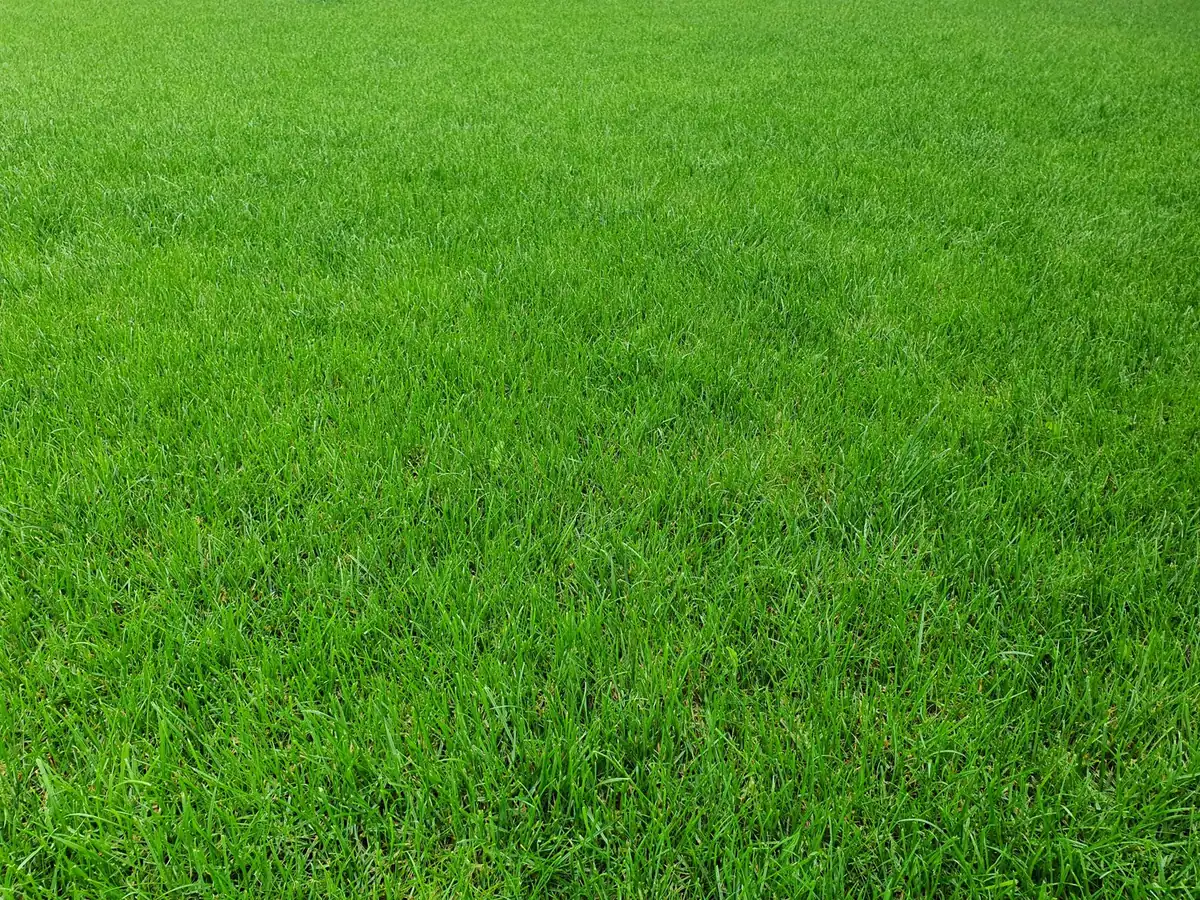
The second wave of what happens to artificial grass after years of use is colour drift, driven by UV exposure. The first sign is a south-facing or west-facing slope reading lighter than the rest of the lawn. Over years, a forest-green tone drifts toward blue-grey and then yellow-brown. Modern UV stabilisers slow this, but they do not stop it.
Dye patches work on small, recent spots and on even-toned lawns. They do not match a faded mid-lawn zone, and they do not match an older dye lot. If your site has a sharp colour split between the sunny side and the shaded side, the lot was either mixed or has aged past patching.
For multi-phase or multi-site projects, lock one dye lot and one batch card across every delivery so later rolls match the first rolls exactly. On the line we keep a single batch card per order so the colour card travels with the rolls.
Seam Separation and Edge Curling
Seam movement is the third wave. Thermal cycling, ground movement, and a backing that has started to lose flexibility all pull at the seam adhesive. The first signal is a faint dark line where two rolls meet, then a lifted edge, then a clear step in a walkway.
A single seam that lifts can often be re-bonded if the surrounding turf is still sound. The moment several seams lift across the field, the issue is not the seam, it is the substrate or the backing age. Patching one seam in a multi-seam failure is a diminishing return.
For large open areas, the easiest way to push this wave out of the calendar is to specify the widest roll that fits the space. Fewer rolls mean fewer seams, and a 5 m roll by 25 m can remove a seam line entirely on big terraces and sports runs. On a multi-seam artificial turf installation, this single decision moves the seam-failure wave back several seasons. Our line cuts 2 m, 4 m, and 5 m rolls by 25 m, with custom widths available on request for projects where the geometry calls for it.
Slow Drainage and Standing Water
Slow drainage is the fourth wave, and it shows up as puddles that linger 30 minutes or longer after a rain that used to clear in minutes. On a multi-year artificial turf installation, this is the wave that turns cosmetic into structural. Two things drive it: backing holes that have clogged with fine debris and a sub-base that has settled over years.
A simple hose test confirms it. Hold a hose on one spot for two to three minutes, then watch the surface. If the water sheets off and clears, the system is fine. If the water sits in a low spot, the grade or the backing has moved.
A high-pressure rinse buys some time on a clogged backing. A settled sub-base is a structural call.
For rooftops and balconies, slow drainage is a waterproofing risk, not just a turf issue. A turf that holds water can push that water against the membrane edge and into the structure. The drainage test belongs on every multi-year rooftop walk-through.
Backing Aging Beneath the Surface
Backing aging is the most hidden wave of what happens to artificial grass after years of use, because the surface still looks fine while the structure under it falls apart. Lift a corner at the edge or in a low-traffic spot and flex the backing. A sound backing flexes. An aged backing has turned white, feels chalky, and snaps instead of bending. That is structural failure, and no patch fixes it.
The two common backing families are PP+Net, PP+non-woven, and PP+Grid cloth, with PU as an optional upgrade. PU holds up better against hydrolysis and tearing in heavy-wet zones, on rooftops, around pools, and in pet runs. For a long calendar before the next backing call, the next artificial turf installation should weigh PU against PP on the wet or high-impact zones of the site.

Think of the backing as the foundation under a house: when the foundation goes, the surface above it stops mattering. A brittle backing is a sign to plan the next installation, not the next patch.
Infill Compaction and What It Looks Like
Infill is the sand or sand-and-rubber layer that holds the pile upright. Over years it migrates, compacts, and drops below the level it was laid at. The surface starts to feel hard underfoot, the roots of the pile show white, and low spots appear where the infill has thinned.
A drop spreader pass, followed by reverse brushing, then forward brushing, restores a working infill layer if the backing is still intact. On a high-use artificial turf installation, this is a recurring line item, not a one-time fix. If the pile has flattened and the backing has started to age, top-up infill will not bring the look back. The order matters: infill first, then check the wave underneath.
Keep the spread lighter near any drainage holes. A thick infill over a drainage path turns a slow-drainage wave into a permanent one. On pet runs, plan for an infill refresh schedule rather than a one-time top-up, since rinse cycles pull sand out faster than on a non-pet lawn.
Tears, Holes, and the Spread of Small Damage
Tears and holes are a late wave, and they almost always follow a backing that has lost its flexibility. A sharp object, a dragged chair, or a heavy load pushes through a brittle backing and opens a tear that grows with each weather cycle.
A single small tear in an otherwise sound lawn can be patched with a cut-and-bond repair, as long as the patch comes from the same dye lot. A spread of small tears across zones is not a repair job. It is a sign the whole field has reached the same age and is failing in step.
Patches on a multi-year lawn almost never match the surrounding colour, because the surrounding colour has drifted. Even with the original batch card, the visual match is off after years of UV load. The replacement question starts to make more sense than the next patch.
A Walk-Through Self-Check for an Aged Lawn
This self-check is the working answer to what happens to artificial grass after years of use, walked end to end. It runs the seven failure waves in order, plus an eighth item that often slips past a visual review: odor. Walk the lawn in the same direction each time, and tick each item as pass, watch, or fail.
| Step | Self-check question | Pass line |
|---|---|---|
| 1. Pile | Brush backwards; does the pile spring back in 5–10 min? | Visible spring-back across the zone |
| 2. Fading | Does the south or west face read lighter than the shaded side? | Even tone across sun and shade |
| 3. Seams | Crouch at every seam: dark line, lifted edge, or step? | Near-invisible, no step |
| 4. Drainage | Hose test: does the water clear in minutes? | No standing water after a 3 min hose |
| 5. Backing | Lift a corner; is the backing white, chalky, or snapping? | Flexes without cracking |
| 6. Infill | Does the surface feel hard or show exposed roots? | Pile stands upright, even underfoot |
| 7. Tears | Single small tear or several tears across zones? | No tears, or a single patchable spot |
| 8. Odor | After a rinse, does any musty or pet odor linger? | Neutral smell after rinse |
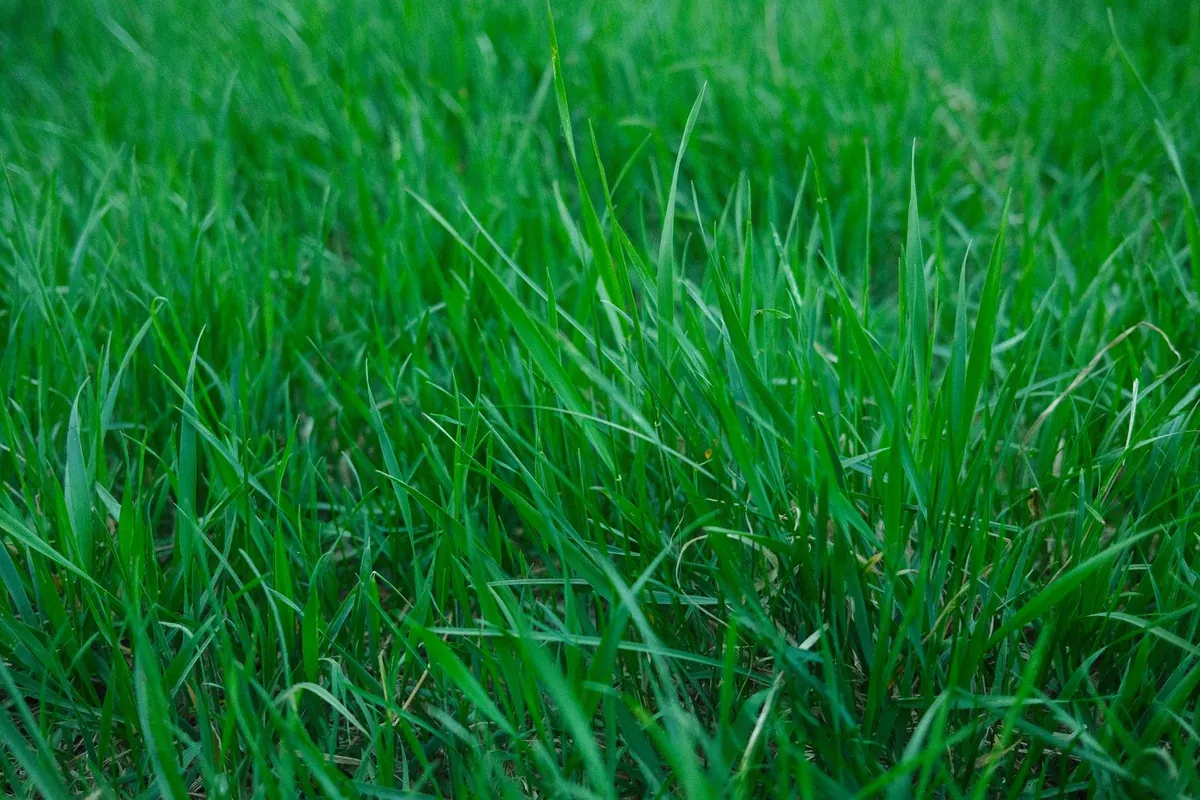
Run this check after the first heavy rain of the season, not on a dry day. Dry surfaces hide the drainage and odor waves, and a wet walk-through catches what a dry one misses. Save the photos from each annual check; the side-by-side is what shows the real change.
When a Repair Still Makes Sense
A repair makes sense when the failure is local, the surrounding turf is sound, and the cost of disruption is small. On an artificial turf installation with one lifted seam in an otherwise healthy field, repair is a clean call. A small tear near a step, with the same dye lot still on hand, is a clean patch call. An infill top-up on a lawn whose backing still flexes is clean maintenance.
Repairs buy six to eighteen months of buffer on a watch item; they do not reset the calendar. A patch on a faded lawn looks like a patch on a faded lawn, and the eye reads the difference within a season. Treat repair as a buy-time tool.
The hard line is at the backing. Once a corner lifts and the backing has gone white and brittle, no local fix holds the structure together. Repairing one zone on a brittle backing is like patching old furniture with fresh glue: the shape comes back, the feel does not.
When Replacement Is the Smarter Move
Three triggers point to replacement rather than repair. The first is a brittle backing, because no local fix restores structure. The second is tears spread across multiple zones, because the field has aged in step. The third is drainage failure combined with persistent odor, because that points to the sub-base and the backing together. When an artificial turf installation reaches any one of these, the conversation shifts from patch to plan.
This is the moment in what happens to artificial grass after years of use where the next round starts. The replacement window is wider than most owners realise. A lawn that still stands up underfoot but has clear signs across two or three waves is at the planning window, not the emergency window.
That window is the time to set the next spec, sample the next roll, and lock the next batch card before the old lawn stops being walkable. Treat the next artificial turf installation as a spec-driven project, not a patch-on-patch repeat. The parameters that decided the failure order on this lawn are the parameters to set differently next time: pile height and density, backing choice, roll width, and infill plan. Each one is a deliberate call on the next commercial grass order.
Specifying a Turf That Lasts the Next Round
Below we map what happens to artificial grass after years of use back to the next spec. The fastest way to push the next replacement out of the calendar is to set the spec by what failed last time. Map each wave you ticked in the self-check to a parameter on the next order. Every parameter you set is a deliberate call on the next artificial turf installation.
Roll width is the first call. A 2 m by 25 m roll fits small areas and is the most economical. A 4 m by 25 m roll covers most residential and light commercial layouts with the fewest seams. A 5 m by 25 m roll removes a seam line on big terraces and sports runs.
Backing family is the second call. PP+Net, PP+non-woven, and PP+Grid cloth cover most uses. PU is the optional upgrade for heavy-wet, rooftop, or pet zones where hydrolysis and tearing drive the failure wave.
Pile height and density belong to the traffic map of the site. Lock one dye lot and one batch card across every roll so the colour card travels with the order.
Old Turf Looking Flat and Shiny?
Age shows in matted pile and dry seams. Replacement rolls can match the old spec. Factory-direct pricing, typically 30–50% below market on like-for-like specifications.
Questions to Ask Before Re-Turfing
Bring this list to the next supplier conversation. The order matters: start with backing, then roll width, then batch card, then pile spec, then infill, then logistics.
- For the rooftop, balcony, and pet zones on this site, is PU backing recommended over PP+Net?
- Can the largest open area be supplied as a 5 m roll by 25 m to remove a seam line?
- Will you lock one dye lot and one batch card across every roll on this order?
- What pile height and density do you recommend for the highest-traffic zone of this site?
- Which infill family and rate do you suggest for the projected foot-traffic and pet load?
- If a future patch is needed, how do you keep the replacement roll on the same dye lot as the original order?
- What is the sample dispatch window for a custom spec, and what is the run-length MOQ?
The answers to these questions decide whether the next lawn fails on the same wave as this one, or whether the next wave arrives later in the calendar.
How to Verify Samples Before Commit
Commit on a sample, not on a PDF. Standard samples are 20 cm by 20 cm, and we usually ship three to four pieces so each parameter gets its own cut. The customer pays the freight; the production cost is on us. Standard samples leave the dock in four to six days by DHL or FedEx, with seven to nine days to remote destinations.
Custom samples, sized to a project-specific pile height or backing, add ten to fifteen days to the production window on top of the dispatch time. Plan the sample request ahead of the procurement window so the custom run does not eat into the install calendar for the next artificial turf installation.
On the bench, check four things: spring-back by feel, pile height against the spec card, backing for chalkiness or cracking, and colour card against the previous batch for multi-phase sites.
A sample that passes all four is the sample to commit on.
Frequently Asked Questions
How soon does artificial turf usually start to flatten?
On a typical residential lawn, flattening shows up first on high-traffic paths, chair bases, and pet runs within the first few years. Brush against the pile; if the blades stay flat after five to ten minutes, polymer fatigue is setting in.
Can a lifted seam be repaired locally?
A single lifted seam on a sound lawn can usually be re-bonded with a urethane adhesive. When several seams lift across the field, the issue is the backing age or the sub-base, not the seam itself.
Does slow drainage always mean a clogged backing?
Not always. Slow drainage can come from clogged backing holes or from a settled sub-base. A two to three minute hose test shows whether water clears; if it does not, the grade or the backing has moved.
Do dye patches actually work on an old lawn?
Dye patches work on small, recent spots and on even-toned lawns. They do not blend with a faded mid-lawn zone, and they do not match an older dye lot. On a multi-year lawn with visible colour drift, replacement is the cleaner read.
How should PU backing be specified for the next install?
For rooftops, balconies, pool decks, and pet runs, request PU as an optional upgrade against PP+Net, PP+non-woven, or PP+Grid cloth. PU holds up better against hydrolysis and tearing in heavy-wet or high-impact zones and pushes the next backing wave out.
How does a project buyer get an FOB quote from a factory-direct supplier?
Send the spec sheet (roll width, pile height, backing, infill plan, total square metres, dye lot) to the factory and ask for an FOB quotation. Standard samples ship in four to six days, custom samples add ten to fifteen.
 English
  Arabic
  French
  German
  Portuguese
  Russian
  Spanish