The third rainy Saturday in a row, and the swing set is sitting in its own mud ring again. The grass under it gave up sometime in October, the mulch has migrated to the fence line, and the kids have been banned from the yard since Tuesday. We run a turf factory floor, and parents send us photos of this exact scene all autumn long.
What parents usually want first is not a product pitch. It is an honest answer to three questions: what happens when a child falls, whether the savings are actually real, and how hot the surface gets in July. Synthetic playground turf for homeowners has moved well past the novelty stage, so those questions deserve sourced numbers instead of brochure lines. Here is how we answer them, including the parts most vendor pages skip.
Why Backyard Play Areas Break Down Before Kids Outgrow Them
Backyard play equipment concentrates wear in a way an ordinary lawn never sees. Every landing under the swings compacts the soil a little more, until the root zone can no longer hold either surface or moisture. The CPSC is blunt about the result: grass and dirt are not considered protective surfacing, because wear and environmental factors reduce their shock-absorbing effectiveness. Its home playground checklist adds that many backyard playsets sit on dirt or grass that cannot adequately protect a falling child.
The failure is seasonal and predictable. Rain turns the worn patches to mud and the yard closes for days. Summer brings the mow, water and fertilise loop that never quite catches up. Loose bark and mulch get kicked to the edges within weeks, exposing the hard ground underneath. The bugs and pollen that come with a fading lawn turn every play session into a wash-down afterwards.

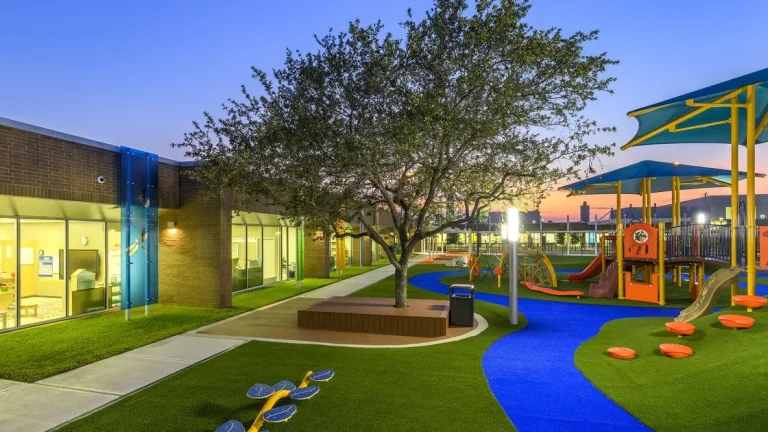
This is where synthetic playground turf for homeowners diverges from the public-park story. We supply the rolls behind school yards and city parks too, and our playground artificial grass range for schools and public parks carries the same systems. A family backyard is a different calculation. The traffic is smaller, the fall heights are lower, and the decision rests on five very specific failures:
- Bald mud rings under swings and slide exits that no amount of reseeding survives
- The seasonal watering, mowing and fertilising burden that scales with the whole lawn, not just the play zone
- Bugs, pollen and the after-play clean-up of muddy shoes, knees and hallway floors
- Loose mulch kicked apart within weeks, always needing another top-up
- Rain-day closures that put the garden off limits for days at a time
Answering the Safety Questions Parents Ask First
Falls and What Is Underneath
Nothing about any surface removes falls from childhood; the question is what happens when a child lands. The CPSC handbook sets out the rating logic: a surface carries a critical fall height, and protective surfacing should meet or exceed the equipment fall height beneath it. That single requirement is the first thing we check before recommending synthetic playground turf for homeowners, because a surface that cannot match the tallest structure is decoration. Loose fill needs roughly 12 inches of wood chips or mulch to attempt the same job, per their checklist. More than 200,000 emergency room visits a year begin with a child falling onto the ground.
When a foam shock pad sits under the turf, its thickness is matched to that same critical fall height; taller structures call for thicker pads. The surface is a system, not a roll laid over dirt.
Infill, Hygiene and Toddler Habits
Toddlers test a surface with their hands and their mouths, and the CPSC handbook advises avoiding loose-fill surfacing where children frequently place objects in their mouths. A bonded surface leaves nothing loose to pick up or scatter. Our rolls are produced from virgin PE and PP, non-toxic and lead-free, with no recycled material of unknown origin in the fibre or backing. Spills and pet messes rinse away with mild soap and water. For the full safety breakdown of playground turf systems, infill options included, we keep a separate guide.
The Honest Heat Conversation
The heat conversation deserves numbers, not brochure lines. Surface temperatures measured far above irrigated natural grass are the honest headline. University of Nevada Las Vegas researchers recorded green artificial turf peaking about 69 degrees Fahrenheit above irrigated grass, with a high of 169 degrees. Penn State’s Center for Sports Surface Research puts typical sunny-day readings 35 to 55 degrees above natural grass. Those figures make sunlight a design input: shade sails, lighter colours, a pre-play rinse and morning play hours keep the surface comfortable when the plan respects your yard’s sun.
No turf stays cool in full sun. Read your yard’s afternoon sunlight before you read any product sheet, and let that map choose the colour and the shade plan.
Where the Savings Come From: Numbers That Check Out
The water story is the easiest receipt to check. Per EPA WaterSense, outdoor water use accounts for roughly 30 percent of household use nationally, and far more in drier regions. A play lawn sits inside that share, and it is the part that gets sprinkled, mowed and fertilised whether or not anyone plays on it that week. For synthetic playground turf for homeowners, this is the number the savings conversation starts from.
Then there is the maintenance the water was feeding. Mowing, edging, fertilising, reseeding and repairing worn patches all cost either your Saturdays or a service contract. These are the receipts we ask parents to check before they believe any savings claim:
- A natural lawn drinks an estimated 44 gallons per square foot every year, per the City of San Diego’s water utility
- A poorly maintained automatic irrigation system can waste up to 25,000 gallons a year, per EPA WaterSense
- Per Tucson Water, its lawn replacement program has retired more than 105,000 square feet of grass and saves close to 4 million gallons a year
- Fertiliser, herbicide and pesticide purchases drop to zero, because the surface needs none of them to stay green
- The weekly mow, edge and bag cycle ends, along with the repair runs after every rainy week
Add those lines up and what disappears is not just the water. It is the weekly task list: the mowing, the sprinkler adjustments, the reseeding that never catches up with wear. What remains is an occasional rinse and a brush, which is about as low maintenance as a play surface gets.
Ready to Retire the Muddy Patch?
Factory-direct rolls run 30-50% below market prices on a like-for-like spec – send us your backyard sketch and we will size the play area with you.
Specifying Turf That Fits a Family Backyard
If the failure list sounds like your October and the receipts hold up against your water bill, the remaining question is specification. Synthetic playground turf for homeowners is not one product; it is a range, and family backyards sit in a particular corner of it.
Pile Height and Density for Play Zones
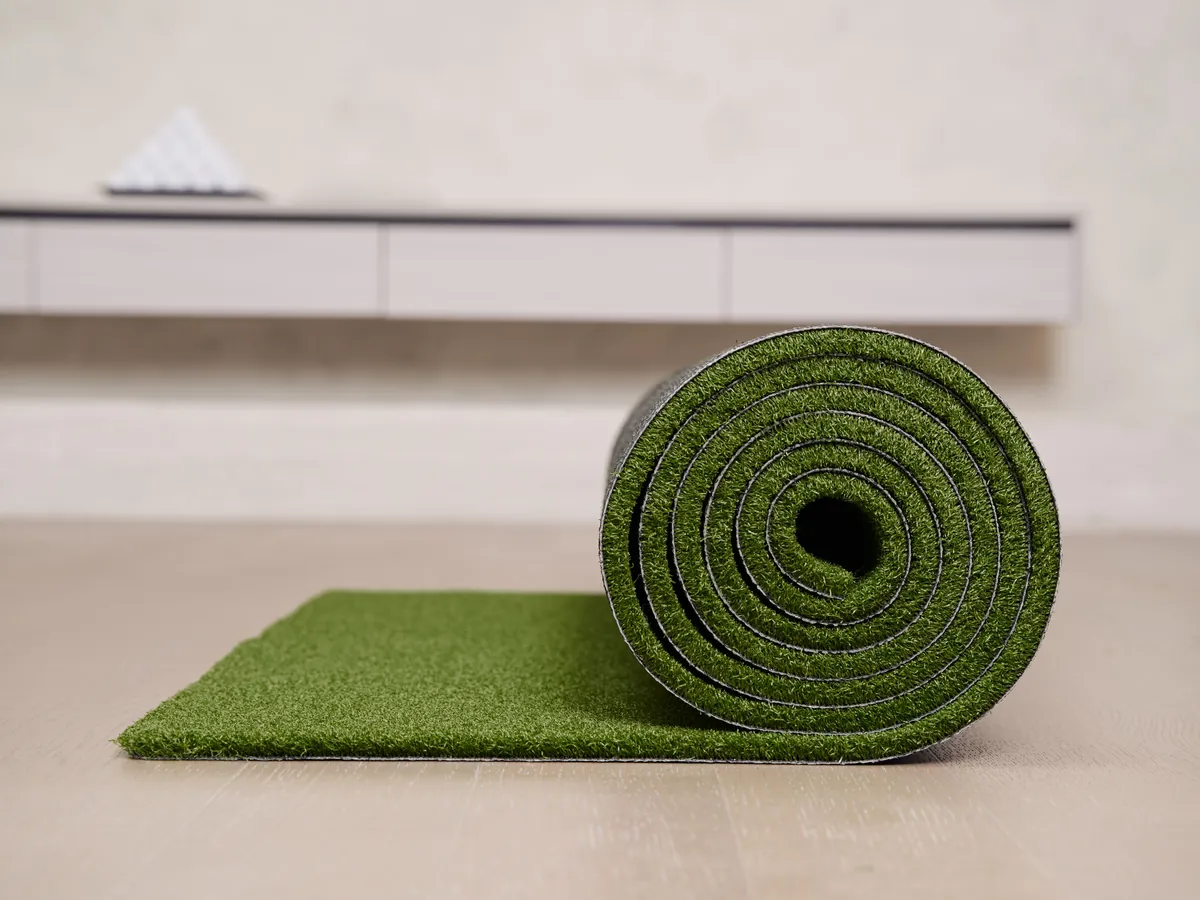
Across our playground line the pile heights span 5 mm to 50 mm over 13 surfaces, and the two ends do different jobs. Shorter, denser piles take the abrasion under swings and slide exits; taller, more open piles feel better for tumbling on open lawn. For most family yards the honest answer sits in the middle, tuned to how hard the play zone works. Density matters as much as height: a sparse tall pile mattes down under traffic, while a dense shorter one springs back.
Edges, Fall Zones and the Six-Foot Rule
The CPSC checklist calls for protective surfacing extending at least 6 feet from equipment in every direction. In front of and behind swings, it extends to twice the height of the suspending bar. Walk a tape measure around your frame before you order anything. Roll width becomes a design decision here: narrower 2-metre rolls let a small backyard run fewer seams along awkward edges. We keep the full playground turf buying checklist for the details, including edge and fall-zone planning.
A Cleaning Routine You Can Actually Keep
Low maintenance does not mean no maintenance, and a routine you will actually keep beats a perfect one you will not. A weekly rinse clears dust, pollen and pet residue. A monthly brush lifts the pile where the swings flatten it. Spills and bird mess clean up with mild soap and water. That is the entire list, and it replaces the lawn’s workload rather than adding to it.
Deciding With the Trade-offs on the Table
The honest ledger starts with the costs. The upfront spend sits well above a load of mulch or a few rolls of seed, and it arrives before any of the receipts above.
Heat management is an ongoing commitment, not a one-time setting. And the weekly rinse is real: skip it for a month and the surface will tell on you.

Against that: play does not close for the weather, and the mud ring disappears from the family vocabulary. The surface is still there when the kids who learned to walk on it head off to school. Quality rolls carry a service life of up to 10 to 15 years in commercial settings, and a backyard is far gentler duty than that. The arithmetic stretches across a decade, not a season.
The decision framework we give neighbours is simple. Match the shock pad to the tallest structure’s fall height, the colour to your sunlight, and the cleaning routine to your family’s habits. If you want the full pros-and-cons breakdown before committing, we have laid it out separately. And if the trade-offs read as manageable rather than discouraging, the muddy patch under your swing set is already halfway retired.
Frequently Asked Questions
Short answers to the questions parents ask before they commit to synthetic playground turf for homeowners, with every number keeping its source.
Is synthetic playground turf safe for kids?
When the system matches the equipment fall height and is installed correctly, it behaves as engineered surfacing. Worn grass and dirt, which the CPSC does not count as protective, do not. Nothing removes every risk; matching moves the odds.
Will it burn my kids’ feet in summer?
It can get uncomfortably hot. University of Nevada Las Vegas researchers recorded green turf up to 169 degrees Fahrenheit on extreme days, about 69 degrees above irrigated grass. Shade, lighter colours, a quick rinse and morning play hours manage it.
How much water does it actually save?
It eliminates lawn watering entirely. Per EPA WaterSense, outdoor use is about 30 percent of household water nationally; per the City of San Diego, a lawn drinks an estimated 44 gallons per square foot yearly.
Is it safe for toddlers who put things in their mouth?
The CPSC advises avoiding loose-fill surfacing for toddler areas precisely because of mouthing behaviour. A bonded surface leaves nothing loose to pick up, and our rolls use virgin PE and PP with no recycled content of unknown origin.
Does the dog make it smell?
Not if you rinse like the dog deserves. The backing drains, so a weekly hose-down plus an enzyme cleaner for the favourite spot keeps odour out of the yard.
What maintenance is left for me?
A weekly rinse, a monthly brush to lift the flattened pile, and mild soap for the occasional spill. That is the whole routine, and it replaces mowing, watering, fertilising and reseeding rather than adding to them.