
Buyers keep asking: is there a difference between indoor and outdoor artificial turf? Yes — and the two grades are not interchangeable. Both come from the same tufted construction, but the engineering targets diverge sharply: outdoor turf fights sun, rain and heat, while indoor turf serves controlled spaces. An indoor-rated roll placed under full sun can fade, turn brittle and fail long before its expected service life. That mismatch is the most common and costly selection mistake in this niche.
We watch that split get built into the product at our own line. UV stabilizers go into the compound before the yarn is extruded, drainage holes are punched in a perforating step, and pile height, density and colour are set as factory parameters. Relyir runs both grades off the same tufting base, so we ask buyers one question before anything else: where will this artificial turf installation live?
What Separates Indoor Turf From Outdoor Turf
At first glance, “is there a difference” rarely has a visible answer — a sample board hides the gap. Two rolls that look identical on top may differ completely underneath: one carries UV-stabilized yarn and a perforated backing, while the other trades weather armor for softness and even density. The difference lives in three places — fiber chemistry, backing construction and drainage.
Picture a facility manager holding one spec sheet against two projects: a gym floor retrofit and a rooftop deck. The gym wants short pile, even density and a surface that cleans like carpet. The rooftop needs sun-stable fibers, permeable backing and heat tolerance — same buyer, same budget line, two different rolls. For commercial artificial turf installations, that distinction decides whether a surface lasts a decade or a season. Our indoor gyms and commercial facilities overview shows how those specs translate floor by floor.
Why UV Stabilization Matters Only Outdoors
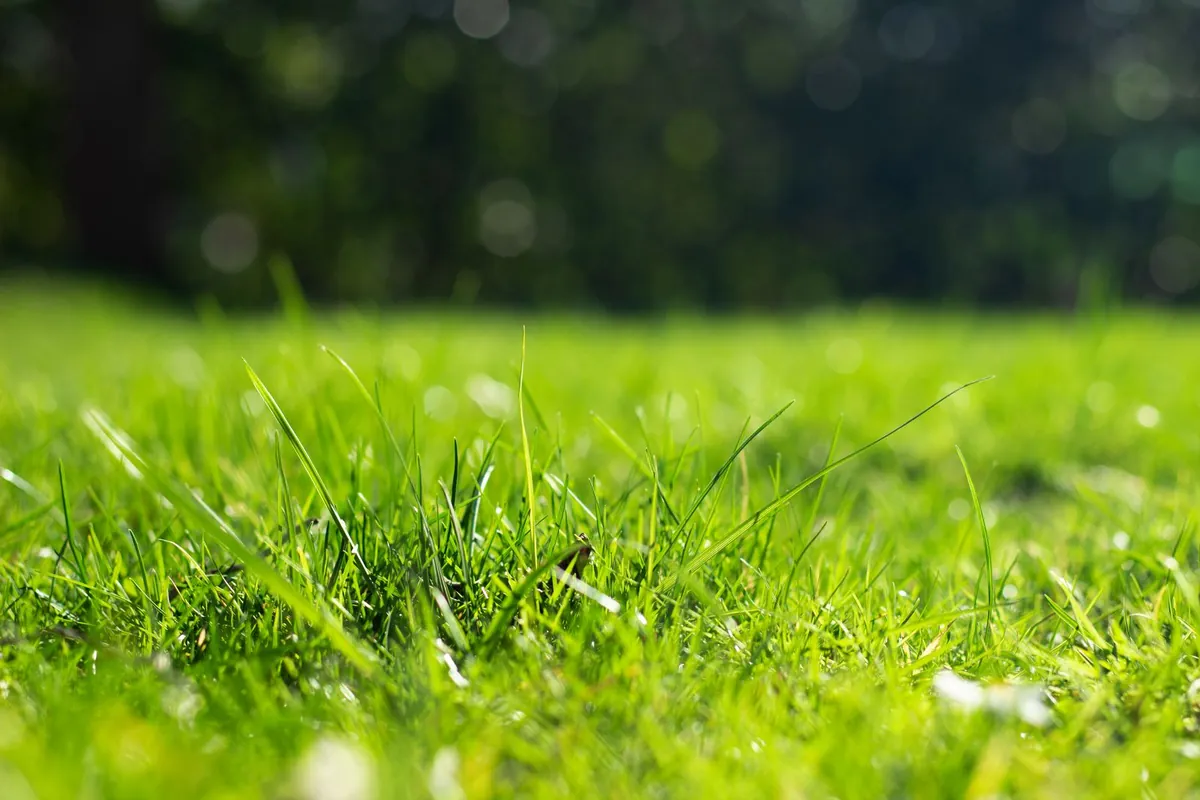
Ultraviolet radiation degrades synthetic polymers: it discolors pigment and drains mechanical strength until fibers snap instead of spring back. UV stabilizers counter that process, and on an outdoor roll they are not an optional coating. They are blended into the compound at the compounding stage and locked in as the yarn is extruded, so protection runs through the whole fiber. That is what separates a roll that holds its colour for years from one that washes out in a season — the polymer science behind UV degradation is well documented.
Outdoor artificial grass is therefore UV-stabilized as a baseline, while indoor turf can prioritize softness and colour depth because sunlight never reaches it. Heat adds to the case: in direct summer sun an outdoor surface can climb to 150–165°F, which stresses both fiber and pigment. Indoor projects never face either problem. Aging is where the “is there a difference” question settles fastest: UV exposure writes the answer within seasons.
The difference between indoor and outdoor artificial grass is widest under direct sun, which is why our residential artificial grass range shows what a sun-rated build includes for outdoor lawns.
How Drainage Backings Differ by Environment
Outdoor backing is engineered around water management. Rain has to leave the surface quickly, or it pools, breeds mold and works into the subbase. That is why outdoor rolls carry perforated or permeable backing with drainage holes and channels, and why outdoor artificial turf installations live or die by their backing.
Perforating is an in-process step on our line. Holes are punched after the backing is coated and dried, on set spacing and diameter, before the roll is wound up. Drainage is a manufacturing decision, not something a crew improvises with a knife on site.
Indoor turf skips rainfall drainage but still has to handle spills, wash-down routines and humidity in gyms, dog training rooms and indoor play areas. On outdoor dog runs the drainage rate becomes the headline spec, because pet urine and wash-downs demand fast evacuation. Our artificial grass for dogs guide covers pet drainage and odor management in detail.
Pile Height and Face Weight by Setting
Indoor turf runs short — roughly 10–15 mm (3/8 to 5/8 inch) — for training floors, gyms and ball-roll surfaces where equipment sits on the turf. A taller pile would trip feet and upset rolls. Outdoor landscape turf runs taller, from about 30 mm up to 2 1/2 inches, to deliver a natural look and cushioning underfoot.
Face weight follows the same logic. Outdoor surfaces take traffic and weather at the same time, so density has to hold up against both, while indoor surfaces chase an even, carpet-like face weight instead.
Both numbers are factory parameters. Pile height, density, colour and yarn shape are set at the tufting head for each production run. A buyer can therefore spec an indoor grade and an outdoor grade from the same line without changing products. Our customization page lists the full adjustable range, from backing composition to roll size.
Fiber Materials Across Indoor and Outdoor Use
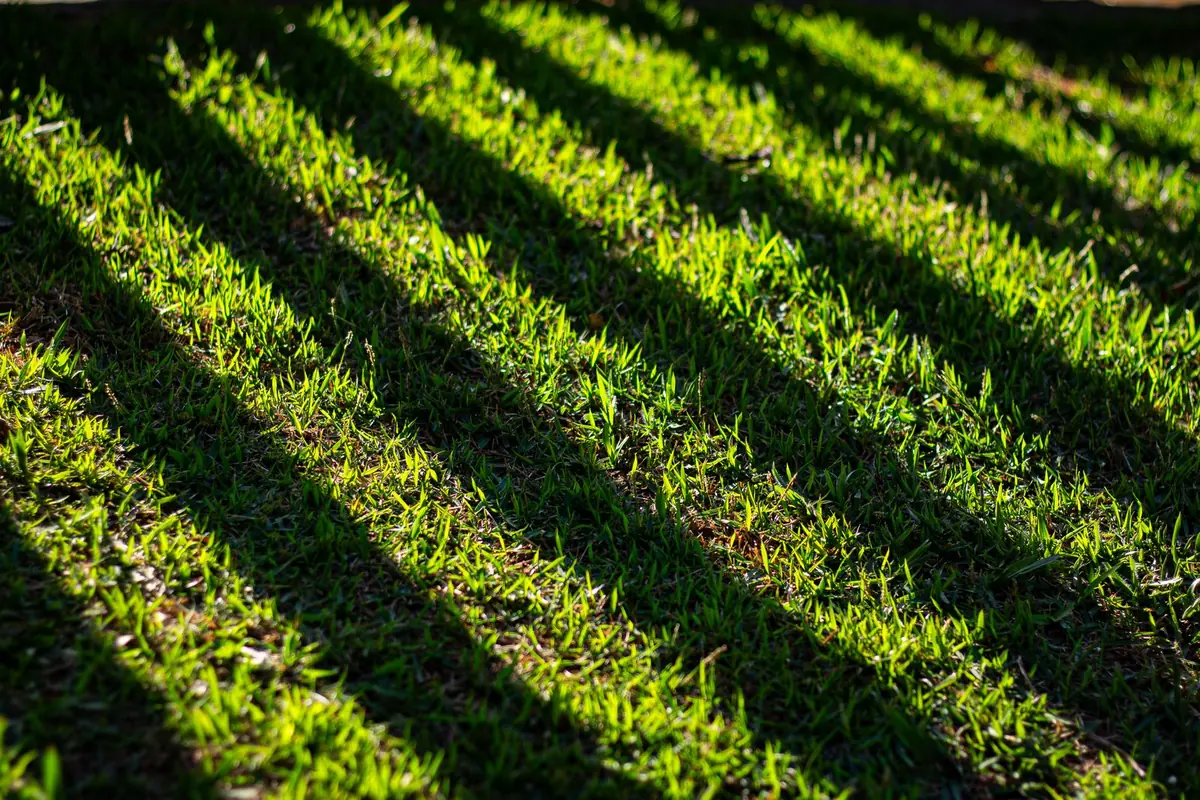
Three yarn families dominate the market: polyamide, polypropylene and polyethylene. Here, “is there a difference” gets a materials answer. Outdoor builds commonly pair polyethylene monofilament with polypropylene thatch — the brown bottom fibers that give landscape turf its natural depth, a detail indoor products usually leave out. Polyethylene is the most water-resistant yarn option, which also helps with pet odor control.
Nylon brings traction and spring-back, which is why it appears in putting greens. Indoor builds favor softer, denser constructions for the places where bare feet and training equipment meet the surface.
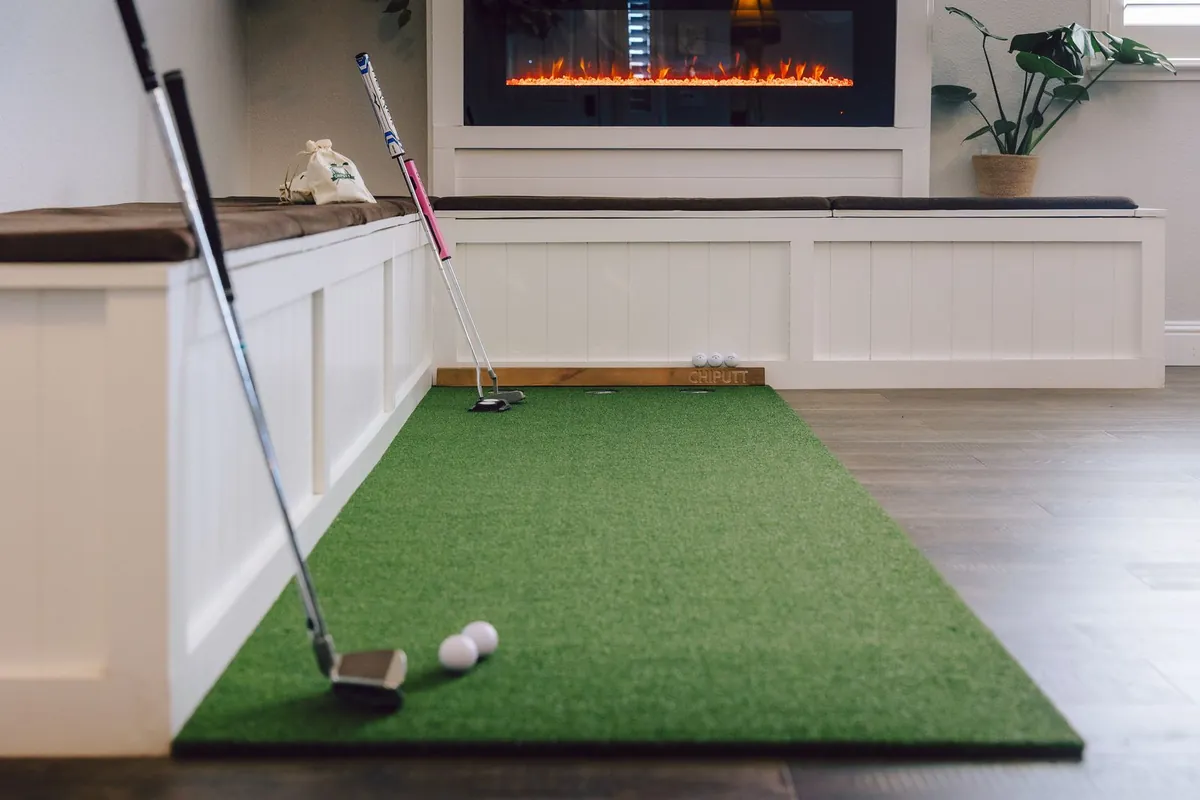
Infill splits the two worlds as well. Outdoor systems typically add sand or rubber for ballast, fiber support and cushioning, while indoor installations often run infill-free on their dense short pile. Indoor and outdoor putting greens show the split clearly. Our putting green guide explains how indoor greens run shorter pile for a faster, more consistent ball roll, while outdoor greens need UV-stabilized yarn and a drainage layer underneath.
Sampling and Spec Checks Before You Commit
Specs beat sample boards every time. Before committing to a batch, check five values against the environment: UV stabilization level, backing permeability, pile height, face weight and roll width. Then ask the factory how each value is achieved — the answer should reference production steps, not adjectives.
Indoor Roll Speced Like an Outdoor One?
UV and drainage needs differ by where the roll sits. We build for the location. We quote off our own line, typically 30–50% under market for matched specifications.
Cleaning Routines for Indoor and Outdoor Turf
Indoor surfaces collect far less debris. Routine vacuuming or sweeping, prompt spill management and a watchful eye on humidity keep gyms and pet areas fresh. The turf never faces leaves, mud or rainwater, so the workload stays close to carpet care.
Outdoor turf needs a steadier routine. Clear debris, rinse occasionally, brush the pile upright, and inspect drainage after heavy rain so water keeps moving through the backing.
The no-mow benefit holds in both settings. Neither surface needs herbicides, pesticides or fertilizers, which trims maintenance budgets in the same way indoors as out.
Where Each Turf Type Performs Best
Indoor wins where consistency matters. Gyms, training rooms, indoor play areas and putting studios hold the same feel year-round, untouched by weather.
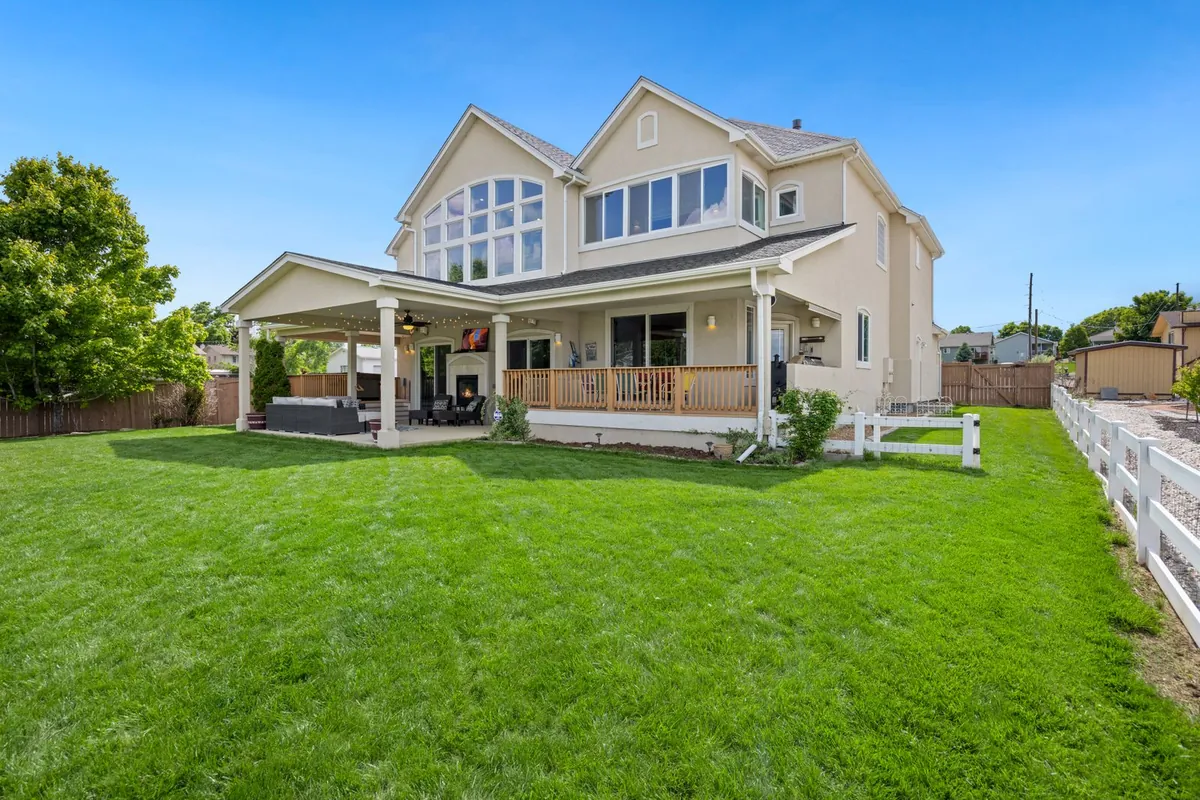
Outdoor wins where weather is the opponent. Lawns, pet runs, playgrounds and sports fields live or die by UV, rain and heat management, and sports fields are the most demanding outdoor artificial turf installations of all. Commercial-grade outdoor turf serves up to 10–15 years when the specification matches the site.
Mixed portfolios are the norm for distributors and facility managers, so match the specification to the environment rather than to the sample that looks best under showroom lighting. The table below condenses the differences into one reference:
| Specification | Indoor turf | Outdoor turf |
|---|---|---|
| Pile height | ~10–15 mm (3/8–5/8 in) | ~30–65 mm (1.2–2.6 in) |
| UV stabilization | Not required | Compounded into the yarn |
| Backing | Non-perforated is fine | Perforated for drainage |
| Infill | Usually none | Sand or rubber typical |
| Cleaning load | Vacuum, sweep, wipe spills | Debris, rinse, brush, drainage check |
| Commercial service life | Tends to reach the upper range | Up to 10–15 years |
For surfaces that serve children, our artificial grass for playground guide shows how indoor and outdoor play areas differ in pile and padding.
Frequently Asked Questions
Can outdoor artificial turf be used indoors?
Yes, physically — an outdoor roll can be installed indoors. UV-stabilized yarn and drainage-oriented backing are tuned for weather rather than indoor feel, so an indoor build usually gives you a softer, denser surface for gyms and training rooms.
Can indoor artificial turf be installed outside?
Not recommended. Without UV stabilization the fibers fade, turn brittle and fail well before their expected service life. That makes this the most common and costliest environment mismatch when specifications get mixed up.
Does indoor artificial turf need infill?
Usually no. Dense short-pile indoor turf works infill-free, while outdoor systems typically add sand or rubber for ballast, fiber support and cushioning underfoot.
Does indoor turf have drainage holes?
Most indoor products skip perforation because rain never reaches them. Spills are handled through routine cleaning, though humid or wash-down areas can still specify a permeable backing.
How long does artificial turf last indoors versus outdoors?
Commercial outdoor turf commonly serves up to 10–15 years. Sheltered indoor use avoids UV and rain, so surfaces tend to reach or exceed the upper end of that range.
How do you clean artificial turf indoors?
Vacuum or sweep it like carpet and wipe spills promptly. Pet training rooms and gyms also benefit from an occasional damp mop and good ventilation to manage humidity.
 English
  Arabic
  French
  German
  Portuguese
  Russian
  Spanish