A 50mm pile is sold as the premium lawn, and in most gardens it behaves like one. The failures that reach a supplier’s desk are narrower than the marketing suggests. Four patterns dominate. Fibre leans and stays down, infill walks out of the pile, water stops moving, and the surface runs hotter than the air above it. Those four mechanisms carry most of the 50mm artificial grass risks a buyer actually pays for.
Most 50mm artificial grass risks begin inside the pile rather than in the yarn. We inspect pile recovery and tuft withdrawal before a roll is wrapped, and the matting and infill complaints reaching us follow the same two patterns each season. Traffic compresses the fibre, and sand leaves it. A buyer who measures both before signing sees the mechanism instead of the adjective.
Where a 50mm Pile Carries Extra Risk
Extra risk on a 50mm pile comes from one geometric fact: the fill line sits low, so most of the blade stands free. ESTC classes long pile as anything above 30 mm, which places 50mm at the upper end of the landscaping range. FIFA records free pile height as a field property under test method 2024-22, and sets no pass or fail limit on it.
The fill definition makes the same point in numbers. FIFA treats a system filled to no more than 25% of pile height as mineral-stabilised, and anything above that as mineral-filled. On a 50mm pile the 25% line sits at 12.5 mm of fill depth, so a light dressing leaves roughly 37 mm of blade exposed above the sand.
The Six Mechanisms at a Glance
Six mechanisms account for most documented 50mm artificial grass risks, and each one has a trigger, a check and an action. The matrix is a map rather than a verdict: find the row that matches your site, then run the check before the specification is fixed.
| Risk | Trigger condition | What you can measure | Action to reduce it |
|---|---|---|---|
| Pile matting and lean | Repeated traffic on one line; brushing across the grain | Recovered thickness after a 50 kPa foot load for 24 h (J-STAGE trial) | Higher pile mass, plus a fixed weekly brushing pass |
| Infill displacement | Doorways, pet runs, wind, heavy rain on light fill | Fill depth against the 12.5 mm line (FIFA TM 2024-19) | Top up from stock; measure monthly at wear points |
| Blocked drainage | Compacted mineral or plant-based fill; silt in the backing | Infiltration against 150 mm/h (ESTC, EN 12616) or 180 mm/h (FIFA) | Keep drains clear; re-test after the first wet season |
| Maintenance load | Pile above 30 mm (ESTC long-pile class) under regular use | Brushing hours per week against the 10:1 ESTC ratio | Shorter pile, or budget the brushing hours up front |
| Surface heat | Direct sun, clear sky, light wind | Surface temperature at midday against air temperature | Plan shade, and test before feet or paws use it |
| UV colour and brittleness | Long exposure with no shade | Grey scale 3 colour hold; 25% breakage change; 40% brittleness (FIFA) | Check UV test hours (ESTC minimum 5,000 h) in the sample pack |
Read the middle two columns first. A risk with no measurable indicator is an opinion, and a risk with no trigger condition cannot be designed out before the turf is cut.
Pile height, density and backing all move those rows, which is why the specification has to be read next to the site rather than on its own. The artificial grass roll range sets out the widths and pile options this matrix assumes.
Blades That Lean, Curl and Stay Flat
Matting is the first of the 50mm artificial grass risks, and it is measurable. A fibre-recovery trial pressed samples under a 120 × 120 mm foot at 50 kPa for 24 hours, then read thickness with a 0.01 mm gauge.
Results spread widely across samples. One lost 56.1% of its thickness two minutes after unloading, 18.5% after an hour, and 6.8% after 24 hours. Another lost 64.1% at two minutes and was still 13.5% down a day later, the largest residual set in the trial. The best sample lost 12.4% at two minutes and 3.8% at 24 hours.
About 88% of the initial loss came back within 24 hours on the softest sample, leaving a permanent set of 6.8%. The write-up of a fibre-recovery trial on long-pile surfaces ranks the samples the same way, so the comparison survives a second reader. What the trial cannot tell you is how your own site loads the pile.
Where the Weight Sits
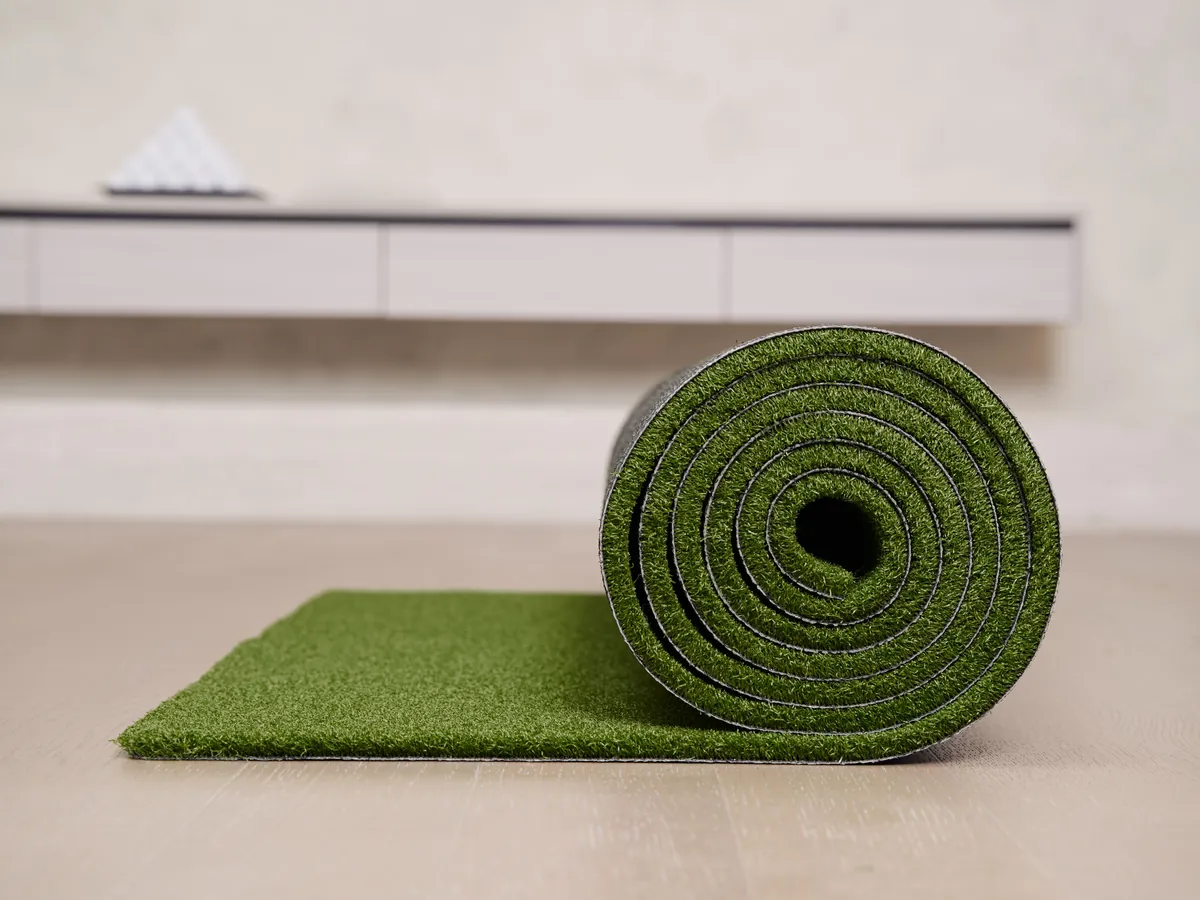
Mass is the part a buyer can check on paper. At 1,600 g/m², a 100 m² lawn carries 160 kg of pile yarn, and that is the fibre which has to spring back after every footstep. The two best-recovering samples in the trial were also the heaviest, at 1,600 and 1,750 g/m².
Density belongs in the same conversation as height, because height alone decides how far a blade can travel before it lies down. A tall, light pile has the longest lever and the least fibre to push back with.
What a Directional Lean Looks Like
- A walked line that stays pale and flat for days after rain
- Blades lying one way across a whole area, not just along a path
- Fibres that feel stiff at the tip and soft at the base
- A pile that stays down in the strip between two doorways
Brushing fixes the symptom only when it follows a pattern. ESTC notes that brushing without an organised driving plan lets the pile develop a directional lean, and a lean is the shape that resists recovery.
Brushing on impulse makes a lean worse. ESTC’s remedy is a fixed plan: the same direction, the same sequence, the same day each week, so the fibre is lifted rather than combed flat.
How Infill Moves and Leaves Bald Patches
Infill loss is the second of the 50mm artificial grass risks, and it is the one buyers notice last. Sand does not vanish; it moves. It walks out at doorways, blows off in wind and floats away in heavy rain, and light plant-based fills travel furthest.
FIFA measures infill depth in the field and records the result for information only, with no pass or fail line attached. Its splash test is written the same way: a note against a 1.5% threshold rather than a band a product has to clear. FIFA’s surface research on infill depth and performance sets out both, and the migration item is recorded for information as well.
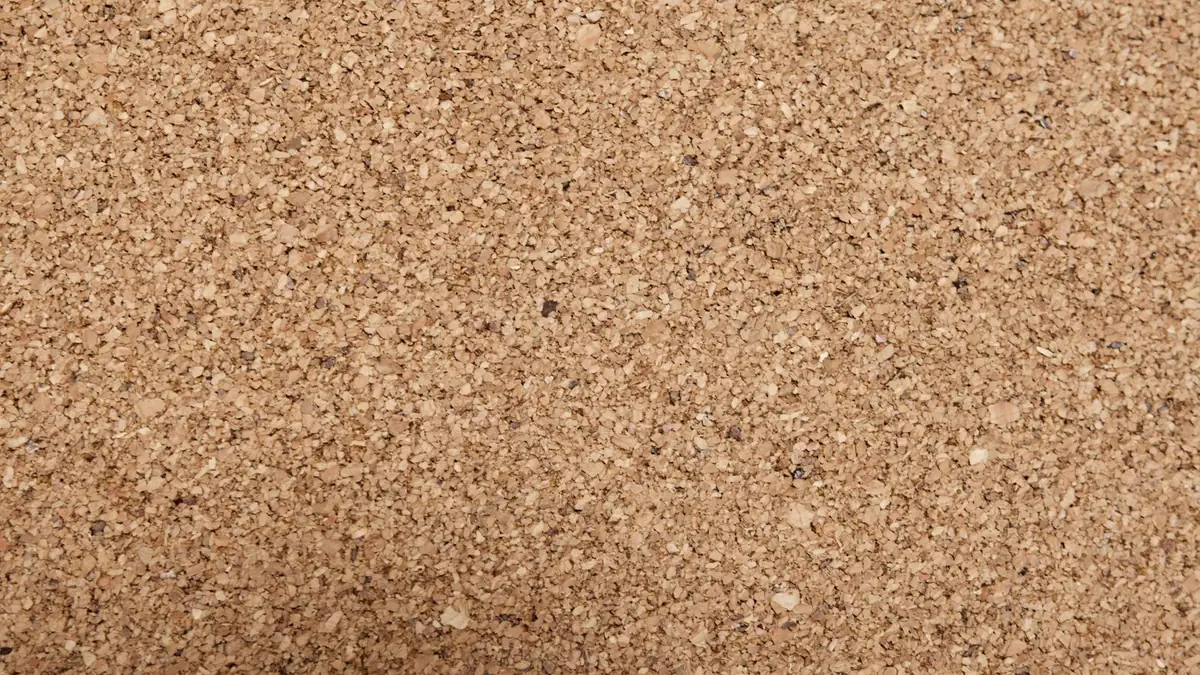
Depth is the number to watch. A 50mm pile with a light dressing carries about 12.5 mm of fill, and that layer is what keeps the base of the blade upright. Once it drops, more blade stands free above the sand, and the matting described above follows.
How Often to Top Up
ESTC puts the check on two clocks: a daily or weekly look at high-wear points, and a monthly depth measurement in the busiest areas with a top-up from stock. A garden has fewer wear points than a pitch, so that calendar is a starting rhythm rather than a rule.
The edge of a lawn is where the loss concentrates, because that is where feet leave the surface and where wind lifts the light fraction. A bald patch at a doorway is a measurement site, not a cosmetic flaw.
Three points are enough for a reading: the doorway, the middle of the walked line, and a corner nobody uses. The gap between the first two gives the loss rate, and the corner gives the original depth.
When Water Stops Going Through
Water leaves a lawn through the backing and through the drain below it, and a 50mm section has more open pile to trap debris on the way down. ESTC sets 150 mm/h as the minimum permeability for landscaping turf meant to pass water, tested to EN 12616 with the infill left between the blades. That figure equals 2.5 mm of rain per minute.
FIFA asks for more on a complete pitch system: above 180 mm/h, which is 3 mm per minute and 20% higher than the landscaping minimum. The carpet alone has to reach 180 mm/h with a single-ring infiltrometer, sealed before infilling.
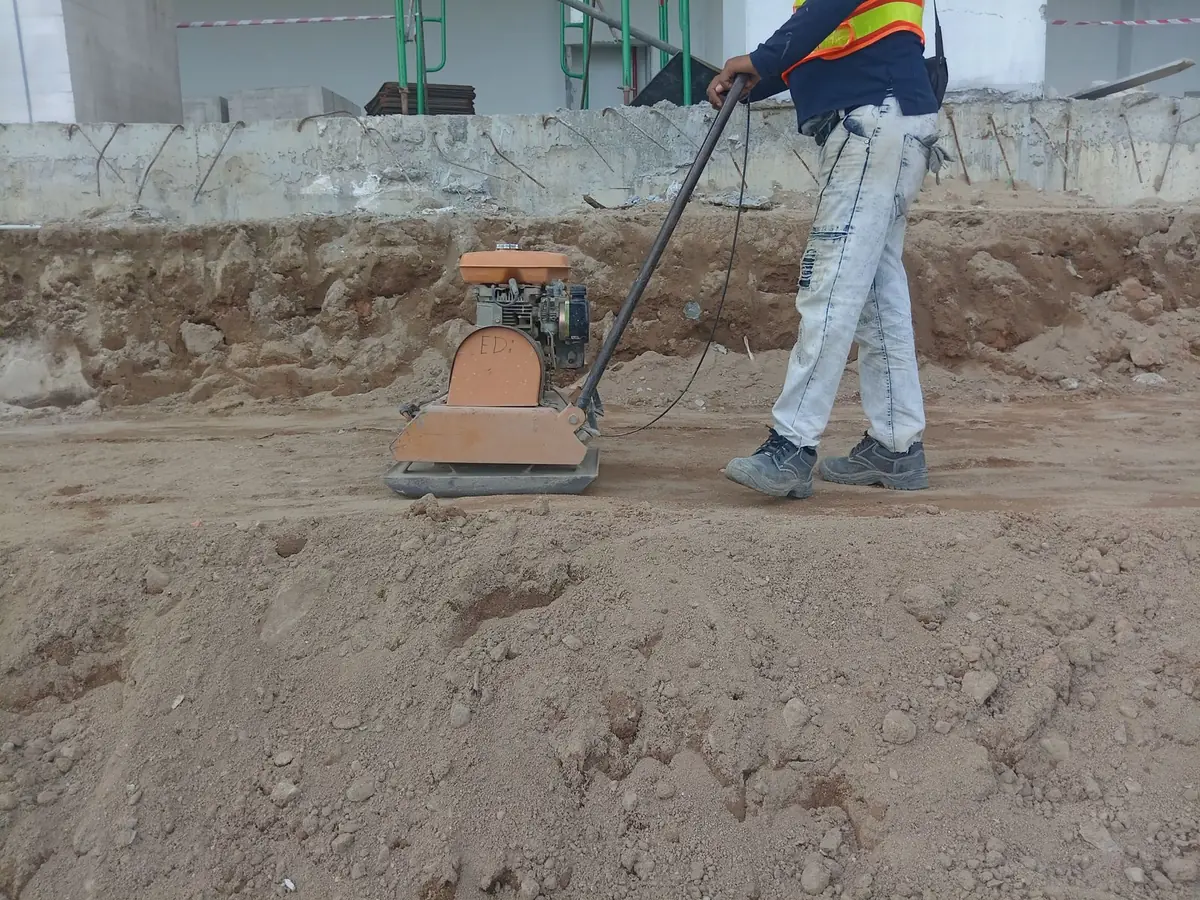
A test result and a wet Sunday are different things. Compacted mineral or plant-based fill can close the surface, and ESTC names waterlogging as the result. Once water sits, the pile stays flat and the fill packs tighter.
What a Ponding Edge Tells You
Ponding shows up at the lowest edge first, where the sub-base falls away or the turf meets paving. ESTC guidance on keeping fill and silt out of the drains keeps drain, channel and silt-trap checks in the routine list for the same reason.
- Water still standing an hour after the rain stops
- A darker band along the low edge that dries last
- Fill that feels hard and slick underfoot after wet weather
- Runoff reaching the paving instead of soaking away
A surface that passed when new can fail the same test after a season of compacted fill. Re-testing after the first wet winter is quicker than lifting a section later.
Maintenance Load Rises With Pile Height
Longer pile needs more brushing, and the ratio is published. ESTC’s rule of thumb is one hour of weekly brushing for every ten hours of use by 22 players, with specialist power sweeping at a minimum of bi-monthly visits.
A garden is not a pitch, and the arithmetic still helps. Ten player-hours on a pitch is a week of family traffic on a lawn, so that hour maps onto a short weekly pass with a stiff brush. ESTC maintenance guidance for synthetic turf ties the interval to hours of use rather than to a calendar.
ESTC lists four items for the yearly schedule.
Deep clean
Collect fibre debris once a year, on a dry surface, as ESTC advises.
Brush along the roll
Work the brush with the roll direction, not across it, on turf with no fill.
Measure infill depth
Check the busiest strip monthly and top the sand back up.
Clear drains before the wet season
Open channels and gullies ahead of the rain, when flow matters most.
Where brushing cannot keep up, pile and density are the lever. We run custom pile and density runs so a busy site starts shorter and denser, not taller and brushed twice a week.
The equipment list is a useful proxy for the workload. FIFA expects a tractor unit, a drag brush or mat, spare infill, a maintenance log and a ball-roll ramp on site, and inspects that kit as a mandatory field test. A domestic lawn needs less of it, but not none of it.
Log the brushing hours for one month before choosing a pile height. Two hours a week on a 50mm lawn is a design decision, not a chore that appears later.
The Surface Runs Hotter Than the Air
Heat is the risk with the widest gap between what a buyer expects and what a thermometer reads. On a clear June day, Penn State measured a mean surface temperature of 162.9 °F on a synthetic sports surface with green fibre and black rubber infill. The peak was 169.0 °F at 2 pm, with air temperature between 73 and 79 °F.
Those readings come from sports pitches in direct sun, not from a shaded garden, and they describe a mechanism rather than a prediction for every lawn. The same work records an unwatered plot at 155.7 °F in the afternoon. Natural turf beside it read 86.0 to 95.4 °F, with air at 70 to 76 °F.
Solar load, not air temperature, drives the gap: a hazy 93 °F day produced 141.6 °F, below the clearer and cooler day. The Penn State measurements of synthetic turf surface temperature set a threshold at 150 °F. Above it, a 20 to 30 °F drop is needed to change the picture. A 5 to 10 °F drop does little.

Where Feet and Paws Sit
Contact is the number that matters for skin. The burn-risk band starts at 45–50 °C, and a dog-play trial recorded artificial turf at 63.8 °C while natural and stabilised grass stayed below 40 °C. That trial also saw readings above 60 °C on days of 25–28 °C air.
Shade and irrigation both move the reading, and neither holds it. Irrigation pulled a plot below 100 °F, yet it passed 120 °F again within 45 minutes, and treated plots sat above 130 °F at 1:30 pm. A measured reading at your own site beats any published average.
UV Turns Colour and Tips Brittle
Sun attacks the stabiliser before it attacks the blade, so colour moves first and strength follows. ESTC requires UV stability testing for a minimum of 5,000 hours, which is 208 days of continuous exposure. No pass threshold is attached to that duration on its own.
FIFA attaches the numbers instead. Carpet colour change has to hold at grey scale 3 or better under EN ISO 20105-A02. UV-aged yarn may change peak breakage force by no more than 25%, and the brittleness test carries a 40% limit.
What Fading Looks Like Before It Fails
Fading rarely arrives as a whole-lawn colour shift. It starts at the tips, on the sun-facing edge and along the line where the pile leans, and it reads as a dull patch rather than a new colour.
- Tips that look bleached while the base of the blade keeps its colour
- Split or frayed ends on the fibres you can reach by hand
- A visible step where an offcut joins older turf
- Colour that reads flat in shade, where fading is easiest to see
Brittleness follows colour by a season or two, and it shows as fibre that snaps instead of bending when you fold a tuft between two fingers.
Where 50mm Is the Wrong Specification
Some sites should not take a 50mm pile at all. Steep slopes, heavy shade and a lawn that doubles as a parking space all push the failure modes above into the first season, and the specification cannot carry them.
The clearest 50mm artificial grass risks are specification risks rather than product faults. A tall pile in deep shade stays damp, and a tall pile on a slope under heavy footfall leans in one direction. Residential artificial grass in an open garden is a different brief from a shaded side return.
The Slope and Shade Cases
Dimensional behaviour belongs in the same decision. ESTC allows at most 1.0% shrinkage and 1.0% extension, and asks that turf which is not fully bonded or granule-filled be designed against expansion. Tensile strength of at least 10 N/mm in both directions is the other floor.
Read the site before the sample: choosing landscape grass by use is the exercise that decides whether 50mm is even in the running.
Not Sure 50mm Suits Your Site?
We cut residential turf rolls to the pile and backing your site needs, and we send a sample so you can judge recovery and shade before the full order.
What to Check in the Sample
A sample settles two questions the data cannot: how the pile behaves under a hand, and what the backing looks like at the edge. Standard samples measure 20 cm × 20 cm, and a set usually runs to three or four pieces.
Press a thumb into the pile, hold for a count, then watch how fast the fibre lifts. That is the same recovery the laboratory reads at 50 kPa. Turn the piece over and read the backing, because PP+Net and PU behave differently underfoot and at a seam.
Reading the edge. The cut edge is the most informative part of a small sample, because a coated backing either holds its yarn or gives it up. ESTC asks for tuft withdrawal of at least 25 N per bundle under ISO 4919, measured after water ageing. A sample pulled by hand shows whether the coating runs continuously to the edge.
Backing edge
A clean cut, with no loose coating and no frayed scrim.
Pile at a fold
Fibre that springs back instead of holding a crease.
Colour in shade
Judge the piece in the light the lawn will actually live in.
Tuft hold
Pull one bundle against the weave and watch what the coating does.
Roll format matters at the same stage, because a sample that matches the pile but not the width still leaves a seam in the wrong place. The range runs 2 m, 4 m and 5 m widths by 25 m, with custom sizes alongside.

Three Checks Before the Deposit
Three checks settle a decision that a showroom visit cannot. Each needs an afternoon, a rule and a bucket of water, and all can be run on the sample before a roll is cut.
Fill depth
Read the sand against the 12.5 mm line at the doorway and again mid-lawn.
Water test
Pour a bucket across a square metre and time how long the surface clears.
Pile recovery
Press a heel into the same spot twice and compare the lift.
If all three hold, the specification is doing its job. If one fails, pile height is the first variable to revisit, because every mechanism in this article starts with how much blade stands free above the sand.
Frequently Asked Questions
Does 50mm artificial grass flatten over time?
Yes, under repeated traffic on the same line. In a 50 kPa trial, samples lost 56.1% to 64.1% of thickness at two minutes, and the weakest still sat 13.5% down after 24 hours.
Where does the infill go?
Out at doorways, into wind and into runoff. Light plant-based fill moves furthest, and ESTC puts the check on a weekly look at wear points plus a monthly depth measurement.
Can long pile artificial grass drain properly?
Yes, if the backing and sub-base pass water and the fill stays loose. ESTC’s landscaping minimum is 150 mm/h to EN 12616, tested with the infill between the blades, and compacted fill can close that path.
Is artificial grass too hot to walk on in summer?
It can be. A dog-play trial read 63.8 °C on artificial turf against below 40 °C on natural grass, and contact burn risk rises from 45–50 °C. Shade and timing matter more than air temperature.
How often does a 50mm lawn need maintenance?
Weekly brushing and a monthly infill check, with a deep clean once a year. ESTC ties brushing to use: one hour per week for every ten hours of play by 22 players.
When is 50mm the wrong choice?
On steep slopes, in deep shade and where a car parks on the lawn. Those sites turn 50mm artificial grass risks into first-season failures, and a shorter, denser pile carries the traffic better.