Relyir Grass
Factory-direct artificial grass since 2006 — full customization, samples and fast quotes.
-
Sports Turf
More Sports
Putting Green
Sports Turf Systems
25 mm sand-filled turf engineered for the fast-paced game of padel. Factory-direct from Relyir — 20 years of sports turf manufacturing.

Why Specify Short-Pile Sand-Filled Turf
Padel is the fastest-growing racket sport in the world, and artificial turf is the modern court standard. The surface must deliver low, predictable bounce, secure foot traction for rapid direction changes, and compatibility with the glass walls that define the game.
Padel’s defining feature is playing the ball off glass walls. The turf surface must produce a consistent, low bounce so players can anticipate where the ball will land after rebounding. Sand-filled short pile delivers that controlled response across the entire 20 × 10 m court.
Padel rallies involve rapid lateral movement, sudden stops and sprints to the net. The sand infill between fibers provides the grip players need without excessive rotational resistance — the surface holds the foot and releases it cleanly on every change of direction.
Modern padel courts are enclosed by glass walls and metal mesh. The turf must be cut and fitted precisely around the perimeter, with edges secured against the glass base rail. PP backing with optional PU coating provides the dimensional stability that glass-court fitting demands.
Product Range
The Mesh Adventure 25 is Relyir’s padel court product — a 25 mm pile at 27,300 tufts/m² on 3/8″ gauge, sand-filled to approximately 15–25 kg/m² for the low, controlled bounce that padel demands. Professional padel courts often use 10–12 mm pile; the 25 mm system provides a slightly more cushioned playing surface suitable for club and recreational use.
| Model | Pile Height | Yarn | Density | Gauge | Stitch Rate | Backing | Colors |
|---|---|---|---|---|---|---|---|
| Mesh Adventure 25 | 25 mm | PP | 27,300 tufts/m² | 3/8″ | 26/10 cm | PP + PP (PU optional) | Olive green / white |
Roll sizes: 4 × 25 m or 2 × 50 m, maximum roll width 5 m. Each padel court (20 × 10 m) requires approximately 200 m² of turf. Blue and green court colors available on request. Full datasheets are provided with your quotation.
Performance Design
Padel is played in an enclosed space — 20 meters long, 10 meters wide, surrounded by glass panels and metal mesh on all four sides. The court surface must work in concert with those walls: the ball bounces off glass at speed and lands on the turf at unpredictable angles. Consistent, low-bounce turf is what makes those rebound plays possible.
The sand fill level is critical. Professional padel courts typically use 10–12 mm monofilament or curly turf with 15–25 kg/m² of silica sand. The 25 mm Mesh Adventure system, sand-filled to a similar loading, provides a slightly more cushioned alternative that suits club and recreational play while maintaining the low, controlled bounce that defines padel’s character.
Color matters more in padel than most sports. Blue and green courts dominate the professional circuit, and club operators often match court color to their facility branding. The turf’s color fastness under UV exposure is essential because padel courts are predominantly outdoor and uncovered.
The court edges present a unique installation challenge. Turf must be cut precisely and secured against the glass base rail so that balls cannot wedge between the surface and the wall. PU backing adds dimensional stability that helps the carpet hold its shape during and after perimeter fitting.
For multi-court padel projects, Relyir supplies matched-lot turf with consistent color across all courts and provides installation guidance for glass-wall perimeter detailing.
Factory Direct from Jiangsu
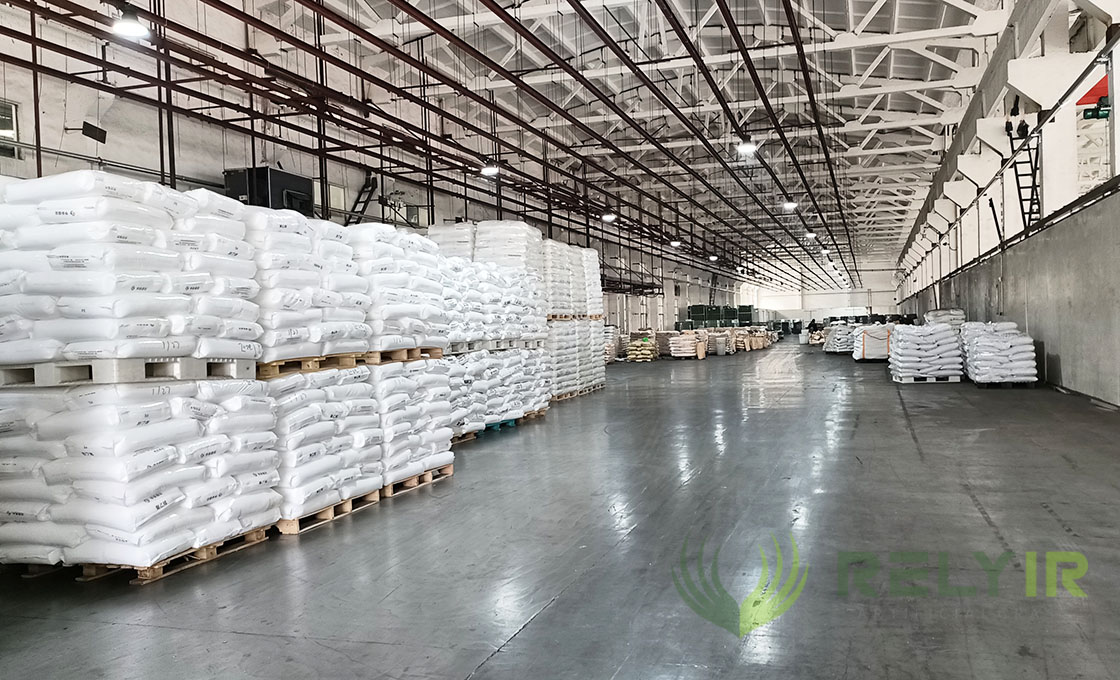
Relyir has manufactured artificial grass in Jiangsu since 2006. Every step — from raw PE pellets to finished rolls — runs on-site, which is how we control quality and hold pricing 30–50% below international equivalents.
All eight production stages are managed in-house, eliminating the quality gaps that arise when compounding, tufting and coating happen in separate facilities. The automated sports turf line, commissioned in 2015, lifted production capacity by 150% and tightened consistency across high-volume orders.
Customization is built into the line: blade density, pile height and fiber colors are adjusted to each project’s specification, with PP + net and PU backing options. The export team has shipped to more than 500 customers across 50+ countries since 2009 and handles all documentation — from commercial invoices to certificates of origin.
System Build-Up
Padel court installation follows a straightforward sequence — a concrete or asphalt base, the turf carpet bonded in place, sand infill brushed in, and white lines inlaid. We supply the turf and share build-up guidance with every project.
A smooth, sloped slab with perimeter drainage — the foundation for the court. Padel courts require tight levelness tolerances because the ball bounces low and any irregularity magnifies.
The carpet is glued to the base and trimmed precisely against the glass base rail. Seams are bonded for a flush, continuous surface with no visible joints in the playing area.
Silica sand at approximately 15–25 kg/m² is brushed into the pile. The sand supports fibers, controls ball bounce and provides the foot traction padel demands.
White court lines are inlaid to the 20 × 10 m padel dimensions, with service zones marked. Glass panels and mesh are then fitted around the court perimeter.
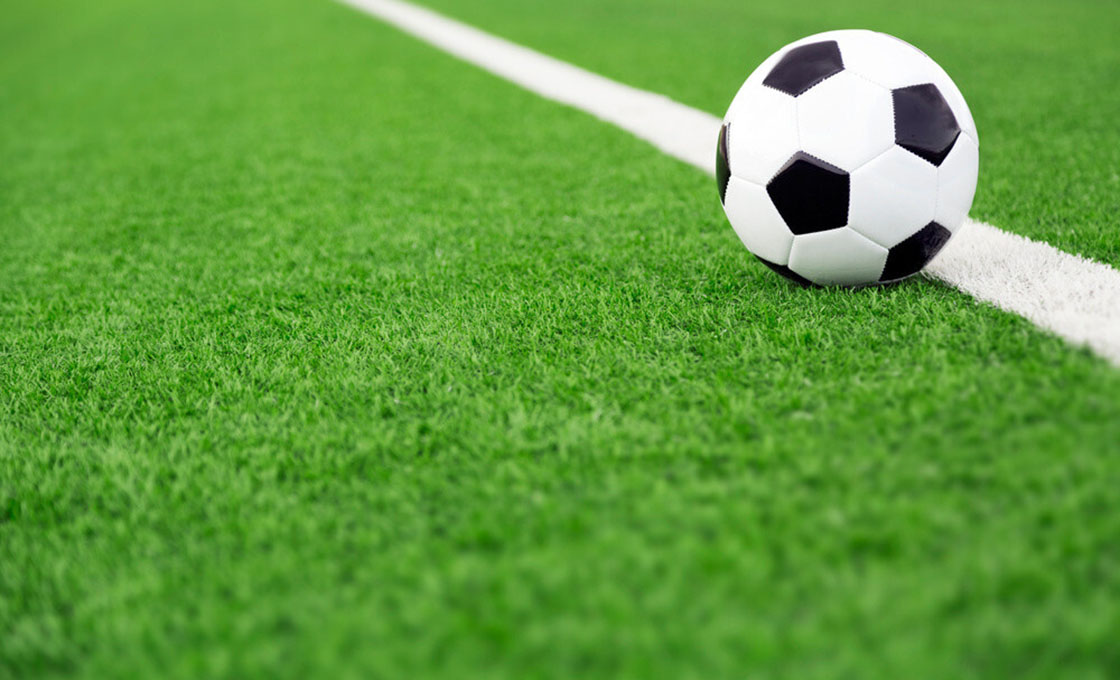
Padel court edges are the highest-maintenance zone. Balls travel along the glass at speed, and sand can accumulate against the wall base or escape through gaps in the perimeter seal. Precise cutting and secure bonding of the turf edge against the glass rail prevent sand loss and keep the playing surface consistent.
Regular brushing redistributes sand from the court edges and service zones back to the center. Perforated backing ensures rain drains through quickly on outdoor courts, and UV-stabilized fibers resist fading under continuous sun exposure.
Professional padel courts (World Padel Tour style) typically use 10–12 mm monofilament or curly turf. The Relyir Mesh Adventure at 25 mm, sand-filled, provides a slightly more cushioned surface suited to club and recreational play. Both approaches deliver the low, controlled bounce padel requires — the choice depends on your target player level and budget.
A standard padel court is 20 × 10 m (200 m²). Accounting for cutting waste around the glass perimeter and service zones, plan approximately 220–240 m² of turf per court. Rolls are 4 × 25 m (100 m² each), so two to three rolls cover one court depending on layout optimization.
Yes. The turf is cut and bonded against the glass base rail during installation. PU backing is recommended for glass-court projects because it adds dimensional stability that helps the carpet maintain a tight fit against the perimeter through temperature changes and foot traffic.
Standard colors are olive green and white. Blue and other custom court colors are available on request — specify at the quotation stage so the production team can plan the dye run. Custom colors are particularly popular for multi-court facilities and branded club installations.
Sand at 15–25 kg/m² supports the fibers, controls ball bounce height and provides foot traction. More sand produces a slightly slower, more controlled surface; less sand lets the ball skid faster. Club operators can fine-tune the sand depth during maintenance to match their players’ preference.
Regular brushing to redistribute sand from edges and corners, periodic sand top-up as material is lost over time, and cleaning to prevent algae or moss growth in damp climates. Outdoor courts benefit from checking perimeter seals against the glass rail to prevent sand escape. Relyir provides maintenance guidance with every order.
Send your court count, color preference, glass-system details and target timeline. Our export team replies with model recommendations, specification sheets and factory-direct pricing within 12 hours.
Get a Free Quote