A Phoenix homeowner opens the first quote for a 1,000 square foot lawn and finds a number north of $8600. Another homeowner in the same metro, asking the same question in a different thread, was quoted $8.30 per square foot installed for grass the estimator called mid-range. Same product, same city, and a gap wide enough to make anyone ask which number deserves trust.
The honest answer is that both quotes are bundles, and bundles hide layers. The US installed stack averages $15 to $19 per square foot with materials and labor included. The factory stack for the grass itself starts at $7-60 per square meter, before freight and site work enter. We price from the factory floor, not a retail counter, so this page takes both stacks apart layer by layer and flags where a quote deserves pushback. Regional labor still moves the installed number, so treat every benchmark here as a midpoint, not a promise.
What Artificial Grass Costs per Square Foot
Most published numbers describe the same thing: a finished lawn, materials and labor included. LawnStarter’s 2026 survey puts the US average at $15 to $19 per square foot, and Homewyse’s May 2026 calculator lands almost on top of it at $16.08-$19.74. In Phoenix, where turf is practically civic infrastructure, Apex Turf quotes the metro band at $5 to $20 per square foot.
| Source | Scope | 2026 figure |
|---|---|---|
| LawnStarter national survey | Installed, materials + labor | $15 to $19 per sq ft |
| Homewyse unit-cost calculator | National average, May 2026, mid-range in-stock product | $16.08-$19.74 per sq ft |
| Apex Turf, Phoenix metro | Installed, materials + labor, out-the-door | $5 to $20 per sq ft |
| r/landscaping contractor ballpark | Installed, prep and site work included | $15-25 per sq ft |
| LawnStarter project math | Typical 500 sq ft yard, mid-grade turf | $7,400 to $9,350 total |
Scale the average to a real yard and the sticker shock makes sense. A typical project covers about 500 square feet, which works out to roughly $7,400 to $9,350 at mid-grade quality. Homeowners who hear that this product is “expensive” are usually reacting to that total, not to the price of the roll itself.
Two quirks hide inside the averages. Nylon products carry roughly a 20% premium because the fiber is stiffer, and bids for artificial turf installation drift toward the top of every band in high-cost labor markets. The spread between the low and high ends is not noise; it is site work and markup, which is exactly what the next two sections unpack.
Cost by Artificial Grass Type
Material choice is the widest single swing in artificial grass cost, wider than brand or color. LawnStarter’s survey of shelf prices breaks the three common yarns out like this.
| Yarn | Material only, per sq ft | Where it fits |
|---|---|---|
| Polypropylene | $2-$6.35 | Budget lawns, lighter foot traffic |
| Polyethylene | $2.20-$4.10 | The all-rounder most yards use |
| Nylon | $5-$6.40 | High-heat, high-wear spots; about a 20% premium |
| Factory-direct roll, indicative | $0.65 to $5.57 ($7-60 per m²) | Before freight, duties, retail margin, and install |
Read the last row twice. The same square meter of grass that lists for $2-$6.35 at a US counter leaves our production line inside the $7-60 per square meter band. At 10.764 square feet per meter, that band converts to $0.65 to $5.57 per square foot. Freight, duties, a retail margin, and an installer’s markup all stack on after that.
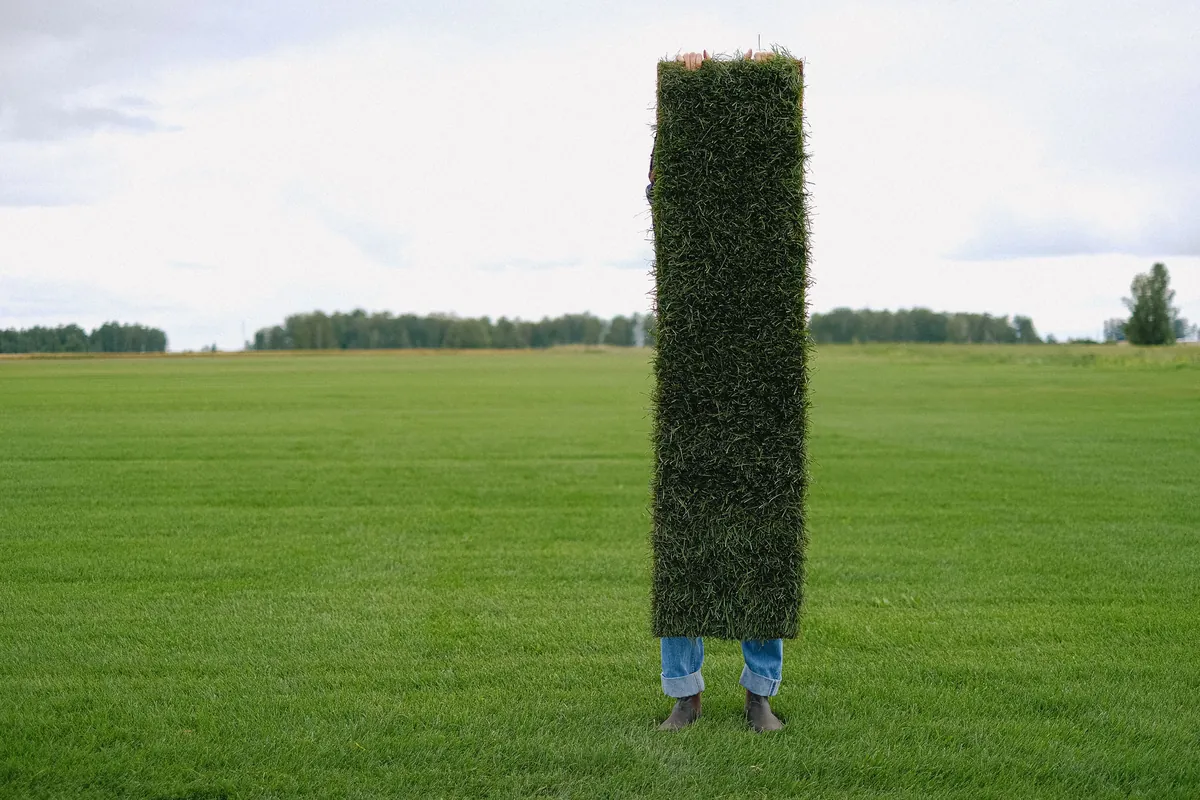
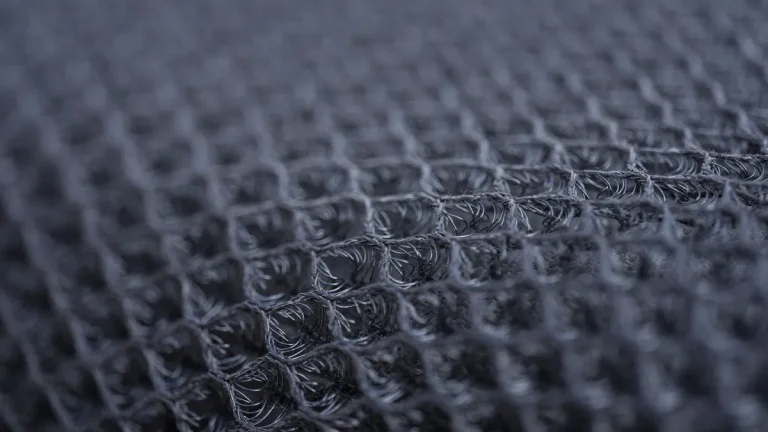
Yarn is only half the spec, though. The combinations we run on our own production line pair polyethylene monofilament with polypropylene thatch for most landscape work. The backing choice, PP+Net or PU, moves both price and how the lawn handles water. Nylon earns its premium only where heat and traffic would flatten softer fibers. If you want the full anatomy, our guide to the quality factors behind artificial turf pricing walks that ladder rung by rung.
Cost to Install: Labor, Base, and Site Extras
Labor is the second axis of artificial grass cost, and it is the one installers defend hardest. Most contractors charge $3.45 to $12 per square foot for a full artificial turf installation. Homewyse’s basic labor scope explains the spread: excavate for finished height, spread base gravel with a compacted sand layer, then fit, seam, and secure the lawn. That work is physical and weather-dependent, which is why the same roll can carry two very different labor numbers in neighboring towns.
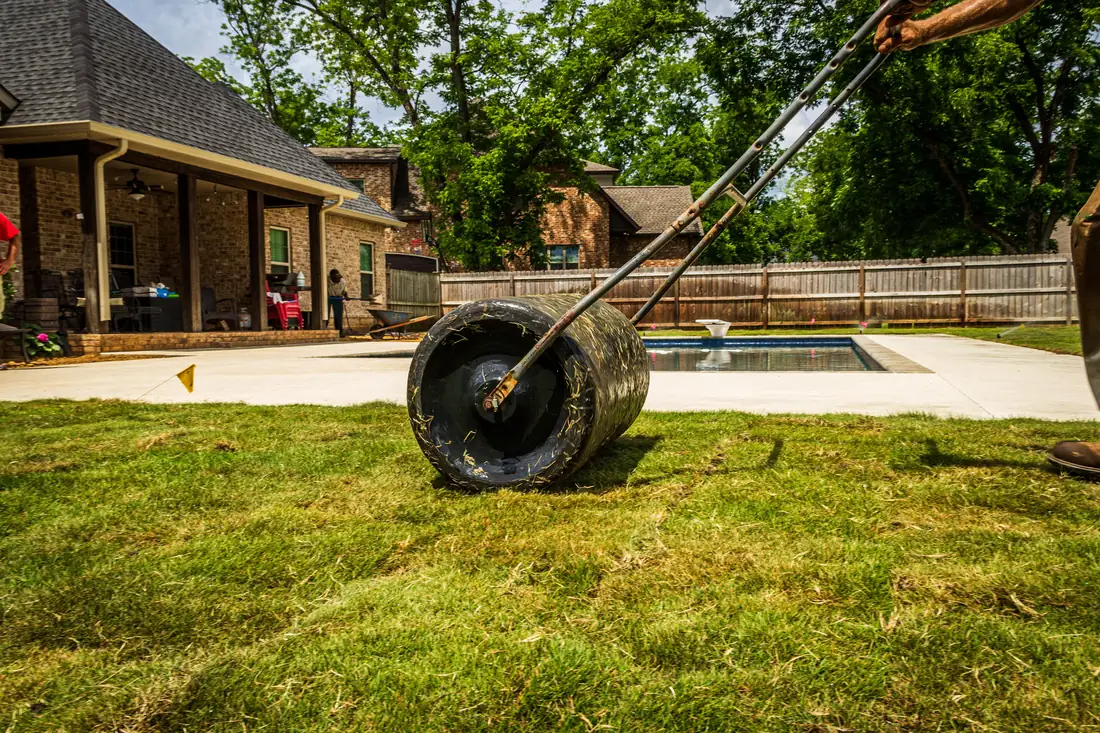
The base under the grass is where many bids quietly diverge. Installers in Arizona bring in crushed rock called minus on every job, about 2 inches of minus, compacted hard. Yards that need raising or heavy excavation pay for every extra wheelbarrow ride. A bare, level backyard is genuinely the cheapest canvas you can hand a crew.
Then come the line items that never make the billboard. Removing an old lawn runs $0.88 to $1.84 per square foot, and landscape edging adds $2 to $11.50 per linear foot. True pet systems add $1.50-$3 per square foot once you spec fast-draining backing and odor-controlled infill. Shape charges stack on top of that. A curved layout adds 15% to 20%, and a slope can add 50% to 60%, because holding turf on a grade is slow, careful work.
The last layer is margin, and it is the least visible. Homewyse notes that a supervising general contractor adds 13% to 22% to the total. Apex Turf in Phoenix says outright that some contractors charge double (or more) what turf and labor actually cost. Apex publishes its own compromise: open-book estimates with a 25% markup, so homeowners see the invoice behind the invoice. Whatever you think of the model, the practice proves the point — markup is a choice, not a law of physics.
Retail Price vs Factory-Direct Cost
Now stack the whole chain next to each other, because by the time an artificial turf installation is quoted, several hands have touched the invoice. Think of the retail price as an onion. The grower’s price sits at the core, and every hand between the line and your lawn wraps one more ring around it: export, freight, import duty, distributor, retail counter, installer. Peel the rings back and the grass underneath costs far less than the sticker admits.
The shelf proves it. LawnStarter’s brand survey spans $1.80-$12.55 per square foot for material alone, roughly a sevenfold spread. At the factory gate, the same grass sells inside the $0.65 to $5.57 per square foot band. Our cost runs 30-50% under comparable international suppliers, not because the grass is thinner, but because tufting, coating, and inspection happen on our own floor. Nothing in that sentence requires a miracle, only a shorter chain.
Roll width is the quiet multiplier on the whole project. American retail rolls come 15 ft wide, so an awkward yard eats the offcut as waste. The grain of the fibers forces every piece to run the same direction, which doubles the planning. We cut 2m, 4m, and 5m rolls to order — 50, 100, and 125 square meters on a 25-meter roll. For awkward footprints, custom artificial grass made to your dimensions removes seams and offcuts almost entirely.
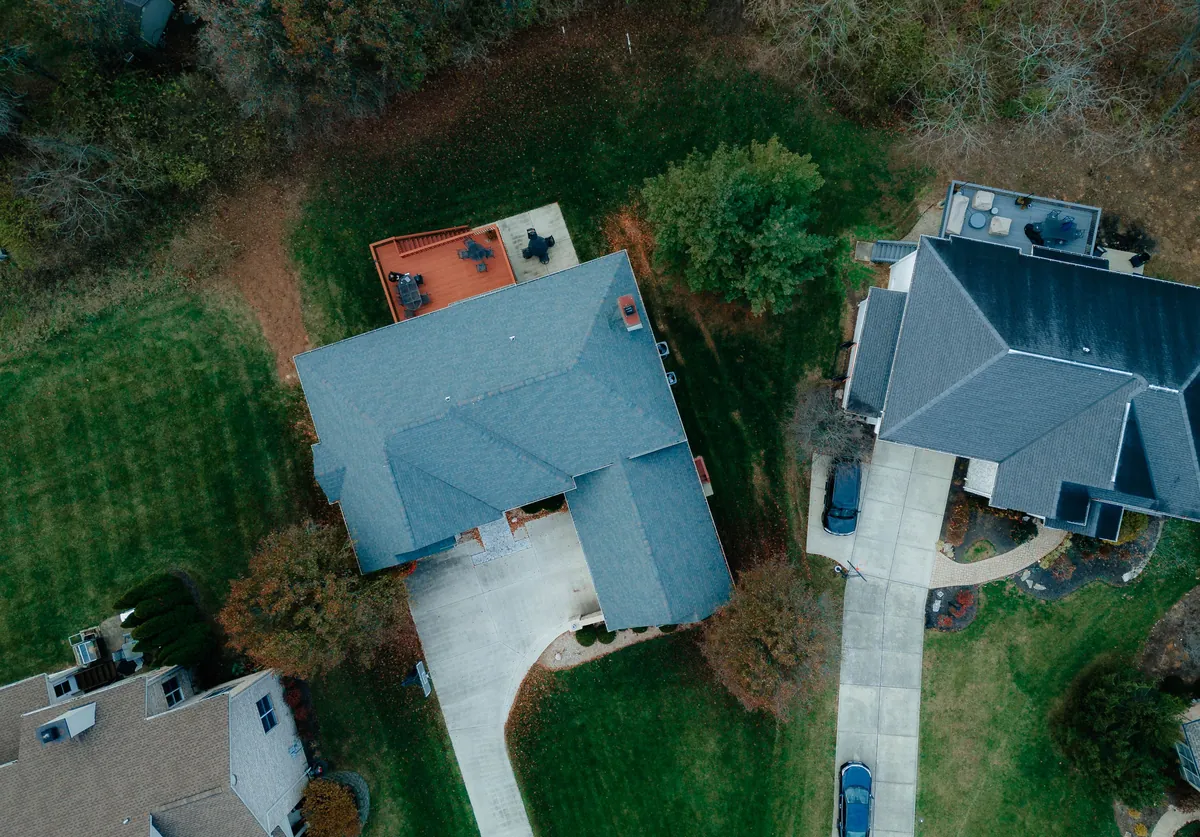
Buying direct only works if you can verify what you are buying, so samples close the trust gap. That is why two honest quotes for one yard can carry different square-meter totals. When we pack samples, they go out as free 20cm × 20cm squares, usually three or four pieces, with the customer covering freight. DHL or FedEx delivers them in 4-6 days, or 7-9 to remote addresses, and custom constructions need an extra 10-15 days of production. Relyir prices this way because the factory gate is the storefront: you audit pile, density, and backing before anything ships.
Price It From the Factory Floor
Indicative bands only go so far; your yard has its own dimensions, grade, and traffic. Send us the measurements and the use case, and we will come back with exact numbers — roll width, pile, backing, and freight — instead of another broad range.
Long-Term Cost of Artificial Grass
The sticker is only the first invoice. Upkeep runs about $250 to $350 a year: brushing to keep fibers upright, an occasional rinse, and infill top-ups. The fine print is about $165 a year for brushing, $0 to $100 for rinsing, and about $85 for infill replenishment. Professional power brooming in Phoenix runs $100-$200 per visit, worth doing every 1-3 years on any artificial turf installation. That is the whole shopping list.
Compare that with the living version: national lawn-care plans run $1,500 to $6,000 a year, and even DIY mowing, seed, and fertilizer add up fast. In Phoenix, hiring it out starts at $100-$150 a month, which is $1,200-$1,800 annually. Water is the third bill, and the EPA’s WaterSense program counts outdoor use among the biggest household draws. An Arizona lawn drinks about 55 gallons per square foot per year. A 1,000 square foot yard burns through 55,000 gallons, or $100-$300+ on the meter.
Run the whole ledger and the artificial grass cost per year drops below every alternative sooner than most buyers expect. A City of Mesa study pegged break-even for artificial turf installation at 5 to 6 years, assuming $9 per square foot and counting water, upkeep, overseeding, and sprinkler repairs. Durability decides where your project lands on that curve, and our guide to how wear resistance determines the life of an artificial lawn explains the mechanics. Commercial installations are rated to last up to 10-15 years, which leaves a long tail of free years after break-even.
How to Read a Turf Quote
Every artificial grass cost claim in this page reduces to one discipline: read the quote the way a cost engineer would. A Charlotte homeowner collected a $16k bid for 600 square feet, a figure no national benchmark can excuse. The fix in cases like that is never negotiation; it is itemization. Any artificial turf installation quote worth signing survives all five checks below. Here they are.
1. Check the Total Against the Benchmarks
Put the bid beside the three published bands: $15 to $19 per square foot installed, Homewyse’s $16.08-$19.74, and the $5 to $20 Phoenix band. A total far above all three needs a reason you can read in the line items, not just in the estimator’s tone.
2. Demand the Five-Line Breakdown
Every professional estimate should separate materials, labor, job supplies, equipment, and debris disposal — the same five buckets Homewyse uses. We would walk away from any bid that refuses to itemize, because a single lump sum is where double-markup hides.
3. Interrogate the Grass Itself
Ask which yarn sits in the roll, what the face weight is, how tall the pile stands, and which backing carries it. The retail baseline Homewyse prices against is 60 ounces per square yard of face weight and a 1 3/4 inch pile. Anything above or below that should move your number, and the estimator should say so.
4. Price the Site Work Separately
Removal, edging, grading, curves, slopes, and pet requirements each carry their own rate, as the previous section showed. Make the bid name them one by one so a slope premium never masquerades as a premium grass upgrade.
5. Close With a Sample, Not a Brochure
Color charts lie by omission. A 20cm × 20cm square in your hand does not. Order one, bend it, rinse it, and leave it in the sun before any deposit changes hands — any supplier confident in its grass will say yes.
Frequently Asked Questions
How much does artificial grass cost installed in 2026?
Most published bands describe installed pricing, materials and labor included: $15 to $19 per square foot nationally, $16.08-$19.74 on Homewyse, and $5 to $20 in Phoenix. A typical 500 square foot yard lands near $7,400 to $9,350.
Why is artificial grass so expensive?
Because the installed number bundles four trades: grass, base work, labor, and margin. Labor alone runs $3.45 to $12 per square foot, general contractors add 13% to 22%, and slopes alone can add 50% to 60%.
What does artificial grass cost direct from a factory?
The grass itself is indicatively $7-60 per square meter, about $0.65 to $5.57 per square foot, before freight, duties, and installation. Padding, grade, and yarn type set the final figure, so ask for an exact quote.
Is artificial grass cheaper than real grass over time?
Usually, yes. Maintenance runs $250 to $350 a year against $1,500 to $6,000 for natural lawn care. A Mesa study found break-even in 5 to 6 years at $9 per square foot installed.
Can I check quality before committing money?
Yes — order free 20cm × 20cm samples first. We usually send three or four pieces; you cover freight, delivery takes 4-6 days (7-9 remote), and custom builds need 10-15 extra days.
 English
  Arabic
  French
  German
  Portuguese
  Russian
  Spanish