
Monday’s session plan is dead by seven in the morning. The coach walks the field and finds standing water over the goalmouths, then soft, chewed-up ground along the sprint lanes. By Thursday the same pitch has baked hard, and every cut and landing lands heavier on the legs. The drills never changed; the surface under them did.
That weekly lottery decides more seasons than talent or equipment does. It is also the reason this page opens with a verdict instead of a feature list.
Why Your Training Surface Decides Your Season
For a surface whose main job is daily training, artificial turf is the more predictable choice. Weather stops controlling the timetable, the footing stays level, and the running bill stops growing every season. Natural grass keeps real advantages for matchday feel and tradition, and those get an honest section further down.
The benefits of training on artificial turf stack in a clear order: availability first, skill quality second, running cost last. Seven of them follow, then the maintenance truth most listicles skip, then a decision path and the cases where grass still wins.
Artificial Turf vs Natural Grass for Training: The Short Answer
Weigh the benefits of training on artificial turf against natural grass and the split is clean. Grass wins on feel, smell and tradition. Turf wins on availability, consistency and workload. A match pitch can rest between games; a training field cannot, because the timetable runs every day.
That daily load is exactly what an artificial turf installation is engineered around, and it is the lens our sports artificial grass is specified through: session volume first, looks second.
Benefit 1: Train Every Day in Any Weather
Rain is the classic schedule killer. On turf, a free-draining backing and base move water through the carpet instead of pooling it on top, so play resumes in minutes rather than days. There is no mud to churn and no ground to close. The field stays open through the wet weeks that empty a grass calendar.
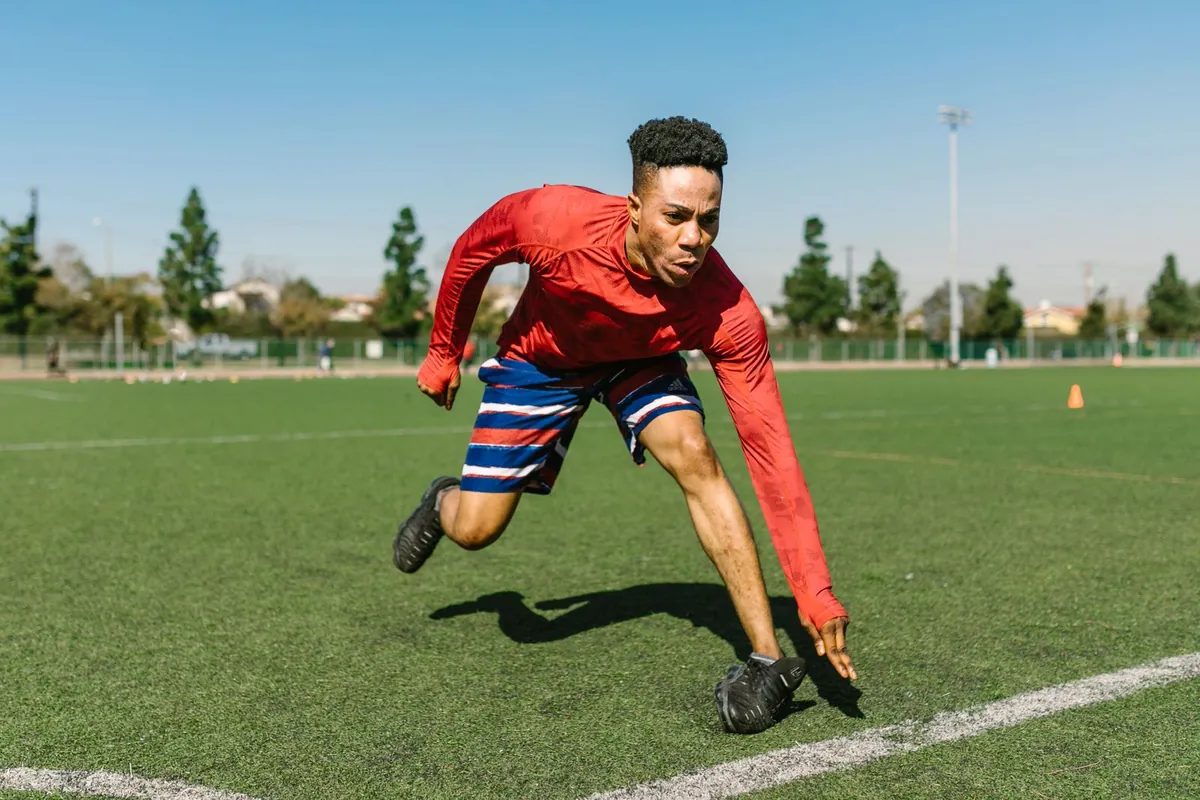
Dry and cold extremes cut the other way. Soil shrinks and hardens in drought, while grass goes brittle in frost; synthetic fibres ignore both. Sessions run in January on the same surface that ran in June. Availability is the quiet benefit underneath all the others, because the same budget simply buys more usable training hours.
Benefit 2: A Consistent Surface Builds Reliable Skills
Skill work needs a surface that never changes its mind. Turf holds one level plane, with no bare patches, ruts or divots to trip a plant foot or deflect a pass. The cutting drill you ran on Monday behaves the same on Friday.
Ball roll and bounce stay predictable too, so technique training does not absorb random noise from the ground. From the coach’s side of the fence, class quality stops depending on which corner of the field survived the week.
Benefit 3: Traction Built for Speed and Agility Work
Acceleration and change of direction live on grip. Turf fibres flex under the boot and release cleanly, giving push-off without slip and hard stops without the surface biting at the ankle. That balance is exactly what sprint lanes, ladder work and cutting drills demand.
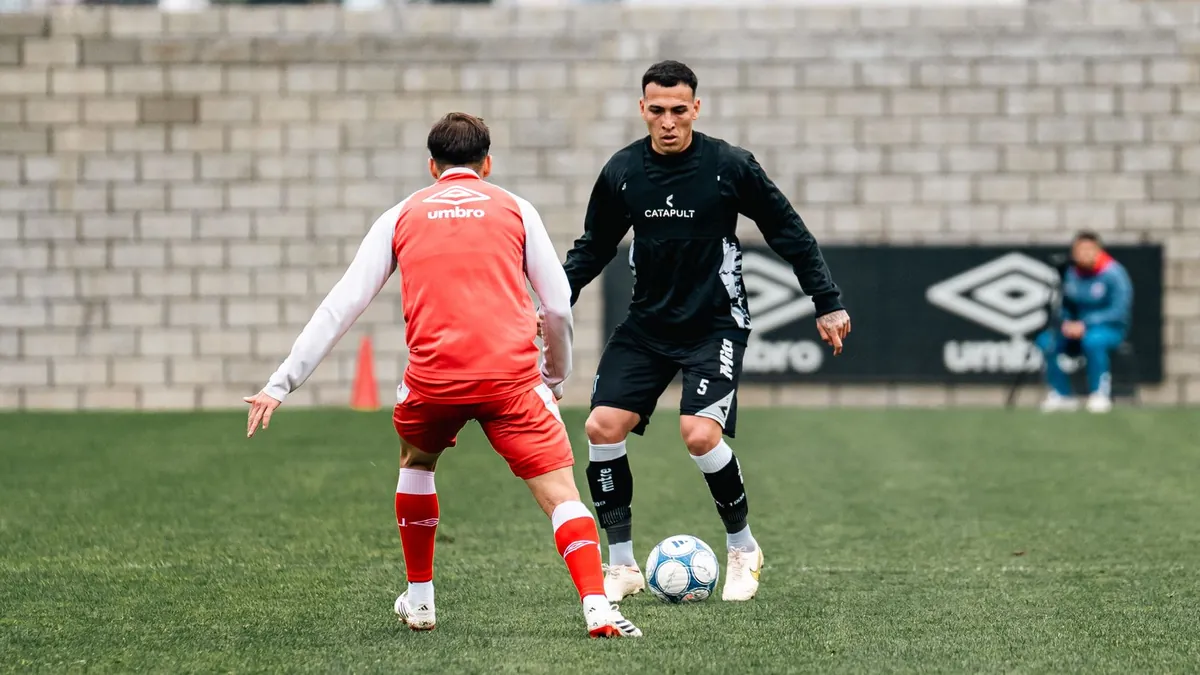
Compared with concrete or rubber gym floors, turf sits in the middle: more give underfoot, less accumulated strain across repeated sprints. A grass field can match it on a good day, but a good day is not a schedule.
Benefit 4: Shock Absorption That Protects Hardworking Joints
Session-heavy weeks pile load onto knees and ankles. Infill and, where specced, a shock pad under the carpet absorb part of every landing and plant. Well-built artificial turf installations pair that cushioning with an even plane, so the impact stays predictable as well as softer. Systems are checked for impact response before sign-off; the figures belong to the spec sheet, not the brochure.
Over a full season, that softened load compounds into a retention benefit: athletes finish February with more left in the tank than they would on hardened ground. Hard midweek grass hands that load back with interest; cushioned turf hands back less of it.
See the Pile Before You Commit
Photos cannot tell you how a surface lands underfoot, how dense the pile feels or how it rebounds after a hard cut. That is what the sample pack is for. Name your sport, session volume and indoor or outdoor setting, and we will match the build and send free 20 cm squares to test first.
Benefit 5: Durability That Survives Squad-Size Traffic
A whole squad working on one half-field is normal wear for turf and fatal wear for grass. Synthetic fibres keep their shape under back-to-back sessions, and the surface never needs a rest week to recover. That removes the rotation days and closures a grass timetable demands. A sports-grade build commonly serves up to ten to fifteen years before pile wear calls for renewal, which is a decade of schedules on one surface.
Benefit 6: One Surface for Multi-Sport and Sled Work
Line the same field for football, rugby and conditioning, and it earns its footprint three times over. Multi-sport markings turn one surface into a full program, and the carpet shrugs off the variety.
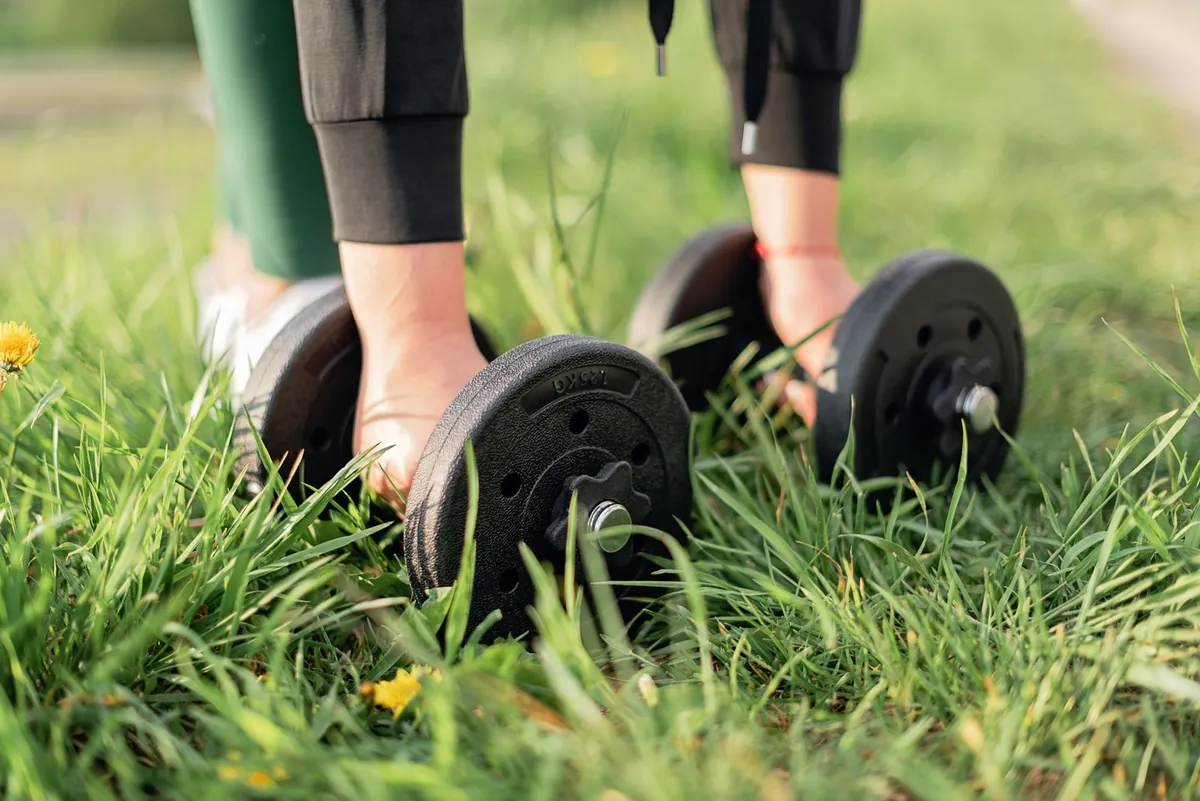
Indoors, the logic extends further. A gym turf strip takes sled pushes, crawls and loaded carries that would tear up any living surface, and our gym turf is built for exactly that load. The sport systems page matches pile to each game, so skills trained indoors transfer to matchday grass without relearning the ground.
Benefit 7: Lower Running Costs Across the Whole Season
The cost benefits of training on artificial turf arrive as line items that disappear: no mowing rounds, no irrigation, no fertiliser or reseeding calendar. The grounds crew stops servicing the field and starts maintaining it, which turns emergency repairs after a bad month into planned hours.
We keep this qualitative on purpose, because a full cost breakdown belongs to its own article. The shape of the saving is simple: fewer consumables, fewer labour hours, fewer surprises.
The Maintenance Truth: Low Effort Is Not Zero Effort
Here is the part most listicles skip. An artificial turf installation stays honest only with routine care: brush the pile upright, check infill levels, clear leaves and debris, and inspect seams and edges.
Set against the mowing, watering, feeding and reseeding cycle of grass, the workload is a fraction, not an equal. It is just not a zero, and planning for it is what keeps the surface fast for years. Write the hour into the weekly plan and the surface never argues back.
Where Natural Grass Still Deserves a Second Look
Honesty requires the other side of the ledger. Grass still suits fields used a few hours a week, budgets too tight for an upfront build, and players attached to the traditional feel. Low traffic is its honest sweet spot: a field that rests more than it trains can stay decent on a small budget.
Summer heat is the real turf weakness: under direct sun the surface runs hotter than grass. Session timing, shading and a light wetting keep it manageable, but manageable is the honest word. Many programs end up hybrid anyway, training daily on turf while matches stay on grass, and letting each surface do what it does best.
Choosing Turf for Your Training Facility
Every one of the benefits of training on artificial turf depends on matching the system to the job. Sport, indoor or outdoor setting and weekly session hours decide the pile height, density and backing. The gap between a good artificial turf installation and a regret usually sits in the base, the drainage and the spec, not in the brochure.
We make those matches every week on our own line and ship worldwide. Do it in the right order: request free samples, put a hand on the pile, then commit.
Frequently Asked Questions
Is artificial turf safe for daily training sessions?
Yes, when the system is built for it. Shock absorption plus a consistent, even surface lowers trip and roll risks. Keep brushing and infill checks on schedule so the surface holds its tested performance.
Does artificial turf get too hot for summer training?
Under direct summer sun, yes, it runs hotter than natural grass. Shift sessions to cooler hours, wet the surface to bring the temperature down, and check it by hand before high-intensity work.
How long does a training turf surface last?
It depends on session volume and upkeep. A well-maintained sports system commonly serves up to ten to fifteen years, with flattened pile and thinning infill as the visible renewal signals.
Can you run sleds and agility drills on gym turf?
Yes. Gym turf is designed for sled pushes, crawls and agility work, indoors or out. Pile and backing are chosen for that load rather than for ball roll.
 English
  Arabic
  French
  German
  Portuguese
  Russian
  Spanish