Pile height is the number most gym buyers quote first, and it is the number that fails them. Gyms that bought on pile height alone discover a permanent carved track within months, because face weight and fibre type were never asked. We have quoted dozens of sled lanes, and the conversation always runs deeper than one measurement.
A useful sled turf buying guide therefore starts with the workload, not the product sheet. On a quote call we ask what the sled does to the carpet, how the carpet answers, and how the lane gets planned. Answer those three questions and the carpet choice largely makes itself.
What a Sled Actually Does to a Turf Lane
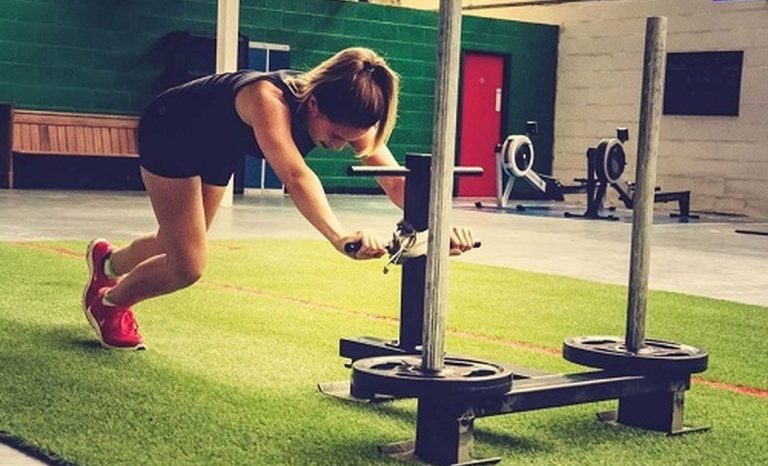
A sled is a steel frame loaded with plates and pushed across the carpet, so the contact patch is metal rather than a training shoe. Friction between that frame edge and the fibre tips generates heat, and heat is where fibre chemistry begins to matter. Any sled turf buying guide that skips this workload misses the point of the product.
Shear Before Everything Else
The frame does not roll like a wheel; it shears the pile sideways on every repetition. That shear is what carves a track into a carpet whose fibres cannot recover. Face weight decides how much fibre stands behind the edge on each pass, which is why sparse carpets fail first under sled work.
How Wide the Workload Range Runs
The training literature shows how wide sled loads run. Per the Journal of Human Kinetics study, young sprinters towed sleds at 10%, 15% and 20% of body mass to stress acceleration and force production. Light on paper, yet repeated thousands of times a month.
The other end of the scale is heavier than most buyers expect. Per the post-activation protocol study, rugby league athletes pushed a sled loaded with 75% or 125% of body mass in a single stimulus. A lane has to survive both programmes in the same week, sometimes from the same member.
Heat is the hidden tax. Friction builds where the frame edge meets the pile, and it never builds evenly. A carpet that looks fine in week one can be glazed along the push line by month three. Match fibre heat headroom to the heaviest programme the lane will host, not the lightest.
Pile Height and Density: The Pair That Decides Sled Glide
The next check in any sled turf buying guide is the pile height and density pairing. Tall, sparse fibres part easily under a frame and lie down permanently along the push line. Short, densely packed fibres support each other and stand back up after traffic.

Why Shorter Pile Glides Better
A shorter pile keeps the frame riding on top of the carpet instead of digging into it. It also presents less fibre tip area to friction heat on every pass. Carpet specified for sprint lanes almost always sits at the short end of the gym range for exactly these reasons.
Why Density Carries the Wear
Density is the workload reserve, and per the ASTM D5848 scope page, face weight is measured as mass per unit area of pile yarn floor coverings. More fibre per square metre means each push removes a smaller share of the standing pile. Ask for the pile yarn figure specifically, because the same test method also reports total and component masses, which read higher. The reserve is what a busy lane spends first.
Glide and wear pull the specification in the same direction, which is what makes the pairing so useful. A carpet dense enough to carry repeated pushes is almost always short enough to glide. When a datasheet offers a tall, thin carpet at a lighter spec, the workload already has the answer.
Fiber Type and Backing: Where Sled Turf Wears Out First
Fibre chemistry is where a serious sled turf buying guide gets technical. Sled friction generates enough localised heat to test every polymer in the pile, and the common fibres sit far apart on that measure. The table below collects the melting points worth keeping in mind, each per its Wikipedia entry.
| Fibre | Melting point | Reading for a sled lane | Source |
|---|---|---|---|
| Nylon 6 | 220°C (428°F), per Wikipedia | Solid heat headroom for heavy push programmes | Wikipedia – Nylon |
| Nylon 66 | 265°C (509°F), per Wikipedia | The highest headroom of the common fibre set | Wikipedia – Nylon |
| Polypropylene | 171°C (340°F), per Wikipedia | Well below nylon, a thinner margin under repeated frame friction | Wikipedia – Polypropylene |
| Polyethylene | 120-130°C (248-266°F) medium and high density; 105-115°C (221-239°F) low density, per Wikipedia | The lowest headroom of the three under a hot frame edge | Wikipedia – Polyethylene |
Melting point is not the whole story, but it sets the ceiling on how much friction heat a fibre can shrug off. Polypropylene and polyethylene are common on the low-spec end of the market, which is one reason bargain lanes glaze first under sled work. Nylon is the premium yarn of the three, and it buys its keep back in lifespan.
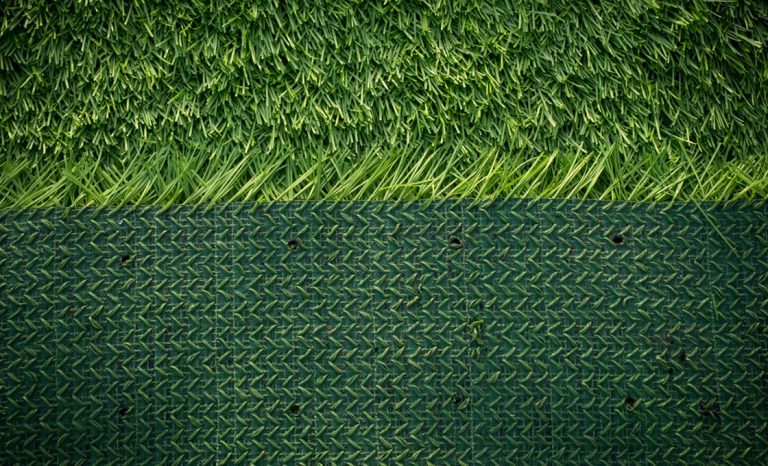
Backing is the other half of the wear story. Wear shows first where each fibre enters the backing, because that junction takes every bit of shear the tip takes. A dense, well-bonded backing holds fibres upright long after the tips have polished, so ask how tuft lock is specified and get the answer in writing on the quote.
Filled or Unfilled, Seam Direction and Fixing
Seam placement is the quiet standout topic in any sled turf buying guide, and it starts with roll width. Most gym lanes are sold unfilled, and the history explains why. The first generation of artificial turf was short-pile carpet without infill, before longer-pile systems added sand and then crumb rubber, per the Wikipedia account of the surface. Short, dense, unfilled pile gives the sled a fast and predictable ride, and it keeps granules out of a gym floor.
Seam Direction Against the Push Line
A seam is a hard line in the carpet, and a frame edge crossing it catches every single time. Run joins parallel to the push line, never across it, so the sled travels along the seam rather than over it. Wide rolls make this easy. Our five-metre rolls cover most gym lanes in one piece, and the four-metre and two-metre widths suit smaller rooms and doorways.
Fixing the Lane So It Stays Put
A sled push loads the carpet horizontally, so a loosely fixed lane migrates across the floor. Fix the perimeter properly, then check the fixings again after the first heavy month of use. Before you commit to a full lane, it is worth weighing whether a dedicated sled track makes sense in the first place.
Sample against the sled. Press a plate-loaded frame across the sample and watch how the fibres recover. Our free samples are cut so you can run exactly this test before committing to a lane.
Planning the Lane: Length, Width and Run-Off
Dimensions close out a sled turf buying guide, and they decide whether the carpet you chose actually fits the room. Length follows the training goal, not the leftover wall. Acceleration work needs travel room; heavy strength pushes need less. Measure the usable run before you shortlist anything.
- Length. Match the run to the programme, since acceleration sprints need more travel than heavy strength pushes.
- Width. Give the sled a full lane, so a veering push never runs the frame off the carpet.
- Run-off. Keep a clear deceleration zone at both ends, free of racks and plate storage.
- Roll width. Align roll width with lane width, so no seam ever crosses the push line.
- Buffer. Separate the lane from walkways, so a runaway sled cannot reach foot traffic.
Sketch the lane on the floor plan before you compare carpets. The plan tells you the widest roll the room can take and where, or whether, any seam will land. It also tells a sled turf supplier exactly what to cut, which removes the most common quoting error.
Planning a Sled Lane and Need a Carpet That Matches?
See the sled turf range – pile, density and width specifiable against your push plan, samples first.
Matching the Spec to the Facility: Commercial, Studio, Home
The same sled turf buying guide framework lands differently across three facility profiles. Traffic volume, not geography, is what separates a commercial floor from a garage gym. The heavier the daily push count, the more the specification must lean toward density and heat headroom.
Commercial Gyms
A busy floor runs sled classes back to back from open to close. Specify near the top of the density range, a fibre with real melting headroom, and the widest roll the room allows. Freight classes and group sessions multiply the push count quickly, so spec for the busiest hour of the week, not the average one. The extra specification is cheap insurance against a carved lane that members photograph and post.
Private Studios
Studios run sleds inside circuits, so traffic arrives in short concentrated bursts. A mid-density carpet with disciplined seam planning usually holds up well. Bursts are gentler than sustained volume, but seams still decide whether the carpet ages evenly. Rotate class formats so the same push line is not hammered by every session of the day.
Home Gym Lanes
A home lane serves one athlete, so the workload is predictable and modest. Short-pile carpet with a sound backing and clean perimeter fixing covers most home programmes comfortably. The step-by-step home gym selection guide covering surfaces beyond the sled lane walks through the rest of the room.

Installation and Maintenance: Protecting the Choice You Made
Installation is where a good sled turf specification either holds or quietly leaks away. The base must be flat and firm, because a frame edge will find every dip in the floor. Seams run with the push line, perimeter fixings go in tight, and the first week of use is your inspection window.
- Brush the lane. Brush against the lean to stand the fibres back up, on a fixed weekly rhythm in busy gyms.
- Check the seams. Walk the push line monthly and feel for lifted joins before a frame edge finds them first.
- Re-tension fixings. Horizontal sled loads work perimeter fixings loose faster than foot traffic alone ever will.
- Watch the wear signs. Glazing, matting and a permanent track all start small and visible.
Glazing tops the seven wear signs that tell you a gym turf lane is nearing replacement, and it pays to know the full list before it appears. A five-minute monthly walk catches most problems while they are still cosmetic. Keep the routine proportional to traffic, since a commercial floor earns its brush schedule weekly while a home lane can run on a fortnightly glance.

Frequently Asked Questions
What pile height is best for a sled turf lane?
Short pile at the low end of the gym range, paired with high density. Tall fibres part under the frame and mat along the push line, while short dense fibres support it and recover. Ask for the pairing, not height alone.
Should sled turf be infilled?
Usually no – gym sled lanes run best as short, dense, unfilled carpet. Infill belongs to the longer-pile generations of artificial turf, where sand and crumb rubber weigh the surface down. In a gym, unfilled pile keeps the glide fast.
How heavy do people load training sleds?
Across the research, from about 10% of body mass to well beyond it. Per the Journal of Human Kinetics study, sprinters towed at 10% to 20% of body mass; per the post-activation protocol study, athletes pushed 75% or 125%.
Which turf fiber handles sled friction best?
Nylon, per Wikipedia melting-point data. Nylon 6 melts at 220°C and nylon 66 at 265°C, while polyethylene spans 120-130°C in dense grades and 105-115°C in low-density ones. More headroom survives more friction heat.
How do seams and roll width affect a sled lane?
A seam crossing the push line catches the frame on every pass. Run joins parallel to the push direction, or better, remove them with wide rolls. Our five-metre rolls cover most gym lanes without a single cross seam.