



Category

Sports Field Turf

Practical guides and technical insights from Relyir Grass, an artificial grass manufacturer in China since 2006.

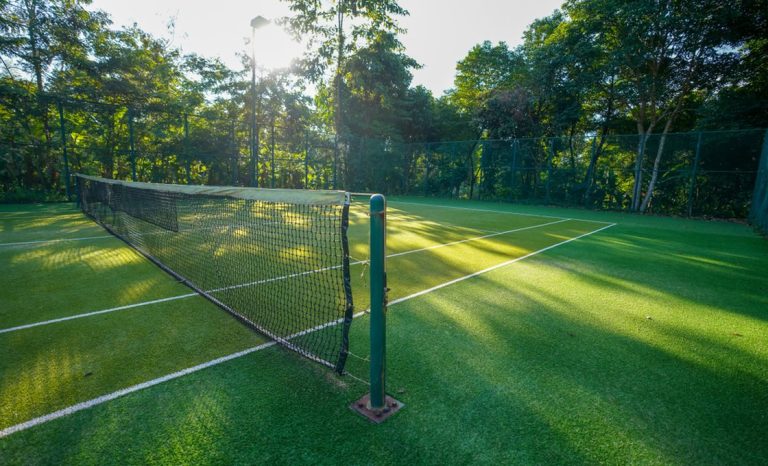
The Pros and Cons of Artificial Turf Tennis Courts

The Pros and Cons of Artificial Turf Tennis Courts

Early on a spring morning, a club groundskeeper walks an artificial court with a drag brush, pulling sand back across baselines where play left the pile thin. The members see a tidy green surface. The operator sees a labour line that never quite ends, and a list of trade-offs nobody priced at handover. That is ...

Read Article
FIFA Standard Turf vs Regular Soccer Turf Explained

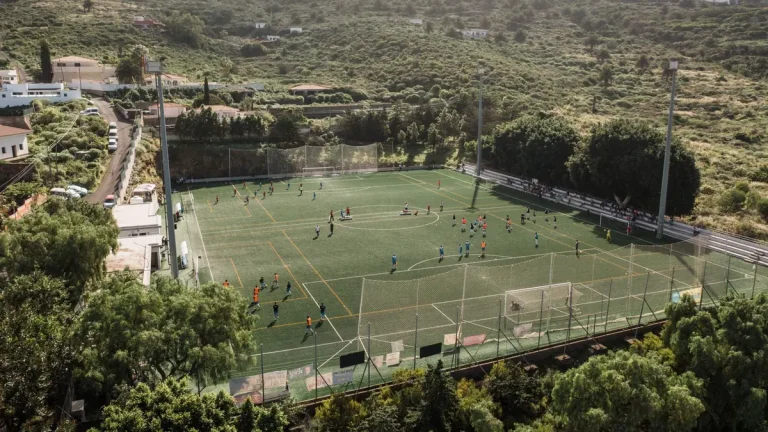
FIFA Standard Turf vs Regular Soccer Turf Explained

A contractor spreads two soccer turf quotes across the desk before a tender closes. One sheet is stamped ‘FIFA standard’ in bold type; the other carries no such line at all. The tender document never says which label the pitch actually requires, and neither salesperson explains it. The stamped one may not be certified either, ...

Read Article
Sports Field Artificial Grass: Types, Costs, Benefits

Sports Field Artificial Grass: Types, Costs, Benefits

Three quotes for the same pitch can land six figures apart, and every number in them can still be honest. The usual reason is that each bidder priced a different system wearing the same name. One quoted a sand-filled short-pile carpet, one a long-pile field with rubber crumb, one added a shock pad and a ...

Read Article
How Much Space Does a Padel Court Need?

How Much Space Does a Padel Court Need?

Look up the size of a padel court and every page hands you the same 20 x 10 m rectangle. Page one then disagrees on nearly everything a project needs. One results page quotes the space one court takes as 21 x 11 m, 22 x 13 m and 26 x 16 m. None says ...

Read Article
Padel Turf Quotes: Reading Between the Specs

Padel Turf Quotes: Reading Between the Specs

A padel turf quote is read twice: once for what each number means and once for what each number hides. Pile height without its sand assumption, density without its gauge and stitch rate, and dtex without its edition all look precise and still mislead. Two quotes for the same 12 mm carpet can disagree on ...

Read Article
A Bowls Green Starts With the Lines, Not the Carpet

A Bowls Green Starts With the Lines, Not the Carpet

A bowls green is bought as a set of lines, not as a lawn. The rink width, the ditch envelope, the bank height and the marker positions are all fixed by the rules before anyone chooses a carpet. Ask for a price before that set-out exists and the answer can only be a guess. A ...

Read Article
Volleyball Court Artificial Turf: Pile Height, Base and Line Specs

Volleyball Court Artificial Turf: Pile Height, Base and Line Specs

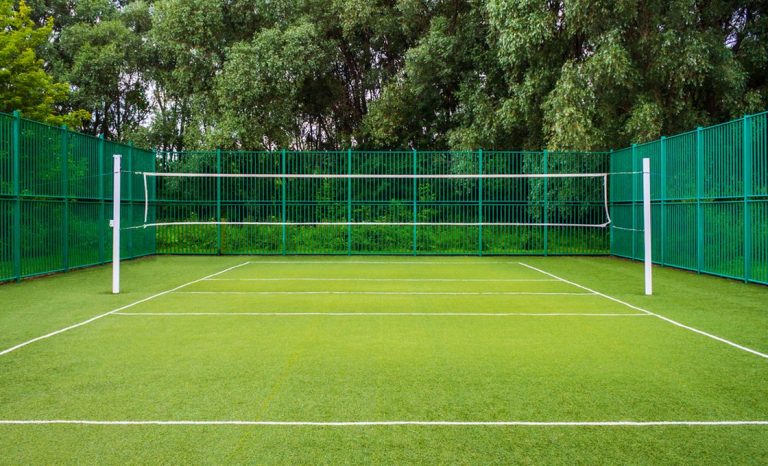
Every volleyball court is three surfaces pretending to be one. The jump-landing zones take players off the floor and put them back down hard. The dive lanes in front of and behind the net take landings all match long. The back court takes the lateral stop-and-sprint lanes that punish every change of direction. We manufacture ...

Read Article
Indoor Sprint Lane Turf: Field-Event Run-Up Specs That Take Spikes

Indoor Sprint Lane Turf: Field-Event Run-Up Specs That Take Spikes

Almost every failure on an indoor track starts at the same interface: the point where a spike enters the surface. Outdoor surfaces accept pins of 9 mm, or 12 mm for certain field events, while indoor tracks are held to 6 mm. Indoor surfaces are thinner and more easily damaged, so the surface itself must ...

Read Article
Softball vs Baseball Turf: The Infield Difference

Softball vs Baseball Turf: The Infield Difference

A softball infield is usually one flat, skinned surface of coloured turf, not a green infield wrapped around a raised mound. That single structural fact drives every number in the specification. It is also why we treat a softball diamond as a zone list before we treat it as a field. On our line we ...

Read Article
Back to top