
On our bench we review failed artificial turf installations and the cause is almost always the backing. Our team specifies PP+Net and PU backings for our line because the hidden layer decides how long the surface lasts.
A PP+Net backing typically lasts six to eight years while a PU backing runs twelve to fifteen years. That six to nine year gap is the cost of one wrong choice, so how to choose proper artificial grass backing starts with engineering metrics, not colour.
Why Backing Is the Hidden Half of Artificial Turf
The pile is what buyers touch, but backing is what the system rests on. We see backing as the keel of a boat: hidden, yet it sets how the whole surface behaves under load and weather.
Our opinion is plain. Backing is the most under-rated line item in a turf contract because the error shows up years later. How to choose proper artificial grass backing therefore begins with the base, then climate, roll width, install method and price.
Most top pages still list materials and stop there. We instead give a decision order: match backing drainage to the base, then fit the climate, then set the roll width, then pick the seam, then read the price band. Each step is a measurable field, not a colour swatch.
Matching Backing Drainage to Your Base Drainage
Top turf moves about thirty plus inches of rain per hour per square yard when the backing is open. The base beneath must drain at least as fast, or water ponds on the surface after infiltration stalls.
We treat backing and base as one hydraulic system. A backing that out-drains a weak base still floods, and a strong base behind a clogged backing still ponds. The two rates must meet before the roll is laid.
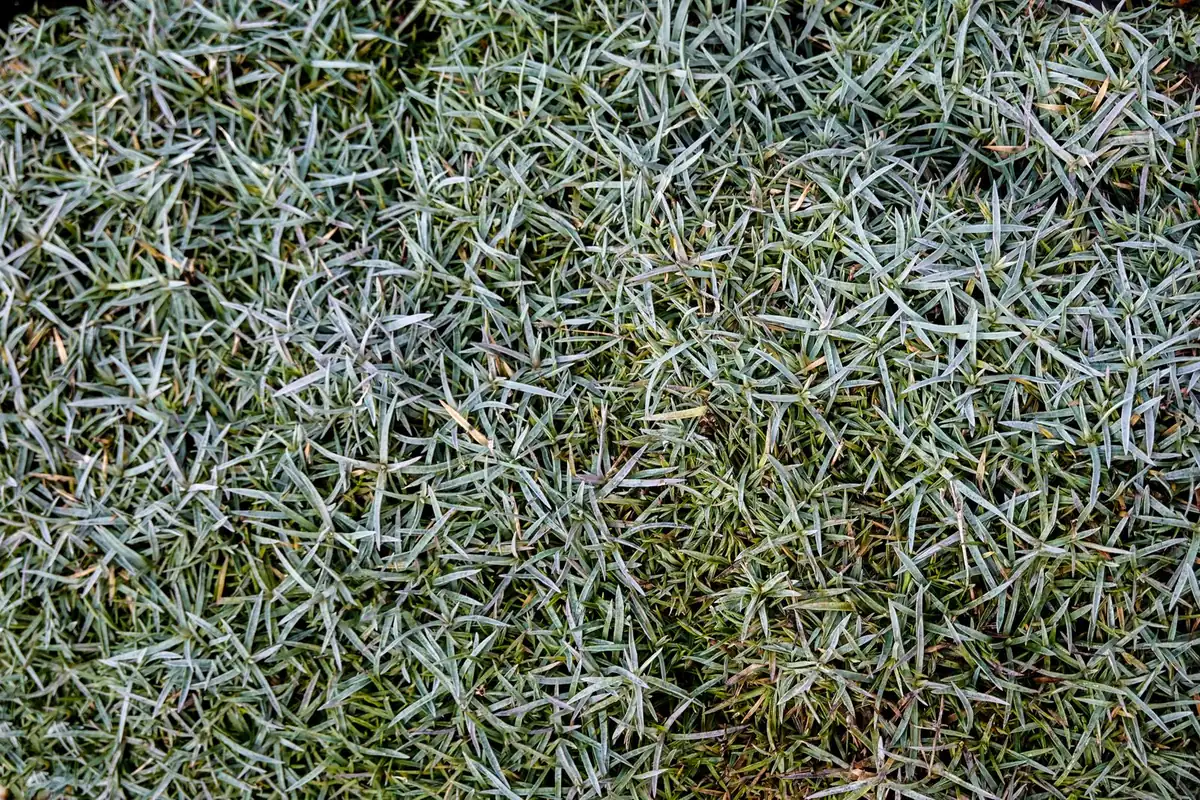
Three perforation styles set the rate. Hole-punch suits homes and parks. Flow-through suits pets and wet sites. Non-perforated suits putting greens that rely on heavy infill to stay flat.
Hole spacing runs about fifty to two hundred millimetres with five to ten millimetre holes in common spec. We check the pattern against the site’s rain load before we confirm the build.
| Perforation | Drainage rate | Fits base capacity | Typical use |
|---|---|---|---|
| Hole-punch | High | Matches 20–50 in/hr base | Homes, parks |
| Flow-through | Very high | Beats a wet base | Pet turf, wet sites |
| Non-perforated | Low | Needs heavy infill | Putting greens |
When the base is engineered for twenty to fifty inches per hour, we align the backing to the same band. A mismatch is the usual cause of call-backs we see on flat roofs and tight courtyards.
Where PP+Net Backing Earns Its Place
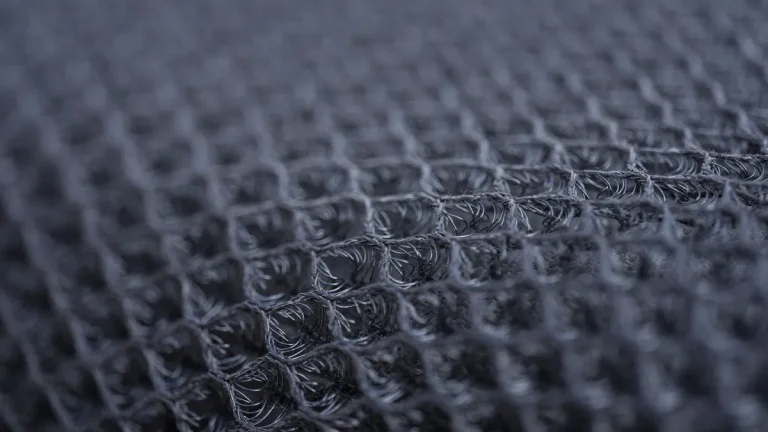
PP+Net is a woven polypropylene net with a coating. Our line uses it as the standard drainage backing for landscape and light traffic where the climate stays mild and the load stays low.
A PP+Net backing typically serves six to eight years in normal use. Under desert UV that window can shrink to four to six years, which is why we track each site’s sun load before we recommend it.
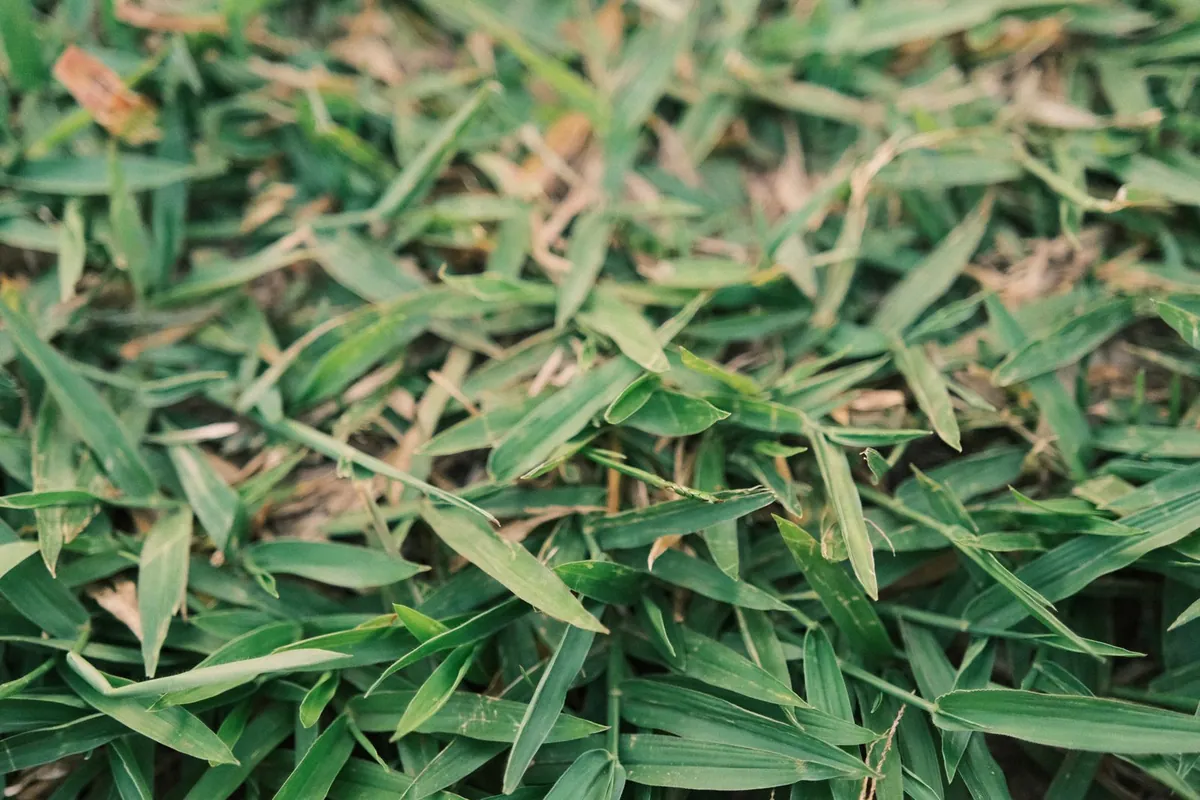
We once revisited a desert demo laid with PP+Net after the first hot summer. The edge had stiffened and a seam had lifted; the backing had lost flexibility faster than the buyer expected from a mild-climate spec.
PP+Net is not latex. The net is a structure, latex is a glue type some coats use. We keep that distinction clear because buyers often mix the two when they ask for a “standard” backing on a quote.
| Scenario | PP+Net fit | Note |
|---|---|---|
| Residential landscape | Yes | Mild climate only |
| Temporary exhibit | Yes | Short term use |
| Mid-low traffic | Yes | Light load |
| Standard climate | Yes | No extremes |
| Desert UV | Limited | Life drops to 4–6 yr |
| Coastal salt | No | Coating degrades |
| Heavy wet | No | Holes clog |
| Freeze-thaw | No | Net can tear |
For coastal salt, heavy wet and freeze-thaw we steer buyers away from PP+Net. The coating hardens and the net can tear when the ground moves through a cold cycle, which shortens the real service life.
Where PU Backing Earns Its Premium
PU backing is a polyurethane coat that bonds the tufts and holds shape under stress. Our line specifies it for commercial, sports and pet sites where the surface works hard every day.
A PU backing typically serves twelve to fifteen years. Its dimensional stability holds from about minus forty to plus eighty degrees Celsius, so desert and freeze zones stay safe through the year.
In our coating hall we join PU with a heat-welded seam. The iron fuses the two edges with no glue, which removes chemical residue and gives a cleaner seam than tape can reach on a long run.
PU resists liquid, so pet urine and coastal salt will not soak in or smell. SBR and latex coats can crack or grow mould in heat and moisture, which is why we rarely suggest them for wet sites.
| Scenario | PU fit | Note |
|---|---|---|
| High-end home | Yes | Long life |
| Commercial landscape | Yes | Heavy use |
| Play area | Yes | Impact safe |
| Pet turf | Yes | No odour |
| Hot desert | Yes | Holds to 80°C |
| Humid coastal | Yes | No mould |
| Freeze-thaw | Yes | No tear |
| Low-budget temp | Limited | Cost is high |
PU weighs about thirty to fifty percent more than PP+Net per roll. That extra mass couples to roll width and crew size, which we cover in the next section on climate and install.
Climate, Roll Width, and Installation Method
Climate sets the backing first. Hot desert above forty-five Celsius calls for PU. Humid coast calls for PU to block odour. Freeze-thaw below minus twenty calls for PU to stop tears. Temperate sites can use PP+Net.
Roll width then meets backing weight. A two metre by twenty-five metre roll covers fifty square metres and stays light. A five metre by twenty-five metre roll covers one hundred twenty-five square metres but needs a bigger crew.
Seam count follows width. A thousand square metres in two metre rolls needs four to five seams; in five metre rolls it needs only one to two. Fewer seams mean fewer leak paths and a longer life for the field.
| Climate | Backing | Roll width | Install |
|---|---|---|---|
| Hot desert | PU | 4–5 m | Heat weld |
| Humid coast | PU | 4 m | Heat weld |
| Freeze-thaw | PU | 2–5 m | Heat weld |
| Temperate | PP+Net | 2–4 m | Seam tape |
Install method locks to backing. PU takes a heat-welded seam; PP+Net takes seam tape with two-part adhesive. We pick the method with the crew and the site, not the catalogue page.
That sequence is how to choose proper artificial grass backing without guessing the seam. Climate, width and method are one decision, and the backing type sits at its centre for every project we ship.
The Backing Numbers, Before You Order
Request Backing Spec & FOB Quote
Climate zone, base drainage capacity, roll width and seam method—one form. The reply pairs FOB pricing with a spec sheet: perforation, drainage rate, tuft bind, peel strength.
PP+Net and PU backings run in 2m, 4m and 5m widths, customisable in chemistry and roll size.
Free 20×20 cm samples ship in four to six days.
Locking the Backing in a B2B Acceptance Spec Sheet
A backing spec sheet turns a promise into a number. We list six measurable fields so the buyer and the plant agree on the standard before a single roll ships to the port.
The six fields are drainage rate, perforation pattern with spacing and hole size, tuft bind, peel strength, tensile and unit weight. Each is set by an industry test method; exact values are available on request from our bench.
On intake we pull one roll at random and run a field test for drainage rate and tuft bind. If either falls short of the sheet, we hold the shipment and notify the buyer before sign-off and payment.
| Metric | Test method | Pass band | Fail action |
|---|---|---|---|
| Drainage rate | Industry test | Meets base rate | Hold shipment |
| Perforation | Industry test | Spacing 50–200 mm | Reject |
| Tuft bind | Industry test | Pull-out force logged | Hold shipment |
| Peel strength | Industry test | Seam value logged | Reject |
| Tensile | Industry test | Value logged | Review |
| Unit weight | Industry test | g per m² logged | Review |
Every roll label should carry backing type, batch number, plant, weight and length. That trace links the sheet to the physical roll and closes the loop for the buyer at the warehouse gate.
A signed sheet is the end of how to choose proper artificial grass backing. The base checklist in our stadium substructure guide pairs with this one, so the two locks sit back to back on a contract. For the life side, see our guide on turf lifespan.
Price Bands, Sample Loop, and the Spec Sheet
Our material range runs at $7–60 per square metre, indicative and subject to exact quote. The backing choice sits inside that band and moves the price by roughly thirty to fifty percent on its own.
PP+Net fills the lower part of the band for mild, low-traffic sites. PU fills the upper part for hard-use and extreme climate, yet its longer life lowers the cost per year across the contract.
| Band | Backing | Life | Use |
|---|---|---|---|
| $7–14/m² | PP+Net | 6–8 yr | Mild, light |
| $14–28/m² | PP+Net / PU | 6–15 yr | Mixed use |
| $28+/m² | PU | 12–15 yr | Hard, extreme |
Samples close the loop. We send free twenty by twenty centimetre cuts, three to four pieces. The customer pays freight; they arrive by DHL or FedEx in four to six days. Custom cuts add ten to fifteen days.
The buyer then sends climate zone, base drainage, target width and seam method. We return a spec sheet with perforation, drainage rate, tuft bind and peel, plus the FOB price for the order.
Match a backing to a product in our artificial grass range before you request the spec sheet and the sample set.
Price is the last step in how to choose proper artificial grass backing. With the sheet signed and the sample in hand, the buyer can compare per-year cost instead of sticker price alone.
Frequently Asked Questions
What is the difference between PP and PU backing for artificial grass?
PP+Net is a woven net with coating; it is lighter and cheaper for low-traffic landscape. PU is a polyurethane coat that resists heat, moisture and tears. We choose PU when the site sees heavy use or extreme weather.
Which backing is best for hot climates?
PU backing is the safe pick for hot climates above 45°C. Its dimensional stability holds from about -40°C to +80°C while PP+Net can stiffen and crack under desert UV. We specify PU for any desert or rooftop site.
Which backing is best for heavy rain or coastal humidity?
For heavy rain or coastal humidity we recommend PU. It does not absorb liquid, so pet urine and salt air will not breed odour or mould. Flow-through perforation on the backing also keeps the base from ponding.
Does PU backing last longer than PP backing?
Yes. A PP+Net backing typically serves six to eight years, while PU runs twelve to fifteen years. That gap is the reason we push PU for long-life commercial and sports contracts where downtime costs more.
How do I check the drainage rate of artificial turf backing?
Ask the supplier for the drainage rate in inches per hour per square yard and the perforation pattern. We test one roll on intake with a simple field kit; if the rate falls short of the base capacity, we reject the shipment.
Can PP and PU backing be used with seaming tape and adhesive?
PU is usually joined with a heat-welded seam for zero glue residue, though seaming tape works. PP+Net is commonly joined with seam tape and two-part adhesive. Both methods are valid; the choice follows the site and crew.
 English
  Arabic
  French
  German
  Portuguese
  Russian
  Spanish