
When buyers ask how long does artificial turf last, they rarely want a single number. They want to know if the roll they specify will hold up until the project pays back. At our line we see three answers hiding inside the same question, and the gap between them decides the ROI of any installation we ship.
The labeled lifespan, the realistic service life on site, and the end-of-life signal that forces replacement rarely line up. Buyers who learn to separate those three usually push the realistic figure toward the upper end of the labeled range. Indicative material pricing for our landscape rolls sits between USD 7 and 60 per square metre, with tailored specs across roll widths 2·4·5 m × 25 m.
What a Realistic Lifespan Looks Like
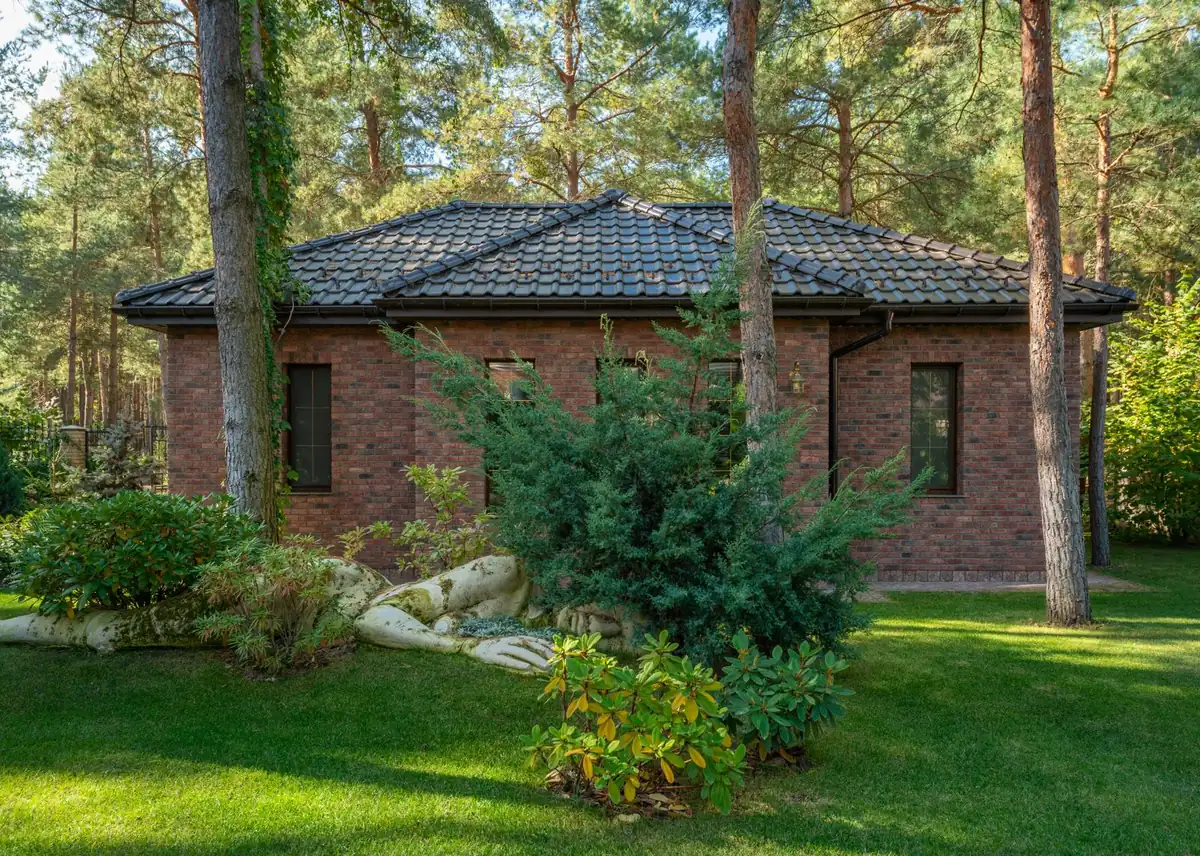
Across the projects we have shipped, a well-installed landscape roll in a temperate climate reaches the 10 to 15 year band. Heavier traffic and harsher sites pull the figure toward the lower end. Mild sites push it toward the upper end. The labeled number is the ceiling; the realistic figure is the floor.
The third figure is the end-of-life signal, the point where repair stops making sense. A frayed bundle, a cracked backing or a lifted seam is the trigger. Once the backing crumbles, the clock stops and the labeled number no longer protects the project.
| Application | Realistic Service Life | Key Wear Driver |
|---|---|---|
| Residential landscape | 10 to 15 years | UV aging, light footfall |
| Commercial landscape | 10 to 18 years | Foot traffic, cleaning cycles |
| Sports field | 8 to 12 years | Cleat shear, sliding stress |
| Putting green | 10 to 15 years | Ball roll wear, matting |
| Pet area | 8 to 15 years | Urine, digging, repeat rinses |
Industry warranty terms, where issued, span 8 to 15 years and cover defects, not wear. Treat the warranty as a separate clock from realistic service life.
Fiber Type and Polymer Choices
How long does artificial turf last depends first on polymer. Three polymers dominate the market, each with a different lifespan band. Buyers who lock polymer early land closer to the upper end of the range.
Polyethylene monofilament is the soft workhorse in residential landscape rolls, banded around 8 to 12 years. High-density UV grades hold above 90 percent of appearance after a decade in commercial service.
Polypropylene is the economic choice for low-traffic zones, banded around 5 to 7 years because the fiber frays faster. It earns its slot where lower cost outweighs the shorter clock.
Polyamide, also called nylon, is the toughest and reserved for heavy-load sports zones, reaching up to 15 years. It tolerates cleat shear far better than PE or PP but costs more and reads stiffer.
Hybrid yarn sets, mixing PE blades with a PP thatch layer, are our most common spec. The PE blade keeps the look soft; the PP thatch adds resilience. Yarn shape decides wear: flat blades flatten fast, C or U bounce back, W or diamond hold on sports surfaces.
Use Case Lifespan at a Glance
Once polymer is locked, the use case decides service life. A backyard, a hotel deck and a school field live on three clocks with the same fiber. The table groups the bands buyers ask about most.
| Use Case | Realistic Lifespan | Stress Profile |
|---|---|---|
| Residential garden | 10 to 15 years | Light to medium footfall |
| Pet backyard | 8 to 15 years | Urine, digging, repeat rinses |
| Commercial landscape | 10 to 18 years | Foot traffic, rolling loads |
| Sports field | 8 to 12 years | Cleat shear, sliding tackles |
| Playground | 8 to 10 years | Falls, heavy wear under swings |
| Putting green | 10 to 15 years | Ball roll, matting at cup |
The use case sets the floor; polymer and backing decide whether the project reaches the upper end. Two same-use-case projects can finish three to five years apart on the spec below the surface.
How Roll Width Shapes Service Life
Roll width is the first spec to lock after use case, and it weighs more on lifespan than most buyers expect. A 2 m roll needs many seams, each a leak path. We have measured 2 m installs losing one to three years to seam water ingress.
The 4 m × 25 m roll is the safe default for most projects, covering site shapes without excess seams and shipping in standard containers. For widths 3.5 to 4.5 m, the 4 m roll wins on lifespan, freight and install speed.
The 5 m × 25 m roll fits larger spaces, including sports pitches and wide decks. A 5 m roll across a 4 m lane leaves almost no seam, removing the leak path and adding years.
Custom widths are sized to the site with no seam at all, sitting at the premium end of the USD 7 to 60 band. On sites where seam failure drove early replacement, the premium pays back in the first service year.
As a rule, treat roll width like a jigsaw: fewer cuts means fewer leak paths and a longer life. Lock width to site geometry first.
Backing Choice and Lifespan Gap
Backing decides whether a roll reaches the upper end of its band. The four grades we ship cover most profiles and form the largest lifespan lever after polymer.
| Backing | Best Fit Profile | Lifespan Note |
|---|---|---|
| PP+Net | Standard landscape, light traffic | Cost-effective baseline for dry climates |
| PP+Non-woven | Medium-stress landscape, play areas | Improved tear resistance over PP+Net |
| PP+Grid cloth | Sports-grade, high tuft bind | Strong dimensional stability under cleats |
| PU (polyurethane) | Coastal, freeze-thaw, heavy moisture | Holds up where PP grades delaminate early |
PP+Net is the most-shipped backing for dry temperate landscape projects. Where moisture or freeze-thaw is routine, PU is the only grade that holds dimensional stability over a 10 to 15 year clock. PU costs more per square metre, but on wet or coastal sites it usually replaces a PP grade before year seven, so the lifetime math favors PU.
The end-of-life signal most linked to backing is delamination, where the secondary coat separates from the primary cloth and the tuft bind fails. Once it starts, it spreads fast, so a backing that fits the climate beats any reactive repair cycle.
Climate Adjustments by Installation Region
How long does artificial turf last also turns on climate, the second-largest lever on service life. The same roll can finish two to three years apart on sites 50 km apart. Buyers who treat climate as a spec band hold closer to the upper end.
| Climate Band | Lifespan Impact | Spec Adjustment |
|---|---|---|
| Temperate mixed | Baseline band | Standard PE+PP+Net spec |
| High UV desert | Minus 1 to 2 years | UV-stabilized fiber, lighter infill |
| Coastal salt spray | Minus 2 to 3 years | PU backing, UV-stabilized fiber |
| Freeze-thaw snow belt | Backing-led risk | PU backing mandatory, drainage plan |
Desert sites are dominated by UV exposure, which hits the fiber first. A UV-stabilized PE grade and lighter infill keep the pile from breaking down early. Without those adjustments the realistic lifespan slides one to two years below the labeled band.
Coastal sites stack UV with salt spray and high humidity, degrading fiber and backing faster. We route most coastal projects to PU backing as default, not upgrade. Salt air is rarely the visible year-two problem; backing delamination in year six usually is.
Snow belt sites with repeated freeze-thaw attack the backing through seam movement. PU backing and sound drainage hold the install inside the 10 to 15 year band. A PP+Net spec often delaminates by year six.
From a 4-6 Day Sample to a 15-Year Estimate
Samples are the closest a buyer gets to real service life before a full container. We ship standard 20 cm swatches in sets of three to four, courier cost covered by the buyer. They arrive by DHL or FedEx within four to six days. Outlying routes take seven to nine days; custom swatches add 10 to 15 working days.
On the bench, three tests map to the lifespan estimate. Compress the swatch and watch fiber recovery. Slow recovery points to a low-resilience yarn and a shorter clock.
Second, lay the swatch on white paper under direct light to read color stability. Third, flex the backing by hand. A backing that creases white or feels chalky signals a low-grade coat that delaminates inside the labeled band.
Once the swatch passes, the talk moves to roll width. The sample shows fiber performance; the site plan shows seam count. Together they close the loop from a 4 to 6 day parcel to a 10 to 15 year estimate for the buyer’s client.
Maintenance That Actually Moves the Needle
Maintenance sets the floor of realistic lifespan. Six tasks at the right cadence close most of the gap between the labeled and on-site number, and skipping one costs the project measurable years.
| Task | Cadence | Purpose |
|---|---|---|
| Brush fibers upright | Monthly | Restore pile memory, prevent matting |
| Rinse surface | As needed | Remove dust, pollen, light debris |
| Clean pet waste | Daily on pet sites | Control odor and bacteria load |
| Replenish infill | Annual | Restore ballast and fiber protection |
| Inspect seams | Quarterly | Catch early lift before water ingress |
| Professional deep clean | Every 1 to 2 years | Reset infill and remove embedded fines |
How long does artificial turf last is shaped by two microhabits more than the headline tasks. Keep heavy point loads off the surface, including ladder feet, plant pots and furniture bases that compress the pile permanently. After a storm, rinse the lane and check the nearest seam that week.
Warning Signs Your Turf Is Reaching End of Life
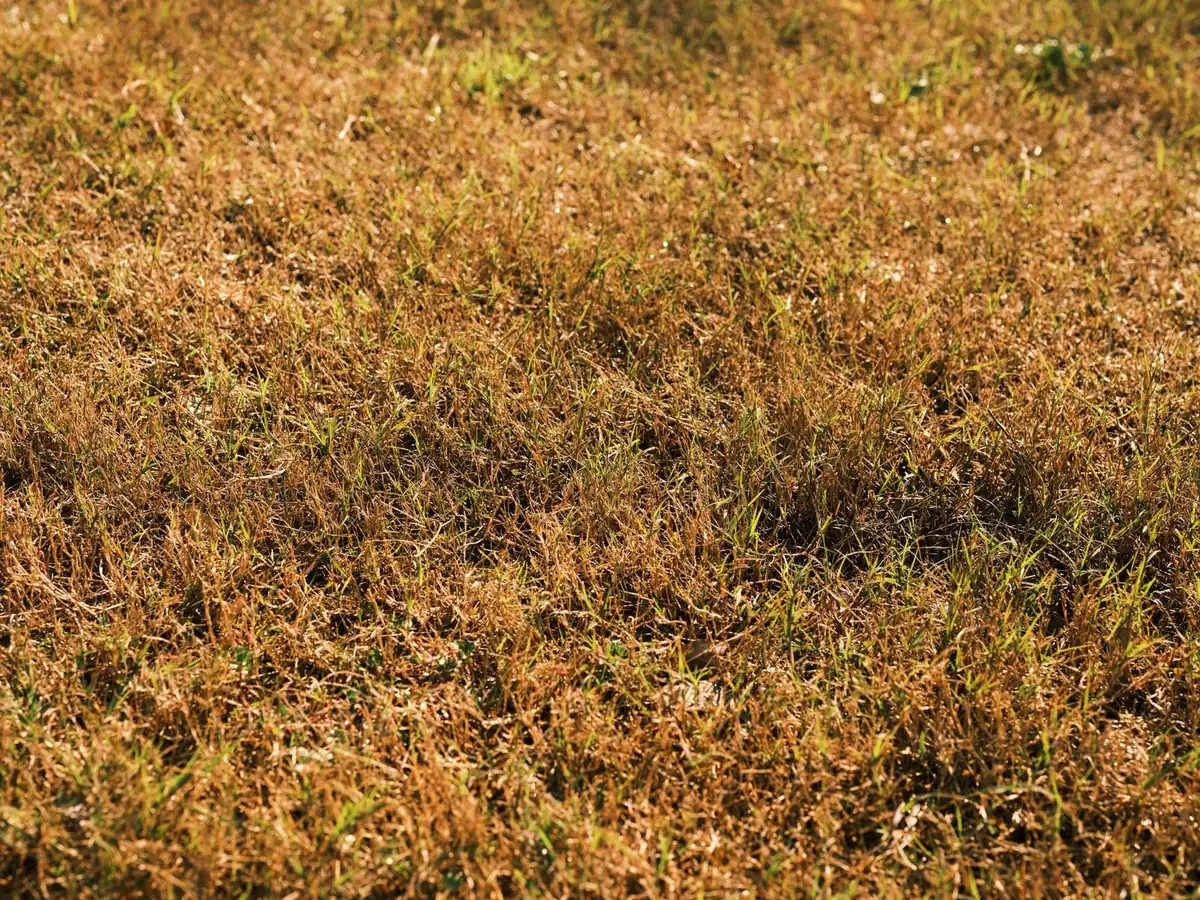
End-of-life rarely arrives as a single failure. It announces itself through a cluster of signals that appear together once the install crosses the halfway mark. Spotting the cluster early separates a planned replacement from a client emergency.
Fiber fraying is the first signal. Tufts that no longer sit upright after brushing point to a polymer that has spent its UV budget. Color fade on the same fiber, especially the south-facing lane, confirms it.
Backing deterioration is the second and decisive signal. Lift a corner and flex the backing. If it cracks, crumbles or leaves chalky white streaks, the coat is failing. The spread is fast once started. Patching buys months, not years, so a replacement quote is the right call.
Seam failure, drainage decline, infill compaction and soft subsurface spots round out the cluster. Any one can sit alone without forcing replacement, but two or more together usually mean the realistic clock has run out.
Repair or Replace: A Decision Guide
The repair versus replace decision turns on age, signal count and traffic load. A roll less than halfway through its band with one isolated signal almost always repairs and returns years of service. A roll past the halfway mark with two or more signals rarely does, as patching labor exceeds the residual life.
Run the cost-per-year test before deciding. Take the total installed cost and divide by the years of realistic service life left. Compare that to a new install spread over its full band.
A working example: a 600 sq.ft install at USD 12 per sq.ft totals USD 7,200 and runs about USD 600 per year on a 12 year clock. Once the existing roll drops below USD 1 per sq.ft of remaining life per year, replacement wins.
Turf Failing Years Before It Should?
Lifespan is set by the spec, not the weather. We roll to the duty you describe. We quote off our own line, typically 30–50% under market for matched specifications.
For buyers who ask how long does artificial turf last in their climate, the next section maps the recycling path. It closes the loop on the 12 to 15 year clock and turns the end-of-life signal into a planned exit.
End-of-Life: Recycling a Synthetic Turf Field
Modern turf recovery has moved past landfill in the past five years. Most of our shipped volume routes at least 70 percent of carpet mass back to a downstream stream with spec-stage planning. The four streams are infill, fiber, backing and shock pad, each with its own buyer.
End-of-life is not the end of the material budget. Most landscape and sports rolls split back into component streams, each with a downstream buyer. For a B2B buyer, planning the exit at spec stage keeps the lifetime cost picture honest.
Infill is the first stream off the field. It can be sifted, cleaned and reused on the next install or routed to industrial use. The PE fiber and backing coat follow; modern reclaim lines separate them so the polymer re-enters the extrusion chain. Where separation fails, the backing routes to energy recovery, not landfill.
The shock pad, where installed, is often the easiest reuse win. Many pad grades outlive the carpet above, so the pad lifts, re-grades and re-lays under the next carpet. Recovery rates vary by site, but planning pad and carpet to be separable at end of life is the cheapest way to lift the rate.
Buyers who ask how long does artificial turf last at spec stage also ask what happens at year 12 or 15. The cleanest exit is the one planned at the spec stage.
| Component | Recovery Path |
|---|---|
| Infill | Sift, clean, reuse or industrial reuse |
| PE fiber | Reclaim line, re-enter extrusion supply |
| Backing coat | Energy recovery where separation fails |
| Shock pad | Lift, re-grade, re-lay under next carpet |
What to Lock In Before Shipment
Before a buyer signs off on a shipment, seven items belong on the order sheet. Locking them at quote stage costs almost nothing and removes the common reasons a project finishes below its realistic band.
The four spec locks: fiber grade, backing type, roll width and application profile, each picked against the labeled band aimed for. The environment lock is the delivery climate band. The budget lock is the cost-per-year target. The sample lock is the bench result on a 4 to 6 day swatch.
Buyers who run through these seven items before a purchase order usually land inside the upper end of the band. Buyers who skip them and pick on price alone land in the lower end and pay the difference in year six when backing delamination forces a re-spec.
Frequently Asked Questions
How long does artificial turf last? Realistic service life sits in a 10 to 15 year band for residential and commercial landscape installations. Roll width, backing choice and climate each move the figure by one to three years either way.
Buyers who lock fiber, backing and roll width at the spec stage usually land near the upper end of the band. End-of-life signals such as backing delamination or seam failure, not the calendar, decide when the realistic clock stops.
What is a realistic lifespan for residential artificial turf?
A residential landscape roll with PE fiber and PP+Net backing in a temperate climate reaches 10 to 15 years. Coastal or high UV sites drop one to three years without UV-stabilized fiber and PU backing.
Does pet use shorten artificial turf lifespan?
Yes, by up to seven years on heavy-use pet runs. Routine rinsing, urine control and infill top-up keep a pet site in the 12 to 15 year band rather than the 8 year floor.
Is a turf warranty the same as the actual lifespan?
No. Warranties commonly span 8 to 15 years but cover manufacturing defects, not wear, installation error or pet damage. Treat the warranty as a separate clock from realistic service life.
How much does it cost to replace artificial turf?
Replacement typically runs USD 8 to 20 per sq.ft installed, depending on region, size and spec. A 600 sq.ft lawn at USD 12 per sq.ft totals USD 7,200, or about USD 1 per sq.ft per year over a 12 year realistic life.
How does roll width affect how long the turf lasts?
A 2 m roll forces multiple seams, each a future leak path, costing one to three years. A 4 m or 5 m roll, or custom no-join width, removes most seams and pushes toward the upper end of the band.
How long does artificial turf last in hot climates?
In hot, UV-heavy sites, a UV-stabilized PE fiber with PU backing holds the 10 to 15 year band. A non-stabilized spec typically drops to the 8 to 12 year range under direct sun exposure.
 English
  Arabic
  French
  German
  Portuguese
  Russian
  Spanish