
Every tendering season our team answers the same question from contractors and club buyers: hybrid grass vs artificial turf for a pitch with a full fixture list. We run a factory-direct line, and our bench sees both surfaces specified on the same project. They are not competitors on one axis. One keeps a living plant in the wearing layer, and the other removes the plant entirely.
This comparison separates the two by what each one commits a buyer to: available play hours, maintenance load, drainage and base work, and the acceptance list on delivery day. It also shows where a reinforced pitch still depends on a synthetic component, and that is the part our plant supplies. Read it as a procurement frame rather than a product brochure.
What Hybrid Grass Actually Is on Site
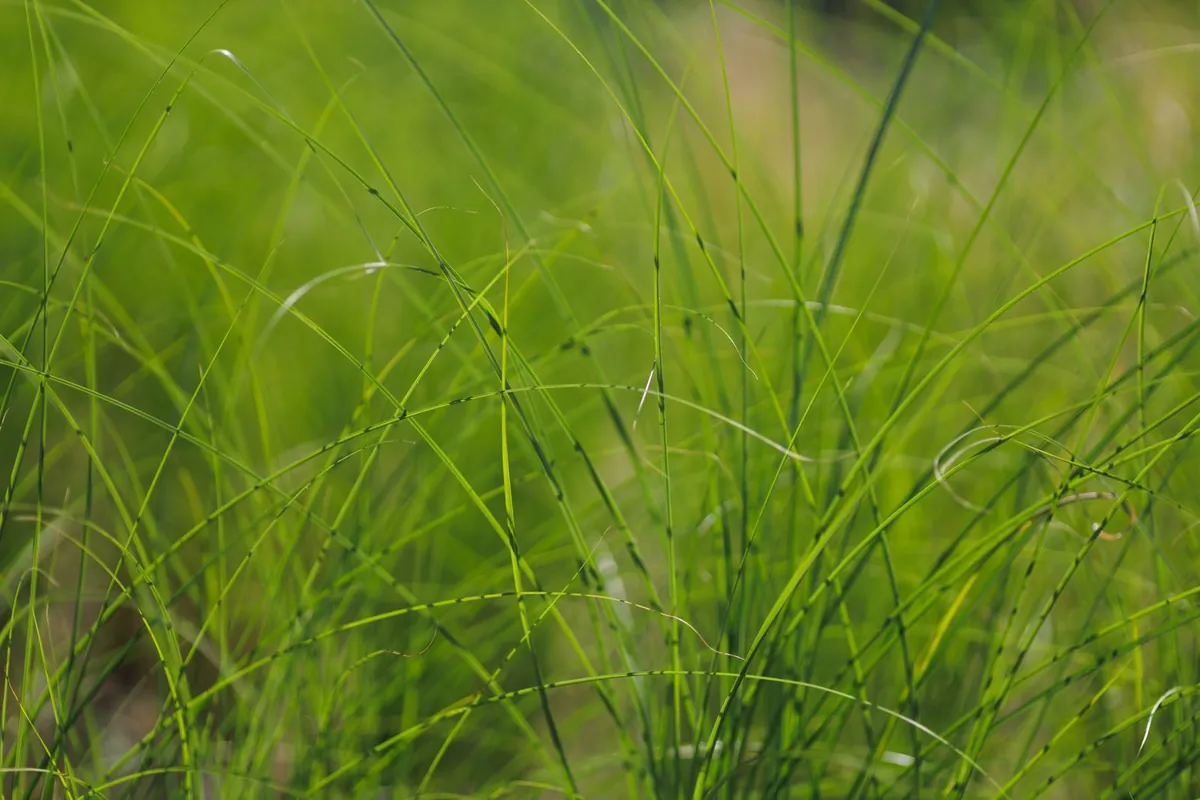
Hybrid grass is a living surface with a synthetic skeleton. Seed or sod goes down over a rootzone into which synthetic fibres have been injected, stitched, or carried on a mat. The fibres sit below and between the blades. As the root mass grows, it binds around them, and the two materials start behaving as one wearing layer.
Three construction families cover most of the market. Injected systems push fibres down into a sand-based profile. Stitched systems sew rows of fibre into that profile. Carpet systems lay a synthetic mat under a sand or soil layer, and the grass grows through it. All three leave a real plant carrying the playable surface.
That distinction is the one a buyer pays for. Hybrid grass is agriculture with reinforcement, so it needs light, water, feed, and recovery time. When a specifier asks where the synthetic component ends, our team points at the same yarn families we tuft for landscape and sports rolls. Those are polyethylene and polypropylene monofilament, with the backing chosen for drainage rather than for looks.
What Full Artificial Turf Means in Practice
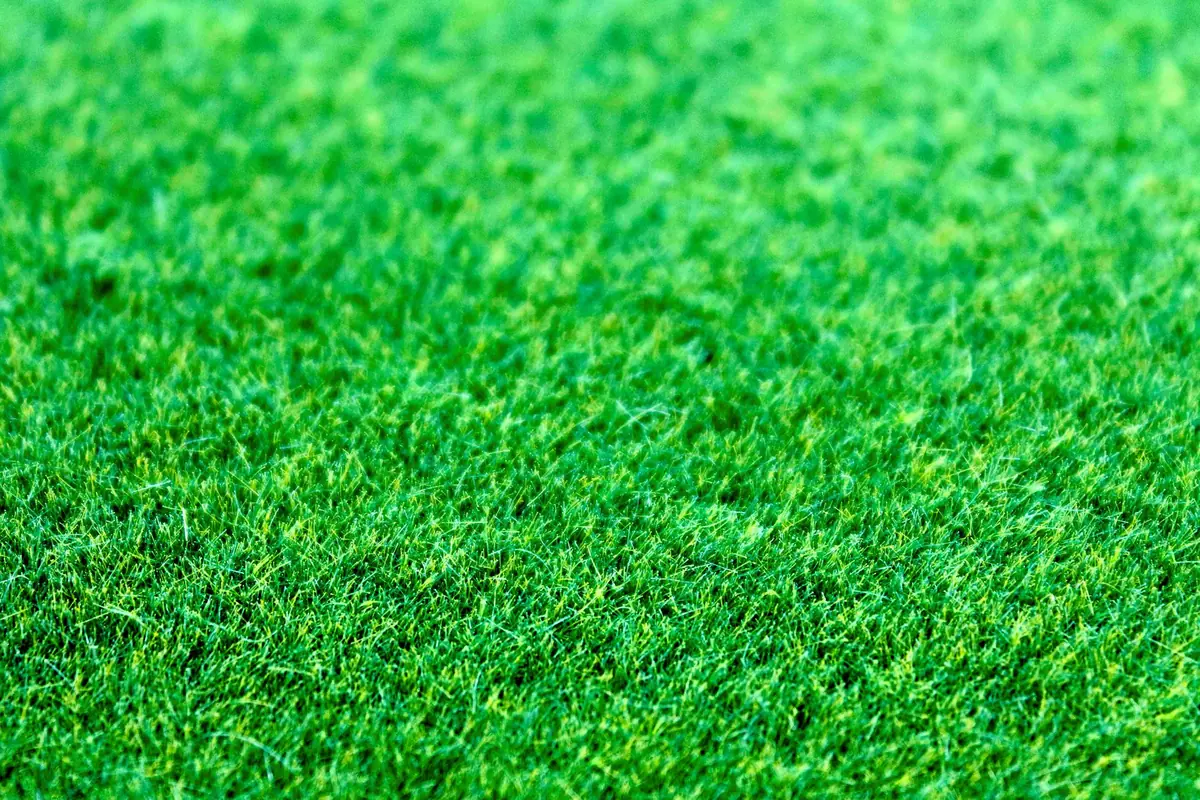
A full artificial turf installation removes the plant. Tufted polyethylene or polypropylene fibres lock into a coated backing and take a sand and performance infill. The roll then sits on an engineered base, with a shock pad where the fall height requires one. Nothing on the surface is alive, so nothing on the surface needs mowing.
Performance then becomes a property of the build rather than the season. Ball roll, ball bounce, traction, and drainage come from pile height, face weight, infill depth, and the base beneath them. Those values are measured at the factory and verified on delivery, which is why artificial turf installations are specified in rows instead of described in adjectives.
The trade is thermal and aesthetic. A synthetic surface does not repair itself, and it does not cool itself the way transpiration cools a living leaf. It stores heat under strong sun. Inside a shaded stadium bowl with poor airflow, that same property can work in the client’s favour.
The standard reference for artificial turf describes the same construction. For the product context on the sports side, see the sports artificial grass range we build for field projects.
Where Hybrid Grass vs Artificial Turf Splits
The hybrid grass vs artificial turf argument usually starts on feel, and it should start on hours. A reinforced natural pitch still needs recovery between fixtures. A synthetic pitch does not, which is why the same venue can carry a far denser calendar after a conversion.
Maintenance splits the same way. Hybrid grass inherits every task of a natural pitch: mowing, irrigation, feeding, aeration, overseeding, and a renovation window. Full synthetic trades those for grooming, infill top-up, and periodic deep cleaning.
| Job on the surface | Hybrid grass | Full artificial turf |
|---|---|---|
| Mowing | Weekly through the growing season | Never |
| Irrigation | Required for the living plant | Only for cooling and cleaning |
| Feeding and overseeding | Required on a seasonal programme | Not required |
| Grooming and infill top-up | Not applicable | Periodic, by traffic level |
| Renovation window | Annual or seasonal closure | Not required |
| Usable hours | Extended over natural grass, still capped | Highest of the three families |
| Heat behaviour | Transpiration cools the leaf | Surface stores heat under strong sun |
None of that makes either option better in the abstract. It makes them different contracts. A club with grounds staff, a clean light path, and a single-sport calendar can justify a hybrid pitch. A municipal operator running five sports across a full day usually cannot. The artificial grass lawn classification guide sorts these families by material, pile, and backing.
Play Hours Decide More Than Appearance Does
Start every specification conversation with the timetable, not the sample. Count the hours the surface must be playable each week, then count the hours it can be closed for recovery. That single exercise eliminates one of the two options on most projects before a price is ever discussed.
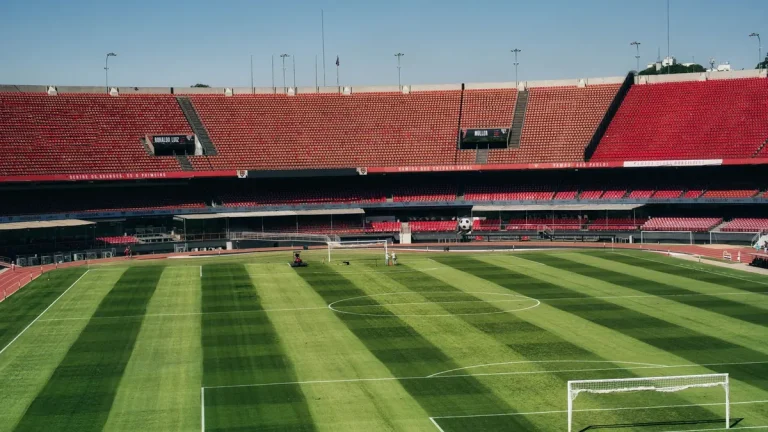
Reinforced natural grass extends what a grass pitch can carry, but the plant remains the limiting factor. Wear concentrates at goal mouths, centre circles, and touchlines, and those areas need recovery time or a renovation window. Shade, low sun angles, and poor airflow inside a stadium bowl make that recovery slower still.
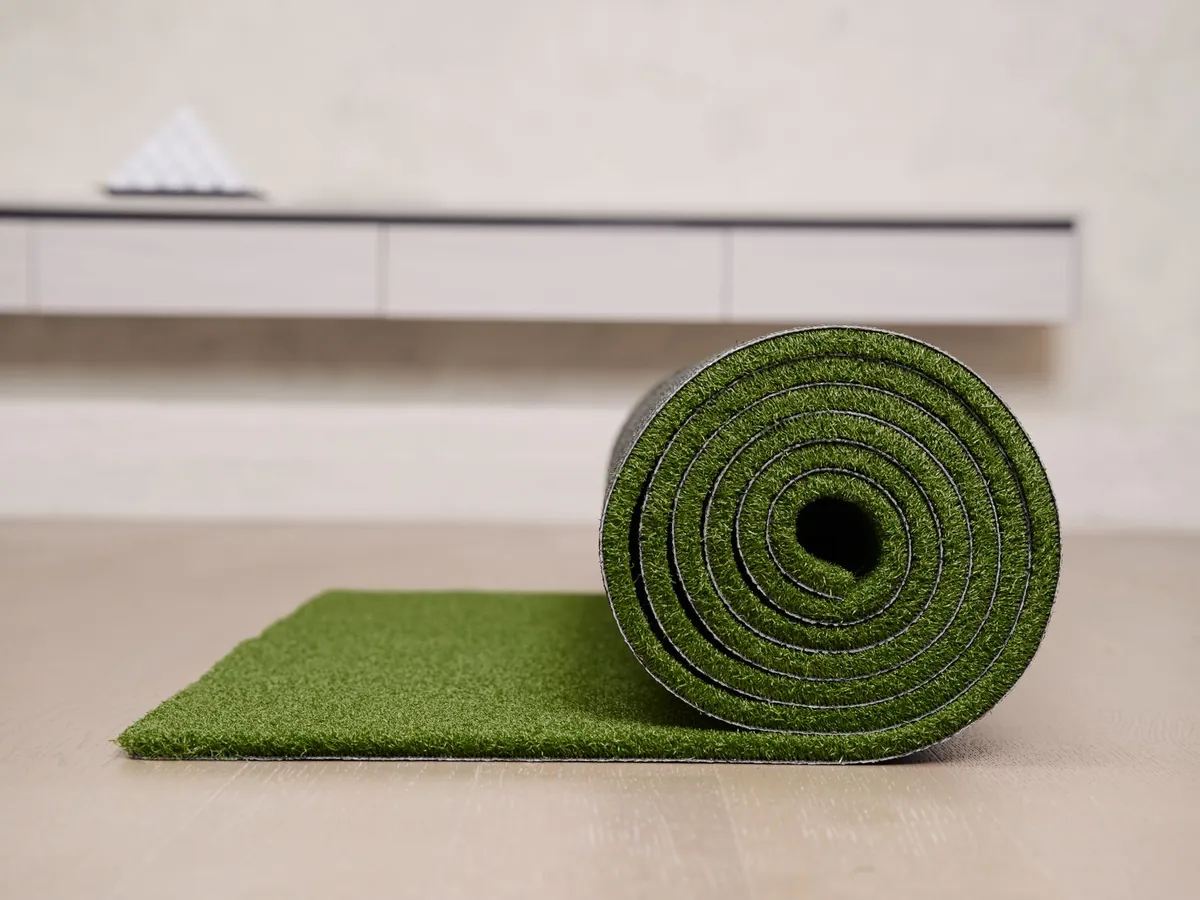
Full synthetic removes the recovery clause. Community use, training blocks, and back-to-back fixtures can share one day, provided the crew keeps up with grooming and infill levels. Our plant ships the widest roll format for heavy-use pitches, because every seam is a future maintenance item. Pile and infill depth differ by generation, as covered in 2G vs 3G artificial turf.
Maintenance Loads Point in Opposite Directions
Hybrid grass does not release the grounds crew. It changes what the crew does. Mowing, irrigation, and feeding continue on the natural schedule, while the fibres hold the surface together through wear that would tear a pure natural pitch apart.
Full artificial turf removes mowing and irrigation but adds its own discipline. Infill migrates toward the high-traffic lanes and has to be redistributed. Pile has to be brushed upright. Deep cleaning clears the fines that clog the drainage path through the backing perforations. Skip those tasks and the drainage rate falls long before the fibre wears out.

One line in the specification settles many school and municipal decisions. A synthetic surface needs no weedkiller, no pesticide, and no fertiliser, and the materials are non-toxic and free of allergens. On artificial turf installations at schools and municipal sites, that line often carries more weight than the play-hour figure. A hybrid pitch still runs a chemical and water programme every season.
Drainage and Base Work Set the Real Budget
Both surfaces stand or fall on what sits underneath. A hybrid pitch needs a rootzone that drains freely while still holding moisture for the plant, which is a narrower target than most first-time buyers expect. A synthetic pitch needs a base that sheds water through the backing perforations into a stone layer designed for the load.
This is where the hybrid grass vs artificial turf comparison stops being a product question. Two quotes for one site can differ more in the base than in the surface, and the base line is the one most often missing from the first budget.
| Quote line | Hybrid grass project | Full artificial turf installation |
|---|---|---|
| Surface material | Seed or sod plus reinforcement | Turf roll plus infill and shock pad |
| Base and drainage | Rootzone profile with irrigation | Engineered stone base with drainage layer |
| Irrigation system | Required | Optional, for cooling and cleaning |
| Ongoing maintenance | Grounds crew on a natural schedule | Grooming, infill top-up, deep cleaning |
| End of cycle | Overseed and renovate | Replace the wearing layer |
Indicative factory-direct pricing sits at $7-60 per square meter before base work, infill selection, and freight. Request an exact quote against your own area and drainage design instead of comparing a headline number. On artificial turf installations of any size, the base line usually decides the tender. Our artificial grass roll formats page lists the widths that change seam count.
How the Two Options Read on a Quote
Read a hybrid quote and a synthetic quote side by side, and the line structure tells you what you are buying. A hybrid quote carries a construction line, an irrigation line, and a grounds-equipment line that first-time buyers rarely expect. It is a civil engineering scope wearing a turf label.
An artificial turf installation quote splits differently: surface roll, shock pad, sand and performance infill by the tonne, seam tape, adhesive, and edge finishing. Each line carries its own unit, and each unit is auditable before the container is paid for.
Our rolls run 2 m, 4 m and 5 m wide by 25 m long, and the width choice changes the seam count on a full-size pitch. A 5 m roll reduces seams and waste across open area. A 2 m roll moves through tight access and keeps each lift lighter on site. Every roll runs the same eight steps at our plant: compounding, extruding, twisting, tufting, coating, drying, perforating, rolling up. Width, backing, pile height, and colour can all be set on our tailor-made specification line.
Normalise both quotations to the same five lines before anyone signs. Where a supplier bundles infill into the roll price, ask for the split. Where a hybrid quote omits irrigation, add it yourself. The comparison only means something at matched scope.
Spec Your Pitch Against a Factory-Direct Turf Line
We have run a factory-direct artificial grass line since 2006, with 18 years of export experience behind every order.
Rolls ship 2 m, 4 m and 5 m wide by 25 m long, with pile, gauge, colour and backing set to your specification. Backings come in PP+Net and PU. Free 20 by 20 cm cuttings ship from the production run.
Contractors, distributors, clubs and municipal buyers: request a quote to compare options for your site.
Reading a Sample Before You Commit a Container
Ask for two samples and test them against different lists. A hybrid sample reads as a rootzone specimen: fibre depth, fibre density, and how the root mass behaves after a season of wear. A synthetic sample reads as a wearing layer: pile height, face weight, backing type, and drainage rate.
We ship free 20 by 20 cm cuttings, and our team cuts them from the same production run the order would come from. On a synthetic sample, bend it, wet the backing, and time the water through it. On a hybrid rootzone, pull the fibres and watch how much soil moves with them. Start the request on the free samples page.
Then write the numbers into an acceptance form and bring that form to the delivery inspection. Most disputes we see are not about quality. They come from a buyer testing a system sample against a roll checklist, or the reverse.
Which Buyers Should Choose Which Surface
Reinforced natural grass suits an owner with grounds staff, natural light, and a single-sport calendar at the top end of the market. It suits a venue where the feel of real grass is part of the product and where the surface can be closed for recovery.
Full synthetic suits everyone else with a heavy timetable: schools, municipal multi-use fields, training centres, and clubs running several teams across one pitch. It also suits indoor and heavily shaded sites, where no amount of reinforcement will keep a living plant alive.
So the hybrid grass vs artificial turf question is rarely about which surface is better. It is about who holds the maintenance budget, how many hours the site must run, and whether the plant gets enough light. Answer those three and the specification writes itself.
Frequently Asked Questions
What is the difference between hybrid grass and artificial turf?
Hybrid grass keeps a living plant anchored by synthetic fibres. Artificial turf replaces the plant with tufted fibre over a backing. One is maintained like a lawn, the other like a floor.
Does hybrid grass still need mowing and irrigation?
Yes. The fibres stabilise the surface but do not remove the maintenance load. Mowing, irrigation, feeding, aeration and overseeding all continue on the natural schedule.
Which surface gives more usable play hours?
Full artificial turf. Reinforced natural grass extends the hours a grass pitch can carry, but the plant still needs recovery time and a renovation window.
Is hybrid grass cheaper than artificial turf?
Not over a full cycle. Hybrid grass usually carries a lower material bill and a higher maintenance bill, because the living plant still needs water, feed and mowing every week.
Can a hybrid pitch be converted to full artificial turf?
Yes, and the reverse is harder. Most reinforced rootzones must be removed before a synthetic system can be built, so the conversion cost belongs in the first budget conversation.
Which surface suits a school or municipal field?
Full artificial turf in most cases. Multi-use fields carry heavy timetables and mixed sports, and a living surface rarely recovers between fixtures. Reinforced grass suits single-sport venues with grounds staff.
 English
  Arabic
  French
  German
  Portuguese
  Russian
  Spanish