
Baseball’s surface argument is older than most fans realize, and it has never really been about preference. In 1966 the Houston Astros became the first Major League club to play on a synthetic field, and the league has been moving between grass and plastic ever since. Read as nostalgia, the back-and-forth is entertainment. Read as engineering, it is a sixty-year record of surfaces that either failed or finally worked.
We tuft sports surfaces on our own line, so we treat the MLB timeline like a spec sheet: every switch marks a material decision, not a mood. This page follows that record decade by decade and closes on what the dome, carpet and infill eras mean for the next field you have to build. The clubs were solving your problem first, at a scale where mistakes make headlines.
How The Astrodome Forced The First Switch
The story starts with a roof. When the Houston Astrodome opened in 1965 it carried a natural grass field, the first indoor stadium to attempt one. Outfielders could not track fly balls against the glare, so engineers painted the translucent roof panels. Grass needs sunlight, and the painted panels starved it.
The turf died within weeks, and the Astros spent most of the 1965 season on dirt painted green. Monsanto’s Chemstrand division had a synthetic surface called ChemGrass waiting in the wings, and the club laid it down for 1966, infield first. The outfield stayed painted dirt until the installation was finished. The first game on the completed field arrived that July.
That season settled nature vs turf the only way a dome allows: by architecture. Baseball’s first synthetic field was less a fashion statement than a salvage operation. Every surface switch since has started the same way, with a stadium whose conditions no living grass could survive.
Why not simply add light? The grow-lamps of the mid-1960s could not reproduce the intensity of the sun across a full outfield, and the dome’s whole point was climate control. A surface that ignored the sun was the only engineering answer left. The industry has spent sixty years refining that answer.
The Multipurpose Era When Turf Peaked
Other parks copied the experiment on open ground. Chicago’s Comiskey Park put turf down in 1969, the first outdoor stadium to try it, covering the infield and nearby foul territory while keeping a grass outfield. That arrangement lasted through the 1975 season before the White Sox went back to full grass.
Cincinnati’s Riverfront Stadium pushed the idea further in 1970 with the first full sliding-pit layout, where dirt survived only at the mound, home plate and the cutouts around each base. By 1973 Cincinnati, Pittsburgh, Philadelphia and Kansas City all had synthetic fields, and St. Louis and San Francisco had converted. The peak came in 1982, when ten of twenty-six teams played on plastic.
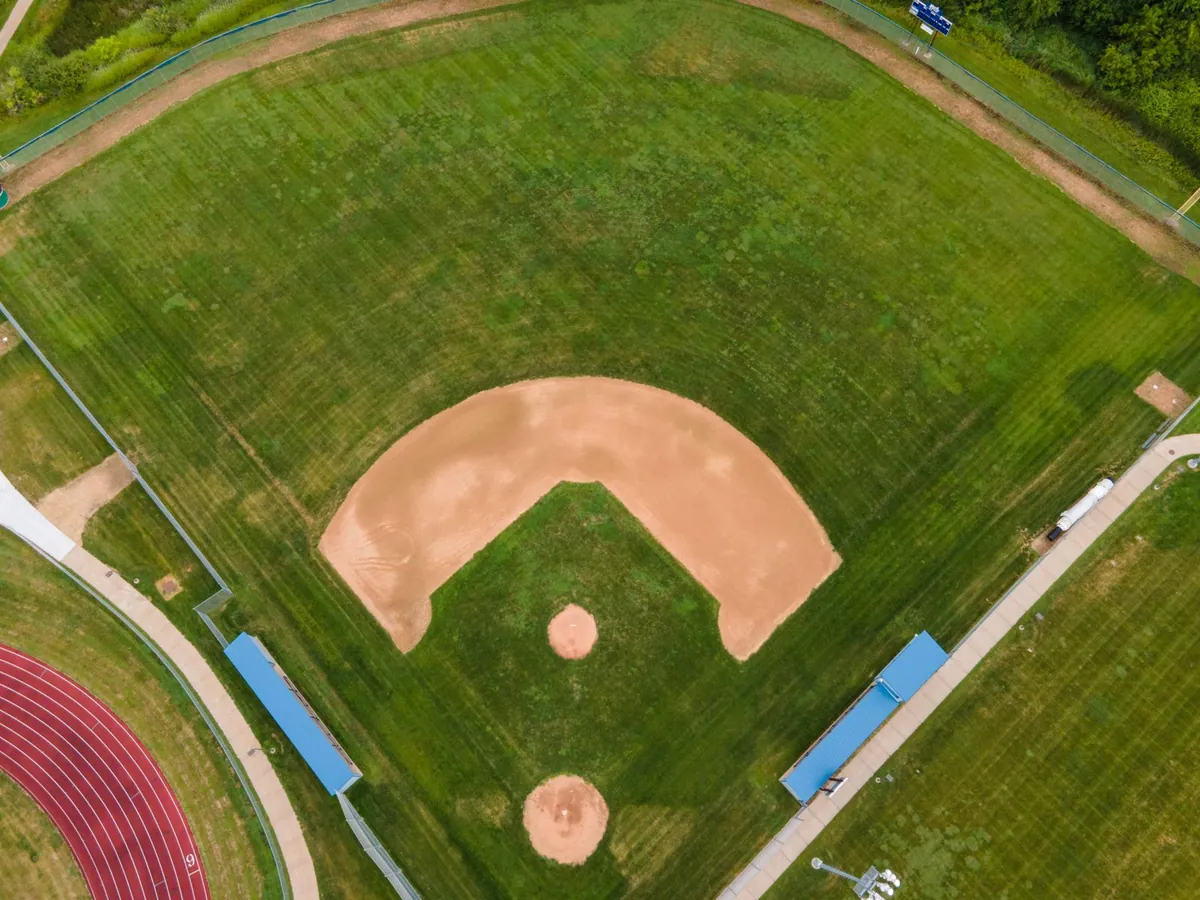
The fast, true surface changed how the game was played. Whitey Herzog’s Cardinals of the 1980s built rosters around speed and defense because ground balls got through the infield in a hurry. For twenty years the standings argued nature vs turf the way standings do: in October.
The costs showed up too. In 1970 a reporter’s thermometer on Busch Stadium’s surface read 152 degrees at ground level. An artificial turf installation glued over concrete gave less than grass and dirt. The ball bounced higher and faster, and players took the difference in their knees, ankles and backs.
Durability was the sales pitch for the multipurpose stadiums of that era. Fields hosted football in autumn and baseball in spring, and living grass rarely survived the double duty under shared schedules. Synthetic carpet promised one surface that could take both calendars without a reseed between seasons.
Why The Pendulum Swung Back To Grass
Candlestick Park became the first all-turf park to go back to living grass in 1979, and Kansas City’s Kauffman Stadium eventually made the same call. The deeper shift was architectural. Oriole Park at Camden Yards opened in 1992 and defined the retro ballpark, and a real grass outfield was part of the package fans were paying for.
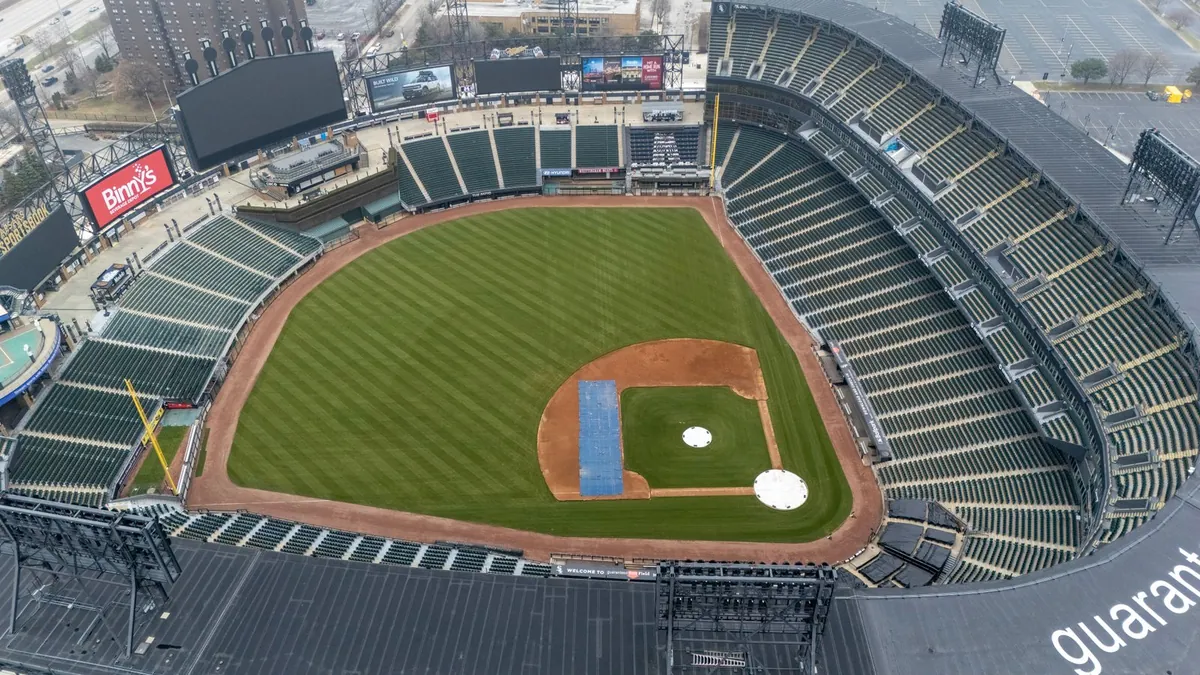
Fans kept score on nature vs turf the way fans do, and they liked green. Through the 1990s new parks opened with lawns, and clubs in older synthetic stadiums followed the money. Between 1992 and 2005 the National League went from half its teams on plastic to every one of them playing on grass.
The lesson of that decade was never that turf had failed. It was that turf had been asked to be a carpet, and carpets look like carpets. What changed the argument was a different way to build the surface, not a change of heart about grass.
Players had their own ledger. Spikes caught on the old carpet, summer heat made it worse, and there were days the surface burned metal cleats or melted plastic ones. Comfortable or not, the grass years that followed were a response to a decade of complaints from the people actually playing on it.
Third Generation Infill Changed The Debate
The first generation of turf was honest about being a carpet: half-inch nylon fibers on thin foam, glued to concrete, no infill. In direct sun the surface could pass 160 degrees, and slides left the burns players still call turf burn. Nobody would mistake it for grass.
The second generation of the 1980s and 1990s split the difference. Fibers grew longer, pads grew thicker, and multi-layer backings improved stability, but the surfaces still played like a hard imitation of the real thing. The complaints from players kept coming, which is why the next redesign went below the surface.
Third generation systems attacked that gap with structure instead of padding. Longer fibers stand up out of a granular infill, sand for ballast with rubber granules for cushioning, so blades move and the surface gives. Every artificial turf installation built this way plays softer and holds its bounce far longer than the glued carpets did.
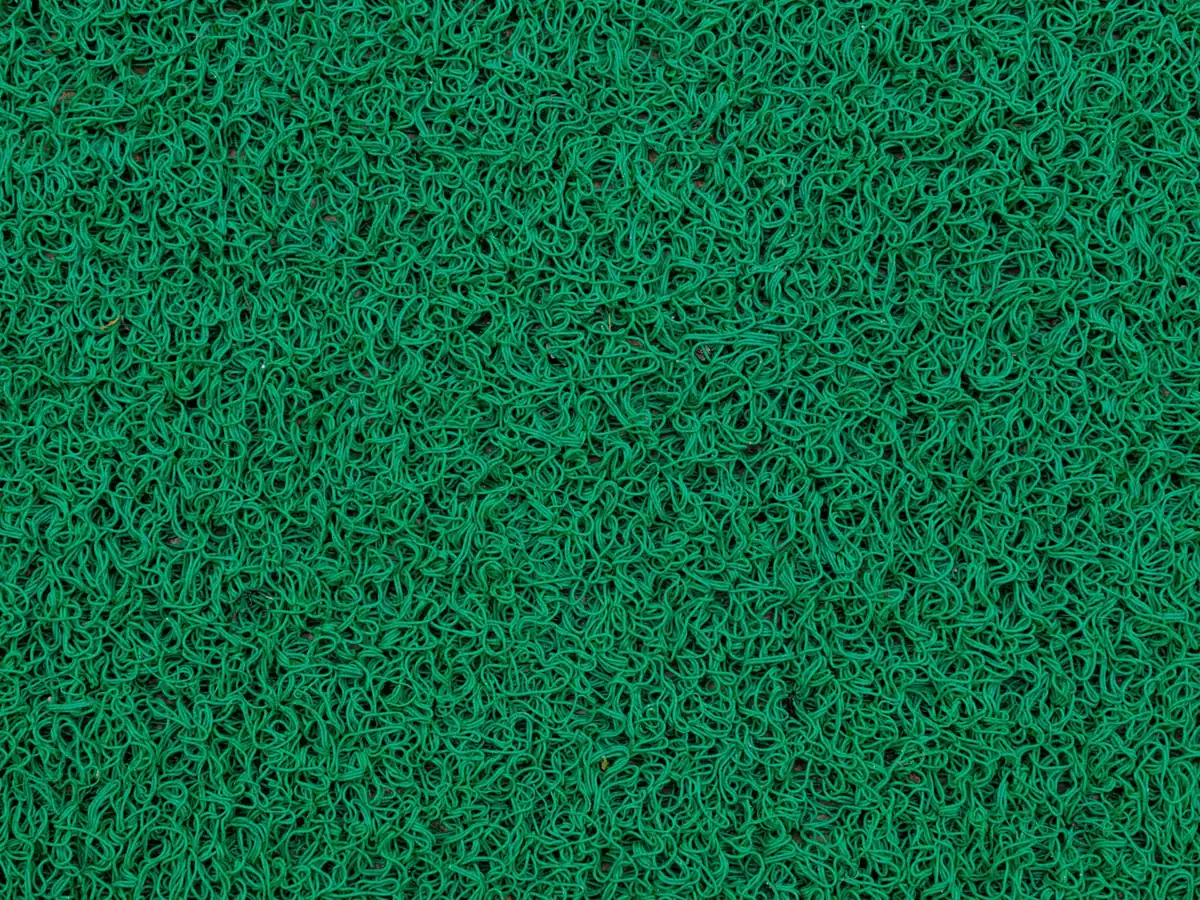
Baseball took the new build quickly. Tropicana Field became the first MLB field on a third-generation surface in 2000. In 2008 AstroTurf introduced the Diamond Series, the first system engineered specifically for the diamond rather than adapted from football. Infill changed the terms of nature vs turf the way padding never had.
The distinction matters for anyone comparing quotes today. A pile height without an infill specification is half a spec, and a surface without cushioning is the 1970s design wearing newer yarn. Generation labels are shorthand, so read the construction instead.
Why MLB Teams Switched Back To Turf
By 2010 only Tropicana Field and Toronto’s Rogers Centre still played on synthetic surfaces, and Rogers Centre restored a full dirt infield in 2016 while keeping its turf. The revival started with Phoenix. Chase Field had fought its desert climate for two decades under a retractable roof, where the grass dried, hardened and played unevenly by midsummer.
The club installed a synthetic system for 2019. Miami followed in 2020 with the humidity version of the same problem, and Texas opened Globe Life Field on artificial turf that same year. The pattern across all three repeats the Astrodome: when a roof meets an extreme climate, grass loses.
Fan experience mattered as much as agronomy in these calls. In Phoenix the club had kept the roof open into late afternoons just to feed the lawn sunlight, which meant baking everyone in the stands. With synthetic turf the roof stays closed through the summer, the seats stay cooler, and the field reads as a uniform sheet of green instead of a blotchy one.
Phoenix settled nature vs turf the way the desert was always going to: with a switch. Five ballparks ran artificial surfaces in recent seasons, every one of them roofed or extreme-climate. The technology did not beat grass everywhere. It won exactly where grass was already losing.
Rainouts Piling up on the Schedule?
Natural fields lose days that the turf game does not. Baseball rolls built to order. Factory-direct pricing, typically 30–50% below market on like-for-like specifications.
What The MLB Story Means For Facilities
Strip the nostalgia and the timeline becomes a decision framework. Every switch in the record answers the same questions. Can the local climate support grass, can the schedule absorb its upkeep, does the surface play consistently, and how hard is its heat to manage? Score nature vs turf the way a groundskeeper must: by the calendar, the water bill and the traffic count.
Each era in the timeline maps to a buyer. The multipurpose stadiums bought turf for durability, and the retro parks bought grass for atmosphere. The roofed franchises of the last decade bought engineered surfaces because their climate had already voted. Your project is making the same purchase for smaller stakes, which is exactly why the axes below translate.
| Decision axis | Natural grass | Modern infill turf |
|---|---|---|
| Water and upkeep | Irrigation, mowing and reseeding on a fixed rhythm | Brushing and occasional top-dressing, no irrigation cycle |
| Climate tolerance | Fails in shade, drought and roofed venues | Indifferent to shade and roof design |
| Play consistency | Shifts with weather and wear | Uniform bounce and roll across the season |
| Surface heat | Evaporative cooling keeps it livable | Needs watering or rest windows on hot days |
| Scheduling load | Recovery time between events | Takes back-to-back events without visible wear |
| Base design | Needs an engineered soil profile and careful grading | Needs a free-draining, stable aggregate base |
| Annual rhythm | Renovation windows and grow-in periods | Steady output once the roll is seamed |
| First impression | Unmatched when healthy | Uniform green all year when specified well |
An artificial turf installation is only as consistent as its base, and natural grass is only as reliable as its drainage, so neither column wins on its own. Your field sits somewhere on every row. Read the rows against your worst week, the way MLB clubs learned to.
How We Specify Turf For Baseball Grounds
We build the roll itself, so our read of the MLB story runs from the production line out. Yarn colour and composition are locked at compounding and extruding. Tufting sets pile height and density, coating cures the PP+Net or PU backing you specify, and perforating cuts the drainage pattern before the roll ships.
Production order matters when a specification has to survive contact with a schedule. We check tuft lock at the coating and drying stages because a backing that passes after curing stays anchored in the field. That bench-first habit is the factory version of what MLB clubs learned the hard way about surfaces.
That sequencing is why a baseball surface should be ordered as a set of parameters rather than a colour sample. A school infield that hosts three games a week needs a different density than a practice ground behind the fence. A 4-meter by 25-meter roll also seams differently than a tailor-made width cut for a single diamond.
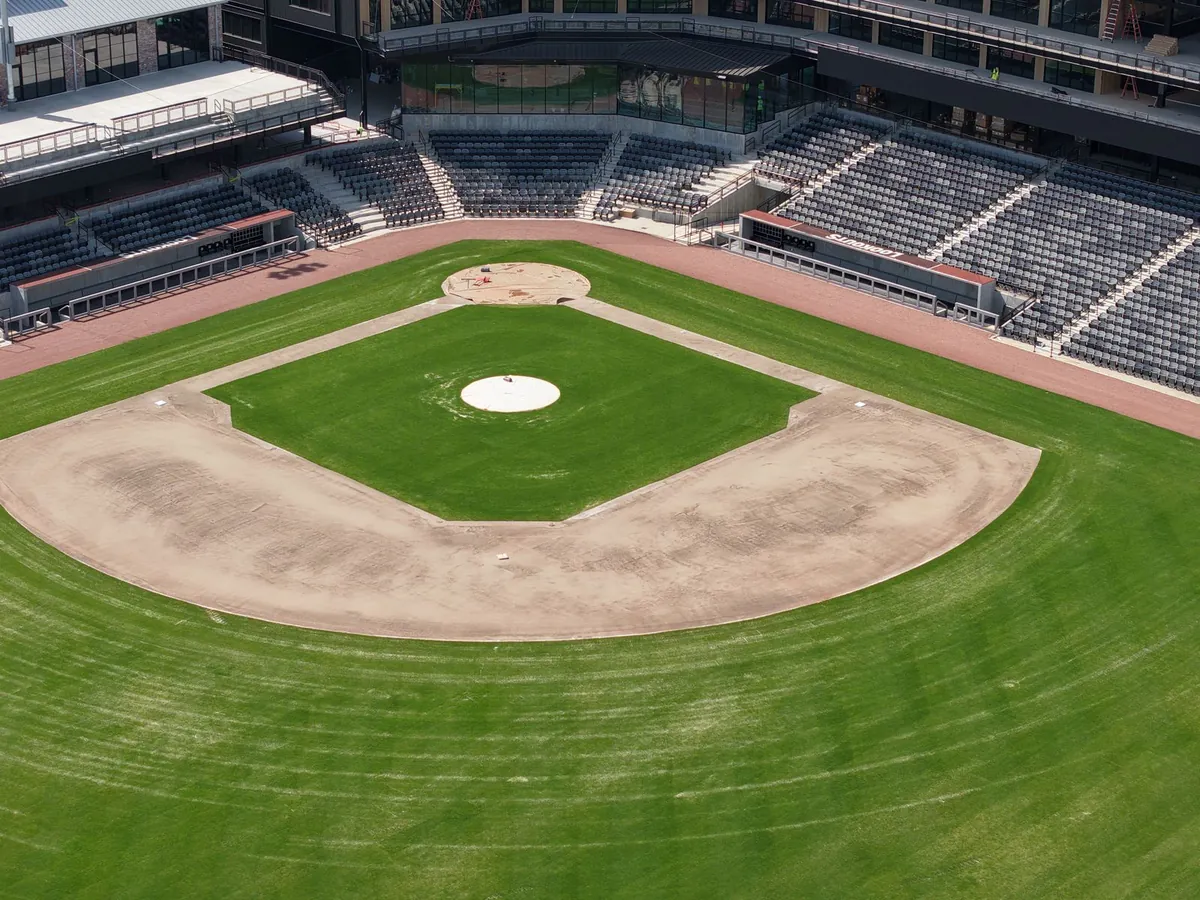
We read nature vs turf the way we read any brief: from the climate band, the traffic count and the base design backwards to the specification. The roll range behind this article covers the standard 2, 4 and 5 meter widths at 25 meters, with tailor-made widths for single-diamond work. Our sports turf range lists the sport builds, and the customization page shows which parameters travel with the order.
Freight favors planning too. Wide 5-meter rolls lay a full diamond with almost no seams, which cuts installation labor, while narrower 2-meter rolls move and handle more easily on smaller sites. Neither width is better in the abstract. The right one is the roll your base crew can actually lay.
Baseball’s sixty-year experiment compresses into one conclusion: name the conditions first, and the surface picks itself. That is how the majors stopped asking which surface is better in the abstract. They built stadiums that answer the question for them.
Frequently Asked Questions
Why did the Astrodome switch to artificial turf?
Painted roof panels blocked the sunlight grass needs. The natural field died within weeks, the 1965 season ran on green-painted dirt, and the club installed synthetic turf for 1966.
How many MLB ballparks play on artificial turf?
A small minority. Five ballparks in recent seasons: Chase Field, Globe Life Field, loanDepot Park, Tropicana Field and Rogers Centre — all roofed or extreme-climate venues where grass struggles.
Do baseballs bounce differently on artificial turf?
Yes. On early carpet the ball bounced higher, faster and truer than on grass, which pushed infielders deeper. Modern infill systems were built to narrow exactly that gap.
Is today’s MLB turf the same carpet as the 1970s?
No. The 1970s product was short nylon glued over foam and concrete. Modern fields use long fibers with sand and rubber infill, so the surface cushions and plays far more naturally.
Why did Chase Field switch back to artificial turf?
Desert heat under a retractable roof kept killing the grass. It hardened through the season, played unevenly and left dead sod, so the club installed synthetic turf for 2019.
Does the MLB lesson apply to school and club fields?
It scales directly. Judge your field on climate, schedule, traffic and base design rather than on fashion, and the same axes MLB learned over sixty years will pick your surface.
 English
  Arabic
  French
  German
  Portuguese
  Russian
  Spanish