

Two sample photos, two near-identical spec sheets and a handover date six weeks out: that is where most landscape turf confusion starts. The word sounds self-explanatory, yet quotes labelled landscape, sport and pet arrive in the same envelope, and the difference is never printed on the label.
The question what is landscape turf has a working answer, and the answer decides what you verify before you buy. Landscape turf is synthetic grass engineered for how a surface looks and feels rather than for athletic performance. We tuft, coat and perforate rolls on our own line, so the pages we write read like a factory walkthrough: one definition, one anatomy, one boundary line.
What Is Landscape Turf? The Working Definition
So what is landscape turf, in working terms? It is a manufactured surface of polyethylene, polypropylene or nylon fibres tufted into a backing system, made to imitate a healthy natural lawn all year. Sports surfaces are tuned for ball roll, shock absorption and controlled bounce; a landscape product is tuned for colour depth, softness underfoot and a silhouette that never browns. Industry introductions describe it the same way: a synthetic surface built to look and feel like natural grass, with appearance and comfort as the design goal.
The category is older than most buyers assume, and it did not start in gardens. Artificial turf first drew wide attention in 1966, when ChemGrass was installed in the year-old Astrodome and rebranded as AstroTurf. Stadiums adopted it first. The same fibre and tufting technology now anchors artificial turf installations everywhere, from pitches down to the lawns, rooftops and plazas that buyers call landscape turf.
How a Landscape Turf System Is Built
Every artificial turf installation shares the same anatomy, whether it ends up on a stadium or a hotel entrance. Read a roll the way you would read a rug. The face yarn sets the look. The backing carries the load, and the layer between them decides how it wears under traffic.
The face is a blend, not a single green. Modern products combine multi-tone yarns and several blade shapes so the surface catches light unevenly, the way a real lawn does. UV stabilisers sit in the fibre so colour survives seasons of direct sun rather than fading to grey in the first summers.
The backing is where quality is quiet. Our lines run PP+Net and PU backings, and perforation is an in-house production step that opens the drainage path before the roll is wound. On our bench, a roll that drains badly is a roll we scrap; the carpet above it can be perfect and the surface still fails after its first storm.
Fill matters too, and the history explains the options. First-generation systems of the 1960s were short-pile fibres without infill. The second generation added longer fibres with sand, and the third added recycled crumb rubber. That progression is documented in the general history of artificial turf. Landscape products borrow from all three: short decorative piles often run unfilled, while thicker lawn products may carry a light sand dressing to keep fibres upright.

Landscape Turf Compared With Sports Turf
The search what is landscape turf often lands on pages that drift into stadium talk, so the boundary deserves its own section. The boundary is purpose, not quality: landscape surfaces optimise appearance and comfort, while sport surfaces optimise performance under cleats and match play. Neither is a cheap or premium version of the other, and treating them as interchangeable is how specifications drift.
| Characteristic | Landscape turf | Sports turf |
|---|---|---|
| Primary purpose | Appearance and comfort | Athletic performance |
| Maintenance requirement | Low | Moderate |
| Shock absorption | Minimal | High |
| Durability focus | High | Very high |
| Typical traffic | Everyday foot traffic | Cleats and match play |
| Design priority | Realistic colour and softness | Consistent ball behaviour |
| Weed pressure through the backing | None | None |
Use the table as a buying filter. If a quote pushes deep rubber infill and high shock ratings for a decorative plaza, someone is selling a sports product into a landscape brief. If a landscape product is offered for a football pitch, the surface will look fine on day one and fail the first season of match play.
Where Landscape Turf Gets Installed
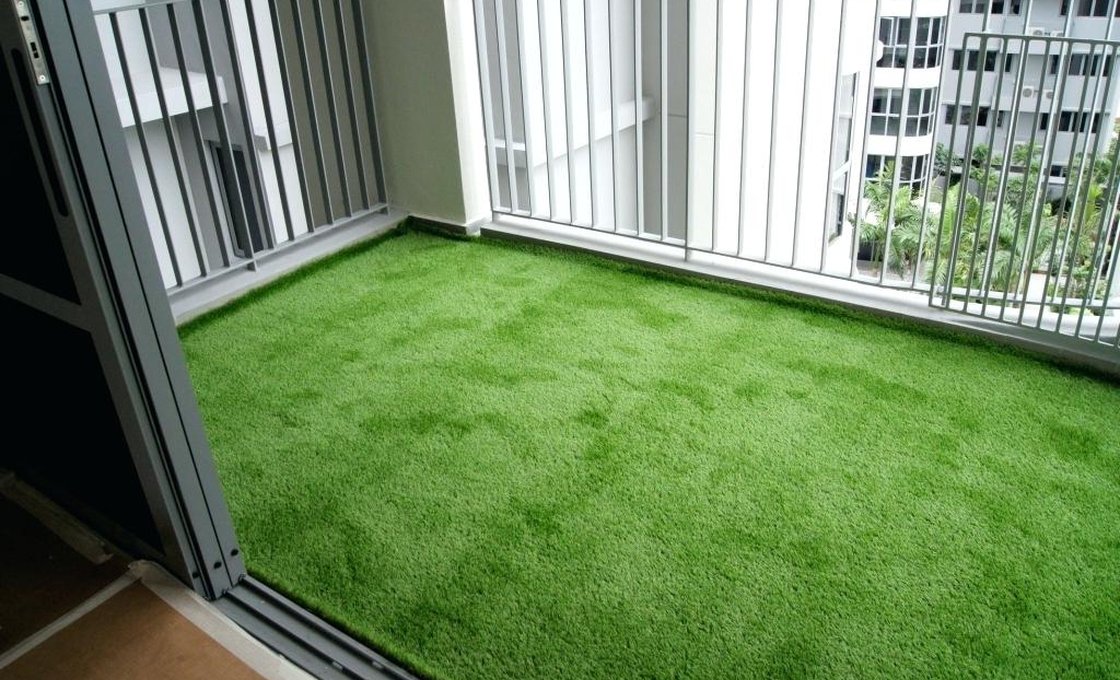
Applications follow the definition: anywhere a green surface is wanted, but mowing, irrigation or light cannot be guaranteed. Residential projects use it for front and back yards, shaded corners where natural grass thins out, pool surrounds and side paths that churn to mud every winter. Rooftops and balconies take lightweight variants with drainage backings, because a living lawn is simply too heavy and too thirsty for the structure.
In most commercial artificial turf installations, the driver is upkeep cost spread across years. Hotels, resorts, office campuses, retail frontages, parks and public spaces all want the green look without a grounds crew behind it. Browse the site’s commercial artificial grass applications to see how those briefs map to products, and the residential artificial grass range for garden-scale choices.

Event and display work rounds out the list. Exhibition stands, photo backdrops and temporary brand spaces use landscape rolls because they install fast, need no water and look identical in every photograph taken that week.
What Landscape Turf Costs to Live With
Water is the first saving, and the official numbers are large. Nationally, outdoor water use accounts for 30 percent of household use in the United States, and more in drier regions, according to federal water-use guidance. Landscape architecture guidance records that an 80 percent reduction in water use is common with a typical all-weather turf field, as documented by ASLA. That figure explains why municipal projects in dry regions spec synthetic surfaces first.
Across residential artificial turf installations, mowing, fertilising and reseeding leave the calendar with the irrigation. What stays is honest, small work. A brush every two to four weeks keeps fibres upright in high-traffic areas. A monthly rinse removes dust and pollen, and debris is cleared after storms. Weeds cannot grow through the backing, though airborne seeds occasionally sprout on the surface and pull out by hand.
Our opinion, formed on the production side: “zero maintenance” is a sales line, and “low maintenance” is the truth you can budget on. A surface that is brushed and rinsed on schedule looks new for years; the same surface left under leaf litter mats, darkens and hands the salesman’s promise back to you.

Choosing a Landscape Turf Specification
Specification starts with the brief, not the brochure: traffic level, sun exposure, pets, children, and the look the client signed off. Pile height, density, yarn shape and colour follow from that, and backing choice follows the load. Variants on the market differ in exactly these variables, which is why two rolls at the same pile height can wear nothing alike.
Roll format is the quiet variable that decides seams and waste. Our rolls come in 2 m, 4 m and 5 m widths by 25 m. The factory runs eight in-house steps from compounding through extruding and tufting to coating and perforation. That makes custom pile heights, densities and colours a production question, not a trading question. Check the roll construction and widths before fixing a layout.
| Roll width | Standard length | Where it fits best |
|---|---|---|
| 2 m | 25 m | Small areas; easiest transport and installation |
| 4 m | 25 m | Most laying needs; the most widely supplied width |
| 5 m | 25 m | Large areas with almost no seams; heavier to move |
| Custom widths | Made to order | Tailor-made, seam-free, a premium niche choice |
| Custom spec | Any width to order | Yarn colour, shape, density and height made to spec |
Lifespan claims deserve a source before you believe them. Published supplier guidance typically quotes 10 to 15 years with proper installation and basic maintenance. Other published ranges cite 8 to 15 years or more, with UV fade resistance at 15 to 20 years, as quoted in the sources behind this page. Treat all of them as band estimates shaped by traffic and upkeep, not as a warranty.
Seeing Landscape Turf Before You Commit
Still Guessing What Landscape Turf Feels Like?
Photos hide pile softness and colour depth, and a wrong guess costs weeks. We cut free 20 cm swatches from live production and ship in four to six days.
Where the Definition Meets Its Limits
An honest definition includes what the product cannot do. In direct summer sun, a synthetic surface runs hotter than the surrounding air and than nearby natural grass. That pushes midday use on play areas and pet runs to cooler hours. A rinse takes the edge off the surface before events, and shade structures solve it permanently where the design allows.
Upfront cost is the second limit. A landscape conversion asks for more capital than renovating a tired natural lawn. The case rests on what leaves the budget afterwards. No irrigation programme, no mowing crews, and no fertiliser or pesticide rounds across a decade of use. Projects that measure only the invoice and not the decade routinely reach the wrong verdict.
An artificial turf installation lives or dies under the carpet, where base grading and drainage decide whether water actually leaves the surface. Our perforated backings do their half of the job in production. The base, the fall and the edges do the other half on site. That is why we ask installers about the base before we talk about pile height. A free sample swatch tells you what the fibre feels like, and the base spec tells you how it will age.
Three Definition Mistakes Buyers Still Make
Buying Sports Turf for a Landscape Brief
The inverse of the boundary above causes real failures. Plenty of artificial turf installations go wrong on this point. A deep sand-and-rubber sports product specified for a plaza reads as uncomfortable rather than durable under everyday traffic. Match the surface to the purpose first, and the rest of the specification falls into place.
Treating Low Maintenance as No Maintenance
The second mistake is retiring the brush. Fibres that are never groomed mat down in traffic lanes, organic litter darkens the pile, and the surface ages years in a season. The published maintenance rhythm is light but real, and it is the difference between a surface that lasts its quoted years and one that disappoints early.
Judging a Roll by Pile Height Alone
The third mistake is reading one number off a spec sheet. Two products at the same pile height differ in yarn shape, density, backing and drainage, and those differences decide wear far more than the height figure does. Ask for the full construction, then confirm all of it on a physical sample before the order is placed.
Frequently Asked Questions
What is landscape turf in one sentence?
Landscape turf is synthetic grass built for appearance and comfort rather than athletic performance: polyethylene, polypropylene or nylon fibres tufted into a backing with drainage.
Does landscape turf need infill?
Not always. Many landscape products carry a cushioned backing instead of the deep sand and rubber profiles used on sports surfaces, with variants differing in pile, density, yarn shape and backing.
How long does landscape turf last?
Published supplier guidance typically quotes 10 to 15 years with proper installation and basic maintenance; other published ranges cite 8 to 15 years, depending on traffic and upkeep.
Does landscape turf get hot in summer?
Yes, in direct sun the surface runs hotter than the surrounding air and than natural grass. Shift midday use to cooler hours or rinse the pile before events.
Can water drain through landscape turf?
Yes. Roll backings are perforated during production, and rooftop variants pair lightweight construction with drainage backing, so rain passes through rather than pooling.
How do I check quality before ordering?
Order free 20 by 20 cm samples, usually 3 to 4 pieces. They ship by DHL or FedEx in 4 to 6 days, with courier freight covered by the buyer.


 English
  Arabic
  French
  German
  Portuguese
  Russian
  Spanish