A public turf project does not move on a repair schedule. It moves on a capital budget or a bond window, and the approval chain between the idea and the purchase order can stretch across years. While the paperwork travels, the community keeps using the same worn, muddy field for another full season. The buyer is squeezed between repairing now and waiting for money that has not been approved.
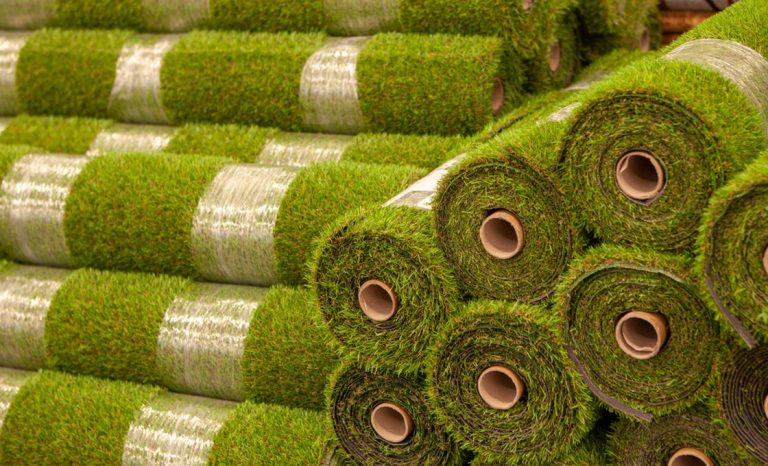
That squeeze, not the grass itself, decides whether a conversion succeeds. We build turf rolls on our own line. The public buyers we hear from arrive with a budget year, a tender calendar and a field that cannot close for a season. Treated that way, artificial turf for parks and schoolyards is a procurement problem first and a product second.
Why Public Spaces Move to Artificial Turf
A park or a schoolyard is not a sports pitch, and it is not a playground either. Nobody books it, nobody lines it and nobody closes it for a fixture list, yet it absorbs dog walkers, lunch crowds, PE classes and festival setups on the same ground. That mix is why parks and schoolyards need their own buying logic instead of borrowing one from sports construction.
The case rests on four numbers a public buyer can check. A county oversight report puts sustainable annual use at about 850 hours for cool-season grass, 1,200 hours for Bermuda grass and 3,000 hours for synthetic turf. The same external report lists annual maintenance at $12,000 for synthetic against $35,000-40,000 and $50,000-55,000 for natural grass across its service tiers. The nonprofit Trust for Public Land describes the surface as highly permeable where drainage is designed, so stormwater can reach storage underneath instead of the street.
The fourth driver is access: the authority position holds that artificial grass can form stable, firm, slip-resistant ground that complies with ADA guidance. State the boundary plainly: this article excludes playground fall protection, airport airside surfaces, commercial building landscaping, sports-field construction sequences and pile-by-pile specification reading, because separate site articles own them. Here the question is what a public owner buys, and the commercial applications of artificial turf give the wider application map.
The Public Buying Cycle for Parks
No page on this topic strings the public buying cycle for parks and schoolyards together, yet every public project runs one. A published district comparison put a synthetic field installation at about $2.5M against $634,000 for natural grass, magnitudes worth reading as context checks rather than quotations. Council policy can stop a project before it starts, and one city council has voted to ban new artificial grass on all city-owned land, per independent reporting. In the same city a joint-use agreement makes school fields serve as parks, a $495M bond funds the rebuild, and the surface decision was deferred across multiple funding rounds.
Tender notices compress the same discipline into one document. Public tender practice bundles a control price, a calendar-day construction period and a warranty period into the same notice, so the schedule is a constraint rather than a comfort. Our own arrangement runs in five steps.
- Budget or bond window: which funding round actually pays
- Approvals and permits: school board, council and zoning sign-offs
- Tender and evaluation: control price, calendar-day schedule, evaluation criteria
- Sealed sample and test reports: the reference the delivery is judged against
- Acceptance and record keeping: sign-off tied to the numbered sample
The in-year question still needs an answer, because the cycle can outrun the mud. A targeted interim treatment keeps the site usable while the money moves. Repair the worst worn channels, regrade the desire lines and defer the full conversion to the approved budget line. That keeps the community playing and keeps the eventual tender honest about what actually failed.
The Tender Package Behind a Public Spec
Commercial pages say reliable; a tender for artificial turf in parks and schoolyards has to write it down. Published municipal durability guidance recommends tuft bind above 30 N for high traffic. It also recommends denier between 8,000 and 12,000, and 15,000-20,000 tufts per square metre for heavier use. Where a safety standard applies, the same guidance suggests a 10-20 mm underlay with the thickness chosen against that standard. Measurable parameters like these belong in the tender document, not a brochure.
The second part is the sealed sample with its third-party reports. Procurement practice recorded in a published government tender template lists material, pile height, gauge, density, backing, coating and tufting line by line. It also requires samples to be numbered, sealed and retained as the inspection basis. A sample carrying a major defect fails the compliance review under that practice. The qualifier matters: that reading comes from a search-returned tender template, quoted here as published practice rather than a verified figure.
The third part is volume and zoning. The same municipal guidance advises adding 5-10% material overage when ordering, which absorbs the cuts and odd widths a multi-zone site produces. Permits are usually required, and some areas restrict or ban installations outright, so the zoning check belongs before the tender, not after it. Read the numbers on a spec sheet against our commercial artificial turf specifications guide before they harden into contract language.
Durability and Traffic Tolerance in Use

Vendors write heavy duty; hours and tuft bind are the checkable form. The county report behind the maintenance figures also frames capacity, at about 850 hours a year for cool-season grass, 1,200 for Bermuda and 3,000 for synthetic. One district logged 45,816 hours of use on a synthetic field in a single fiscal year against 6,885 hours on its natural-grass field. Numbers like that are why traffic, not appearance, is the first durability test.
The readings translate into order lines. Municipal guidance ties high traffic to tuft bind above 30 N, denier of 8,000-12,000 and 15,000-20,000 tufts per square metre. Those are the floors a bidder should confirm in writing. The county’s published maintenance figures are third-party data: $12,000 a year for synthetic against $35,000-40,000 and $50,000-55,000 for grass, pricing what the surface survives on. A published district comparison reached $5.72 per hour of use against $23.73 for natural grass over ten years, on the district’s own basis, which excludes replacement.
Treat that last qualifier as a buying rule, because a surface replaced after eight to twelve years carries a cost the per-hour figure leaves out. Ask each bidder for a zone-by-zone traffic declaration as well: entry and circulation routes, assembly areas and quiet edges do not take the same load. A single average across the whole site hides exactly the wear a public owner ends up paying for.
Accessible Routes Across Turf Surfaces
Accessibility is written as thresholds, not as the phrase ADA-compliant. An accessible route needs a running slope no steeper than 1:20 and a cross slope no steeper than 1:48. Vertical change above a quarter inch needs a bevel, and above half an inch it usually needs a ramp. The route needs a clear width of at least 36 inches, and the surface itself must be firm, stable and slip resistant with no loose fill.
The field method is a rotational penetrometer reading checked against ASTM F1951. The warning that comes with it is blunt: a laboratory pass is not a field pass. Infill that sits too loose adds wheelchair resistance even when the lab report looks clean. Transitions to adjoining pavement must be flush, or the route fails at its own edge.

Three procurement checkboxes turn those measurements into a deliverable for parks and schoolyards. Fix the thresholds in the tender, name the field test method, and write a re-test duty into acceptance. ASTM F1951 and the ADA limits are neutral third-party background here, not claims about any product. The authority position that artificial grass can form stable, firm, slip-resistant accessible ground is what makes the checklist realistic.
Drainage, Stormwater and Permitted Surfaces
Drainage is where the marketing claim and the stormwater rule disagree on artificial turf for parks and schoolyards. An industry innovation centre states that certified artificial turf systems drain above 300 inches per hour, some above 900. The same source says the performance fails when the surface sits on a solid impervious base. The authority view is the same in softer words: artificial grass is highly permeable when drainage is designed, and stormwater can reach underground storage for reuse.
The measured field results are less flattering. One university sustainability report measured runoff flow from artificial turf at five to ten times that of natural grass. The same report recorded greater cumulative runoff volumes for the artificial turf than for the grass surfaces it compared. Some jurisdictions treat the surface as impervious because of the material and the compacted base, whatever the carpet allows. Sites on flood-prone ground, former landfill or ground doubling as stormwater detention amplify every one of those problems.

Three procurement questions close the gap before the tender does.
- What is the base build-up, layer by layer, under the carpet?
- What calculated runoff does the design assume at the outfall?
- Does the jurisdiction count the converted area as impervious surface?
The answers decide whether the project gains stormwater credit or loses it. Our guide on artificial grass drainage bases explained covers the build-ups behind those answers.
Heat, Shade and Siting Decisions
Heat is a siting decision before it is a product attribute. A university measurement team recorded 34 C for natural grass, 42 C for dry grass and 53 C for artificial grass on a clear March afternoon, matching black concrete. Research from earlier decades measured surface temperatures approaching 200 F, at times more than 100 F above natural grass. A park field measurement reported by a Gulf Coast television station put unshaded artificial grass at 138 F and shaded artificial grass at 100 F on the same site. That source is snippet-level, so treat it as reported rather than verified.
The finding that matters for siting is that lack of shade, not the surface type, drives the dangerous readings across pitches, school yards and playgrounds. That reframes the purchase: the question is where the surface goes, not only which roll arrives. Cooling technologies exist, and the same study names reflective products and water-retentive products while cautioning that independent research at scale is still thin.

The siting checklist for parks and schoolyards follows from those findings. Keep the tree canopy that already shades the lawn, and place the surface beside existing shade. Measure surface temperature on a routine schedule and log the readings, and set a use limit for the hours when readings run too high. Management options published by the green-paper research add watering, with its short-lived cooling effect, to that list. Our guide on how hot artificial grass gets in summer covers the physics behind the numbers.
Maintenance and Seasonal Use Planning
Low maintenance is a sales phrase; a public owner needs a calendar and a log. Institutional maintenance guidance for kid-facing sites sets a rhythm. Debris goes daily, rinsing runs two to three times a week, brushing weekly and spill treatment the same day. Sanitising is monthly, and professional deep cleaning runs two to three times a year. The same guidance cites the CPSC public playground safety handbook on keeping a written maintenance and inspection log for every site.
The county’s own list matches it in substance: surface debris, tear repair, solvent cleaning, GMAX testing, brushing to keep fibers upright and infill topped up so the surface stays level. A vendor-published calendar adds the cadence, with brushing every three to four weeks during an active season and an annual GMAX test and full assessment. A five-item working calendar looks like this.
- Daily: walk the surface, clear debris, note damage
- Weekly: sweep and brush the traffic channels
- Monthly: check seams, brush, verify infill depth
- Seasonally: deep brush, cross-brush, top up infill
- Annually: GMAX test and a full surface assessment
Season adds three entries: drainage checks before the wet season, a frost use plan for the cold months, and a pre-term assessment before the school year starts. The written log is the point of the routine. It is the evidence a public owner needs when a resident, a board or an insurer asks what the surface has been through. Budget the log the way the budget line funds the brushing.
Replacement and Disposal at End of Life
End of life is part of the purchase decision, not an afterthought. Published service-life figures put an artificial turf field at about ten years, occasionally twenty, with recycling capacity limited and most material going to landfill. A published district basis replaces its fields every eight to twelve years at roughly $1M each, an external line item the ten-year cost-per-hour comparison above leaves out. Our guide on how long artificial turf lasts covers the service-life picture in detail.
The disposal route is narrower than the industry’s recyclable label suggests: hearing material published by a city clerk records that California does not recycle artificial turf. It ships instead to advanced recycling facilities whose real recovery rate is contested. The same record sizes a typical field at about 40,000 lb of turf and 240,000-720,000 lb of infill. Testimony in a district council hearing states plainly that most end-of-life material is not recycled and ends up landfilled or dumped. A county solid waste rule allows turf as general waste only up to six feet in length and liftable by one person.
Three disposal questions belong in the purchase file. Who takes the material, how far does it travel and under what permit, and what share of the project budget is reserved for that day? Settling them before purchase costs a paragraph in a tender. Discovering them at year ten costs a surprise line item and a council conversation nobody wants.
Choosing a Supplier for a Public Turf Order?
Public orders buy in volume and need one spec that holds across every zone. Send the zone map, and every roll arrives cut to the spec you wrote.
Converting Grass or Mud Into Turf
The official research gives conversion criteria; the commercial side sells the benefits. A conversion self-check asks whether ground turns muddy after rain, whether worn desire lines have formed, whether shaded spots never grow, and whether a lawn is destroyed after events. A state planning study adds the tools. Synthetic grass can be limited to high-wear zones such as goal areas, and hybrid turf raises durability while cutting the synthetic volume. Lighting with movable markings spreads the load.
Those criteria sort a public site into four zone types, and the verdict differs by zone across parks and schoolyards. The framework is ours, built on the published criteria above; the figures in the basis column are the third-party magnitudes already cited.
| Zone type | Verdict | Recommended action | Basis |
|---|---|---|---|
| Circulation and wear band: paths, entrances, desire lines | Convert to artificial grass | Full conversion of the worn corridor, with a flush transition to paving | County capacity figures: 850 hours cool-season grass, 1,200 Bermuda, against 3,000 synthetic |
| Assembly and event lawn | Convert, or convert part | Turf the event footprint and keep synthetic cover limited to high-wear zones elsewhere | State planning study on zoning synthetic grass and movable markings |
| Shaded spots that never grow | Convert, or leave as mulch bed | Convert where shade is permanent; hybrid turf where partial light survives | State study: hybrid turf combines synthetic fibers with natural grass |
| Flood-prone or former landfill ground | Leave it as grass for now | Hold the conversion until the drainage and stormwater position is settled | State study warning on poorly draining, flood-prone and landfill sites |
Two cautions sit beside the table. Cork rather than rubber infill is greener but dearer and degrades faster, a trade the same study records. And a researcher pair cited by that study questions the claim that synthetic turf wins on lifecycle cost per hour, noting that synthetic cleaning costs can match natural grass. Organised opposition belongs in the same risk file. A petition plus community groups and a state senator stood against the installations, and the council vote came back 7-0 against them.
The leave-it-as-grass verdicts share a profile.
- Ground that floods or holds stormwater for the site
- Canopy shade the tree officer will not trade away
- Lawns used twice a year, where wear never justifies the cost
Where a school shares the ground, the comparison of artificial grass versus natural grass for schools sets out the operating trade in full.
A Procurement Checklist for Public Spaces
Everything above folds into one checklist for parks and schoolyards. The order follows the argument of this article, and each item is a document or a number, not a sentiment. Every threshold has its section above.
Define the zones and the conversion verdict first
Each zone gets one verdict before any pricing starts.
Write the tender parameters
Each one must be measurable on delivery.
Set the durability readings
Require the zone-by-zone traffic declaration.
Fix the accessibility thresholds
Name the field test method and write in the re-test duty.
Settle the base build-up and the stormwater position
Agree both with the jurisdiction before tender.
Record the shade and surface-temperature plan
Attach its measurement schedule.
Put the maintenance log in writing
Include its budget line.
Reserve the replacement route
The disposal answer belongs in the purchase file.
A checklist does not shorten the approval chain; it stops the chain from restarting. Each item answered once in writing is a question that never has to be asked twice at the tender, at delivery or at handover.
Frequently Asked Questions
Is artificial turf for parks and schoolyards the same as sports turf?
No. It serves open access, event lawns and paths rather than a booked fixture list. It is therefore specified by hours of use, accessibility, drainage and siting, not by sports performance testing.
How long does a public artificial turf installation take to approve?
Often several years. The approval chain runs through a capital budget or bond window, board and council sign-offs, permits, tender and evaluation, so published district examples show decisions deferred across multiple funding rounds.
Does artificial turf drain well enough for stormwater rules?
Only when the base is designed for it. Published system permeability exceeds 300 inches per hour, but measured runoff can run five to ten times that of natural grass, and some jurisdictions count the surface as impervious.
What accessibility measurements should a public turf spec require?
Running slope no steeper than 1:20, cross slope no steeper than 1:48 and a clear width of at least 36 inches. Add a firm, stable, slip-resistant surface, and a rotational penetrometer field test against ASTM F1951 with a re-test duty.
How hot does artificial turf get in an unshaded park?
A university team measured 53 C on a clear afternoon, the same as black concrete. Their finding puts lack of shade, not surface type, behind the dangerous readings, which is why siting and shade come first.
What happens to artificial turf at the end of its life?
Mostly landfill. Published service life runs about ten years and recycling capacity is limited. Hearing testimony records that most end-of-life material is landfilled or dumped, which is why the disposal route belongs in the purchase file.