A natural lawn looks like the cheap option until the first water bill lands. Across a hot season, irrigation, mowing, fertiliser and the occasional re-sod cost more than most buyers expect. None of that tally appears on the quote for the grass itself.
Artificial turf saves money long term by moving the spend from a repeating annual bill to one build cost that we amortise across the years the surface stays in service. Our team specs the roll, the base and the infill as one system, so the modelled saving matches the surface you install.
The Real Cost of a Natural Grass Surface
A natural lawn is sold as if the grass were the whole expense. The seed, the sod and the first mow are only the opening entry in a ledger that runs every warm week.
The first hidden line is water. An established lawn drinks through the warm months, and the meter keeps turning whether the turf is used or not. Outdoor irrigation is among the largest household water draws according to federal water guidance, so the saving compounds in dry regions.
The second line is labour. Mowing, edging and clearing clippings cost either paid hours or your own weekends, and a shared or hired crew carries overhead a quote rarely itemises.
Then come the chemical costs most buyers forget. Fertiliser, herbicide and fungicide treatments recur through the season, and a poor one can force re-sodding or over-seeding.
Add the equipment angle. Mowers, trimmers and spreaders depreciate, break and need fuel. On a sports field or commercial ground, closure time during maintenance is an opportunity cost few quotes mention.
What You Actually Pay to Install Synthetic Turf
A synthetic surface asks for its money up front. The build cost is one invoice covering the product, the prepared base, the infill and the labour to lay it. Once paid, the repeating bills shrink to a short list. Most artificial turf installations bundle those trades into the first invoice.
At factory level the grass itself runs an indicative $7-60 per square meter by pile, density, backing and padding. Request an exact quote for your project rather than trusting a headline number. Base works, edging and any regrade are local costs that depend on the ground you start with.

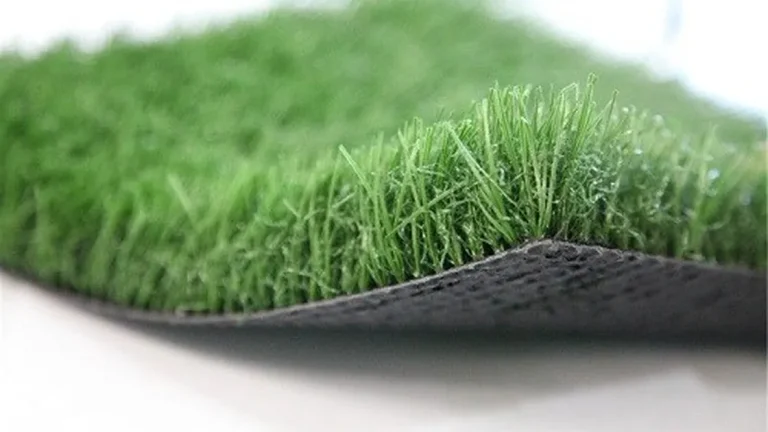
What you are buying is a system, not a roll. The backing holds the tufts, the infill keeps blades upright, and the sub-base decides how the surface drains and stays flat. Spend the build budget on those three and the running cost stays low for years.
The Running Cost Gap Year After Year
Running cost is where the two options diverge most clearly. A natural lawn keeps drawing water, fuel, chemical and labour every season, while a synthetic surface needs occasional brushing, a rinse and periodic infill top-up.
Put the two on the same clock and the gap widens each year. The natural side re-buys the same services annually; the synthetic side amortises one build cost of an artificial turf installation and adds only light maintenance. Over time the bills you no longer pay become the saving. Professional landscape guidance treats recurring maintenance as a real design cost, not an afterthought.
A single season is the wrong window, then. The build premium looks large in month one and shrinks with every season of avoided mowing and irrigation. The honest comparison is the full service life against the full maintenance bill.
Build Cost Versus Running Cost Over the Life Cycle
The clean way to think about it is a three-line model. Build cost is the install invoice. Running cost is the annual upkeep on each option. The replacement cycle is when a surface ends its service life and needs renewal.
| Cost line | Natural grass | Synthetic turf |
|---|---|---|
| Build cost | Low start: regrade, seed, light prep | One invoice: product, base, infill, labour |
| Running cost per year | Water, mow, fertilise, re-sod | Brush, rinse, infill top-up |
| Replacement cycle | Ongoing repair and over-seed | Full re-lay at end of service life |
On a properly specified artificial turf installation the first invoice is the heavy one, and the running line stays thin for the service life. A natural lawn inverts that: a light start, then a permanent, rising running cost.

Amortise the build cost across the usable years and you get a cost per year of use. Compare that figure with the annual natural-grass bill. When the amortised build drops below the recurring natural cost, the surface has paid for itself.
The replacement cycle is the part buyers skip. Budget for periodic infill refresh and a full re-lay at the end of service life. Ignore it and the comparison quietly hides a future invoice that belongs on the same ledger as any artificial turf installation.
How to Estimate Your Own Payback Period
You can build the payback on the back of an envelope. Take the annual natural-grass cost you actually pay, subtract the small annual synthetic upkeep, and divide the build premium by that yearly difference.
Work in per-square-metre terms to keep it honest. Spread the build cost over the area, then over the years of expected use. Compare that amortised rate with your yearly spend per square metre on the living lawn. The crossover point is your payback.
Two inputs drive the answer. Heavy annual use pushes the natural-grass bill up through wear and repair, while a long hold stretches the build cost thin. A daily-use surface kept for many seasons reaches payback far sooner than a lightly used one replaced early.
When Artificial Turf Does Not Save Money
The honest answer is that synthetic turf is not always the cheaper path. A few situations flip the maths, and naming them protects you from buying the wrong surface for the wrong reason.
Short holding periods are the first. If you will resurface or relocate within a year or two, the build premium never amortises, and you pay the heavy invoice for a benefit someone else collects. The saving needs time to arrive.
Very low usage is the second. A decorative corner seen twice a season barely wears a natural lawn, so the maintenance you skip is small and the payback stretches past any sensible horizon. There the cheap natural option can win.
Cheap low-grade rolls are the third trap. A bargain product that mats, tears or fades early forces a premature re-lay, and two build invoices beat one natural-grass bill. Spec the product to the traffic or you pay twice.
A base done wrong is the fourth. Skip compaction, drainage or edge fixing and the surface moves, ponds or lifts until the whole thing comes up for rework. The fix costs more than the saving you chased, so the ground matters as much as the grass.
Price the Build From the Factory Floor
We build residential and commercial rolls on our own tufting lines, so the yarn, density and backing on your quote come from one factory floor. Our cost advantage against international competitors runs 30-50 percent on comparable specs, because the process and the supply chain both sit in-house.
Custom pile, density, backing and roll width are cut to your traffic and your port, not pulled from a fixed catalogue. Share the area, the application and the destination, and we return exact numbers instead of a broad range.
Plan the Base Right to Avoid Costly Rework
Everything above assumes the base is built once and built right. The sub-base carries drainage, load and shape for every artificial turf installation, so a thin or uncompacted layer is the most expensive corner to cut on the whole project.
Compact, free-draining stone under a permeable backing keeps water moving and the surface flat. Edge fixing stops creep where lifting starts. Our team treats the ground as part of the product, because a failed base spends money you thought you had saved. Our guide to what goes under artificial grass explains the layer order we specify.
Choose a Specification That Earns Its Keep
The product spec decides both the build cost and how long the running cost stays low. Pair pile, density and backing to the traffic, and you pay once for a surface that keeps its look through heavy use.
Thin backing, low face weight and no drainage perforation are the cuts that come back as early wear. Spend the build budget on the layers that wear, not on the label. Our guide to the factors behind the per-square-metre cost ranks which variables move the rate, and our cost-saving moves show how to spec without downgrading the surface.

The same discipline applies to cleaning. Light, regular brushing and a rinse keep blades upright and infill working, protecting the service life you already paid for. Our short cleaning routine covers the running-cost levers.
Frequently Asked Questions
Does artificial turf really save money over time?
Usually yes, when the surface is held for several seasons and used often enough that the skipped mowing, watering and re-sodding bills outweigh the one build invoice. Short holds and very light use can flip that result.
What hidden costs come with a natural lawn?
Water for irrigation, paid or own-time mowing, fertiliser and weed treatment, equipment fuel and depreciation, and the opportunity cost of closure during maintenance. Sports and commercial grounds add the heaviest recurring lines.
How long before artificial turf pays for itself?
It depends on your build premium and annual natural-grass bill, not a fixed clock. Divide the install cost by the yearly amount you no longer spend, and that quotient is your payback in seasons of use.
What raises the build cost of artificial turf?
Pile height and density, backing type, infill choice, roll width and site access all move the invoice. A prepared, level base costs less to lay than a site needing regrade, excavation or drainage correction.
When does artificial turf fail to save money?
With a hold of only a year or two, with very low usage, with a bargain roll that needs early replacement, or with a base done wrong that forces rework. In those cases the build invoice never earns its keep.
How do I estimate my own payback period?
Take your real annual natural-grass cost, subtract the light synthetic upkeep, and divide the build premium by that difference. Spread the build across the area and the years of use to keep the comparison honest.