
Five moves cut artificial turf costs, ranked by payback speed: match roll width, spec pile to the use, buy factory-direct, sample first, consolidate the order. None of them asks you to buy a worse product. The overrun in a turf project usually starts before the quote, in habit decisions about width, pile and volume rather than in the sticker price.
Scope note first: our artificial grass cost guide covers price brackets and what drives them, so this article stays on the savings side. Where a cheap choice turns expensive within two seasons, we say so plainly. Sequence the five moves right and the same budget buys noticeably more usable lawn.
Match the Roll Width to Your Layout
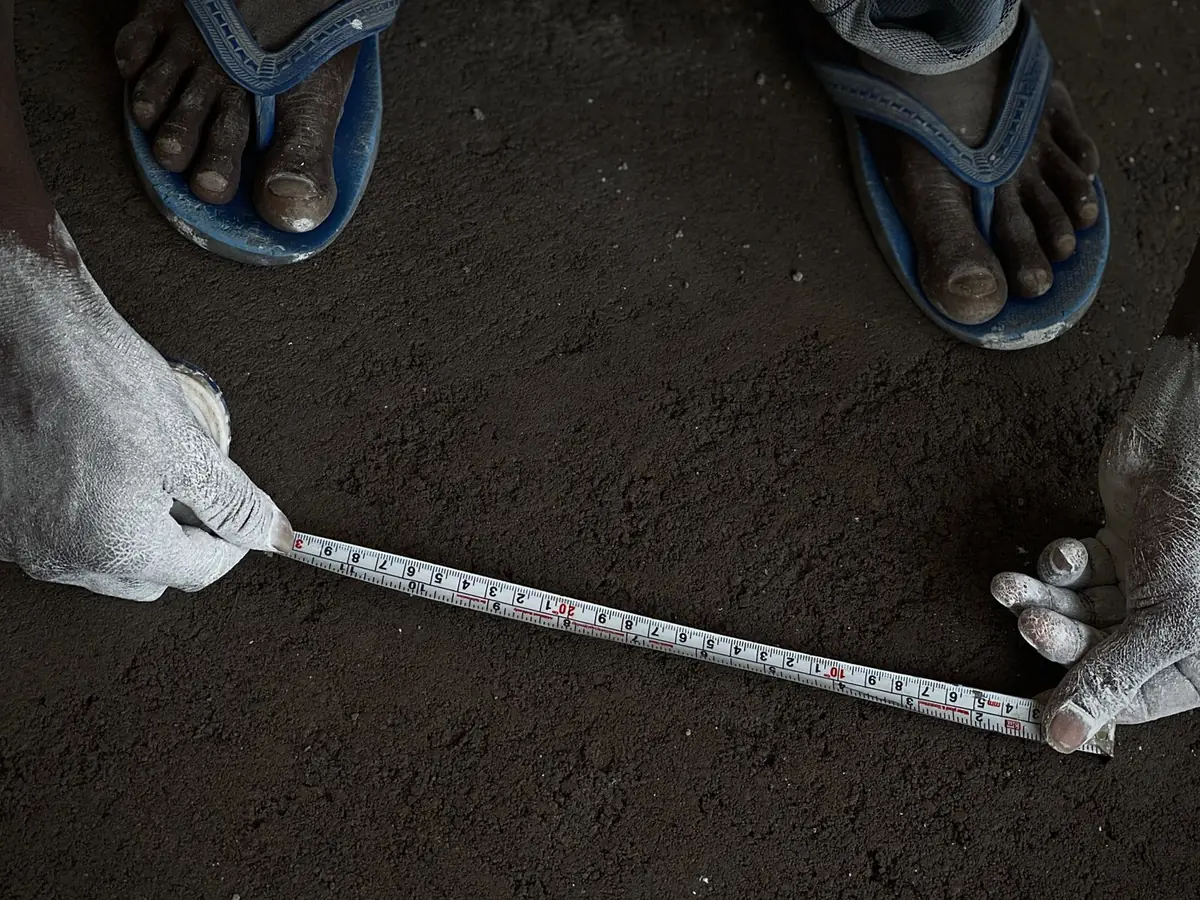
Roll width is the cheapest decision you will never feel in the product. A landscaping crew we know measured a 9-metre-wide lawn and first drafted the plan around 2m rolls. Re-cutting the layout with 4m rolls dropped the seams from four runs to two and removed the pile of offcuts entirely. Same product, same area, less labour, less waste.
Rolls arrive at 2m, 4m or 5m on a standard 25m run, and each width earns its keep on a different job. Draw your seam lines before you order, then pick the width that lets most rolls land whole. The table below is how we match them on real projects.
| Roll width | Best fit | Cost logic |
|---|---|---|
| 2m x 25m | Small lawns, balconies, narrow side yards | Most economical to buy, easy to transport and install |
| 4m x 25m | Uncertain layouts, most residential and commercial grounds | Widest supply, covers most plans with fewer seams |
| 5m x 25m | Sports fields and large open areas | Almost no seams and little waste on big zones, heavier and pricier to ship |
| Custom width | Odd shapes where a seam cannot be tolerated | Tailor-made and seamless, but a premium niche product |
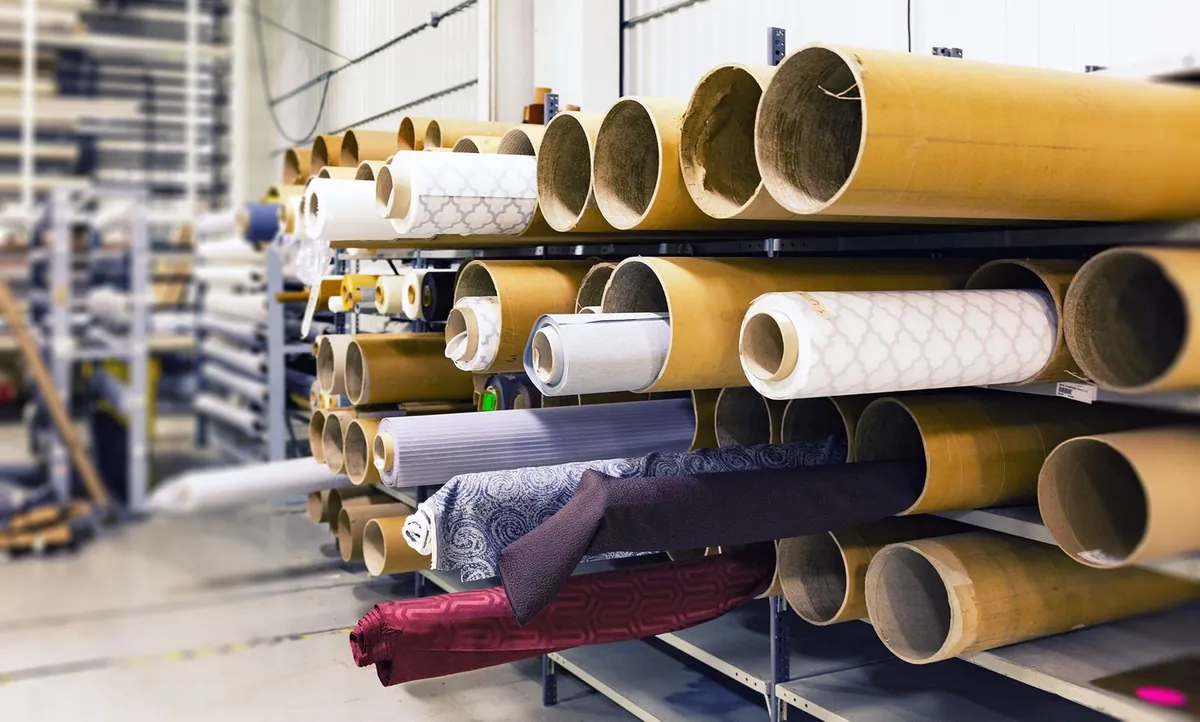
Width also touches the bill you never see: transport and handling. A 2m roll is the easiest to move through gates and onto small sites, while a 5m roll earns its freight only where a seamless field justifies the weight. Match the width to the access you actually have.
The habit to break is ordering one width for every job. A roll cut lengthwise down the middle is money you paid for and never installed.
Spec Pile Height to the Use Case
Buying pile height without matching it to traffic is like paying for a truck when a van does the job. The tallest roll in the catalogue photographs beautifully and usually does nothing extra on a decorative lawn. Supplier guidance keeps pointing the same way: shorter piles in the 20-35mm band cost less to make, need less infill and stay easier to maintain.
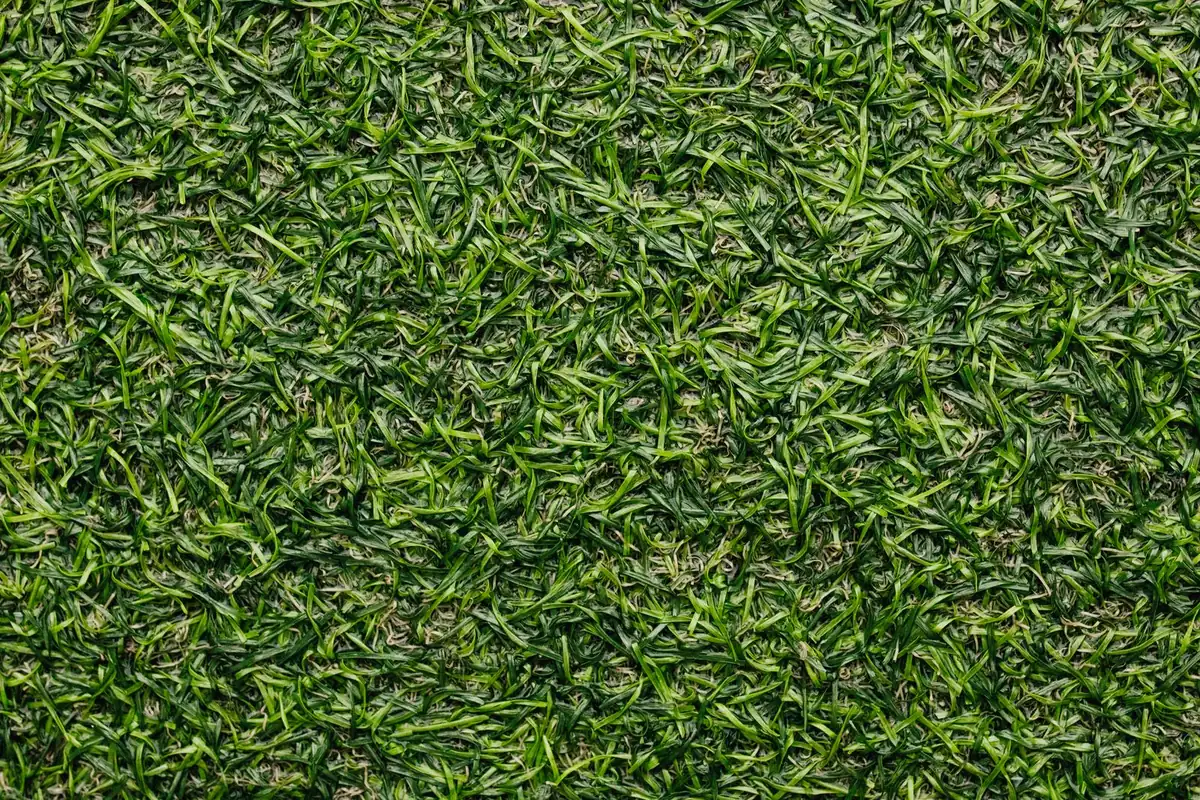
Our honest position is that most first-time buyers over-spec pile height. Traffic decides the spec, not the sample book. Decorative zones and low-use corners sit happily at the shorter end, while play areas, pets and carts need the density that justifies a taller, denser build. Pay for capability only where the surface earns it.
There is a second saving hiding in the same decision. A shorter pile uses less infill to hold the blades upright, and infill is a per-square-meter line item on every project. Spec the pile right and that line item shrinks with it.
Height is not the only dial, either. Backing choice moves the number too: our rolls leave the line on PP or PP with a reinforcing net, with a PU coating available where the job needs it. Choosing the backing for the site, not for the brochure, keeps the quote honest.
Buy Factory-Direct and Skip the Middle Margin
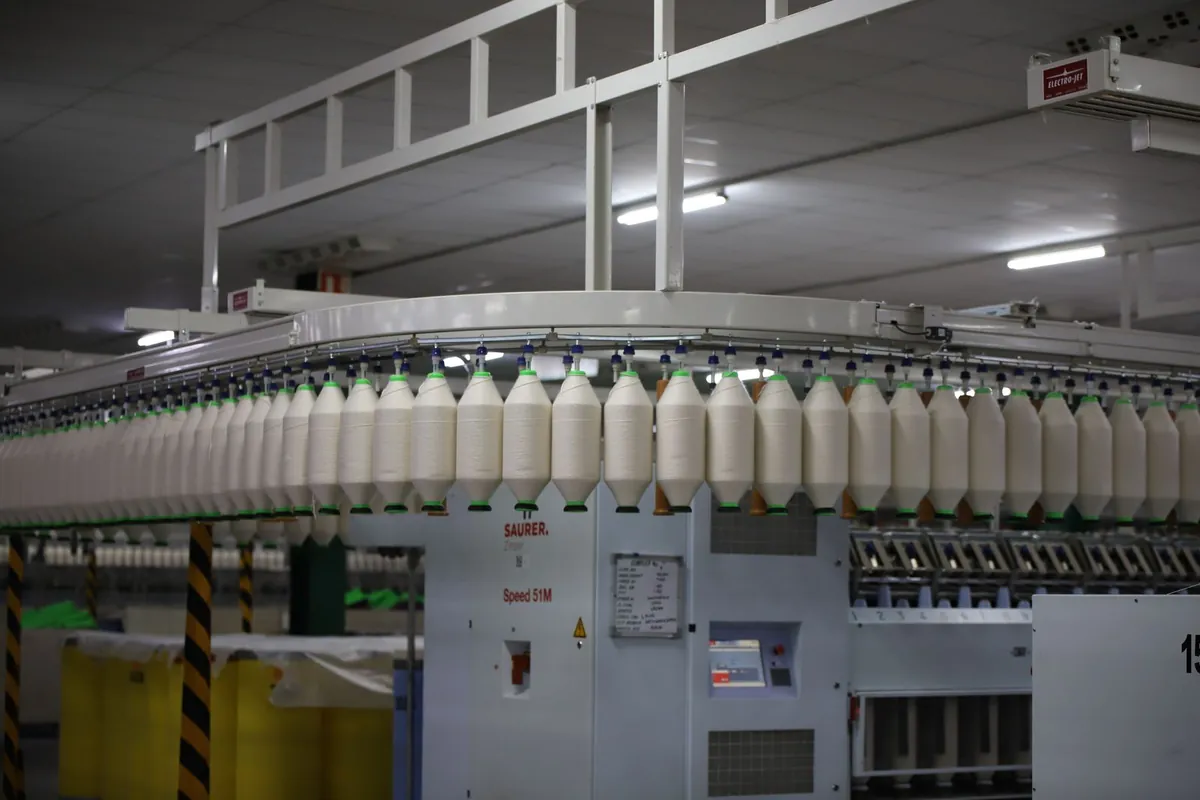
The single biggest lever to cut artificial turf costs is who invoices you. Buying factory-direct removes the distributor layer between the production line and your warehouse. Our cost advantage against international competitors runs 30-50% on comparable specs, because the process and the supply chain both sit in-house.
Factory-direct also changes what a quote can include. Raw material, yarn colour and shape, density, pile height, backing recipe and roll size are all customisable on our line. That means you can pull cost out of the spec instead of out of the quality. A distributor quoting from a fixed catalogue cannot re-cut the product for your budget; a factory can.
Direct buying also shortens the correction loop. When a spec needs adjusting mid-project, the change goes straight to the people running the tufting line instead of through a reseller’s order desk. Fewer hands between decision and machine means fewer expensive misunderstandings.
For buyers comparing quotes, ask every supplier the same question: is this price factory-direct or resold? That single check does more to cut artificial turf costs than any haggling, because the answer usually explains most of the gap before negotiation even starts.
Sample the Spec Before You Scale the Buy
A container is a big place to discover that the green tone looks wrong against your client’s pavers. Samples are free as 20cm x 20cm boards, usually three or four pieces per request, and you cover only the courier. DHL or FedEx delivers standard sample requests in 4-6 days; remote regions take 7-9.
The economics here are lopsided. A courier fee is rounding error against a mis-specified container, and a custom sample built to your exact spec takes an extra 10-15 days to produce. That is why the sampling decision belongs at the start of the project calendar, not the end.
Compare boards side by side, not one at a time. Put the candidates on the same table under the same light, check the thatch layer, the backing finish and how the pile springs back after you fold it. Differences that hide in a single sample stand out immediately in a lineup.
Judge samples the way the site will use them: bend a corner, check the backing, rub the pile and hold the colour against the ground it will sit on. Ordering volume against a tested spec is how you cut artificial turf costs without gambling.
Price Your Spec Direct From the Factory
Share the area, the application and the destination port, and we will match a roll width and spec that keeps the landed cost down. Sample boards go out free in 20cm x 20cm; you cover only the courier.
Consolidate the Buy to Cut Freight Waste
Freight rewards consolidation more than negotiation does. An importer we serve used to ship landscape grass and pet turf as two separate orders. Now both applications ride in one container against a matched spec, and the freight per square meter falls without touching the product.
Consolidation works at the order level too. Fewer, larger orders mean cleaner production runs on our side, and that efficiency shows up in the unit price. Splitting one project across three suppliers breaks exactly that logic: three minimums, three shipments, and three chances for colour variation between production batches.
Storage decides how far you can take this. If your warehouse can hold one annual buy instead of four quarterly ones, the production run gets longer and the unit price gets shorter. Even a two-order year beats a six-order year on both counts.
The pattern to cut artificial turf costs here is unglamorous: plan the year’s demand, then buy it in as few production runs as your storage allows. Slow, boring, and the cheapest freight bill you will ever sign.
Where Cutting the Budget Backfires Later
Not every saving is a saving. Cut the base preparation thin and the surface moves within a season; skip drainage planning and water sits where your client walks. The rework invoice for a failed install dwarfs anything you saved at order time.
The same rule applies to the product itself. A remnant or an off-price lot can be perfect for a small side job. But production batches vary slightly in colour, and mixing lots across one visible lawn shows the mismatch for years. Buy cheap spec where nobody looks; buy matched spec where everyone does.
Comparing quotes needs the same discipline. Two prices are only comparable when the spec sheets match on pile height, density, backing and roll width, and when both sellers confirm the same delivery terms point. A cheaper number on a thinner spec is not a saving; it is a different product.
Our rule after 500-plus customers across 50-plus countries is simple: the cheapest roll is the one you only buy once. Buy the spec once, correctly, and you cut artificial turf costs more reliably than any discount ever will.
Frequently Asked Questions
How much does artificial turf cost per square meter?
At factory-direct level, expect $7-60 per square meter indicative, with pile height, density, backing and padding. Your spec and volume decide where you land inside that band, so request an exact quote.
Which roll width saves the most money?
There is no single winner. A 2m x 25m roll is the most economical for small areas. A 4m roll covers most layouts with fewer seams, and a 5m roll suits large fields where seams must disappear.
Are free samples worth the courier fee?
Yes. A 20cm x 20cm sample board is free and you only cover the courier, usually 3-4 pieces per request. Compared with a mis-ordered container, that fee is rounding error.
Is a shorter pile always the cheaper buy?
Shorter pile costs less and needs less infill, which is why 20-35mm decorative grades price lowest. But under dogs, children or carts, a thin pile mats early and replacement erases the saving.
What should never be cut to save money?
Never trade away base quality, drainage planning or seam layout to hit a lower number. Those choices drive rework, callbacks and early replacement, which cost far more than the margin you saved up front.
 English
  Arabic
  French
  German
  Portuguese
  Russian
  Spanish