
Choosing artificial turf for padel stadium projects starts with one hard truth: there is no single best product. The right surface depends on who plays, how often, and whether the court sits indoors or under open sky. We have watched too many buyers fixate on pile height alone and miss the variables that actually decide play feel.
Ball bounce stays consistent only when fiber, sand, and upkeep move together as one system. A 12 mm pile at one density plays nothing like the same 12 mm at another. Fibrillated and textured yarn cost about the same but drift four to six years apart in service life. Where you hide the seam changes how often you open the toolbox in the first six months.
Match Turf to the Court You Are Building
Walk into a busy padel club on a Saturday and all four courts run hot from open to close. Visit a municipal sports hall on a Monday morning and the same footprint sits nearly empty. That gap is the first clue: court identity, not the catalog, should set your specification depth when you choose artificial turf for padel stadium builds.
We sort venues into four tiers. Tournament sites need the tightest ball control and the longest certified wear path. Commercial clubs want a predictable bounce that members feel on court one and court four alike. Hotel and resort courts trade some pace for looks that survive guest traffic. School and community courts need a tougher, easier-care surface above all.
Site condition then narrows the list. A fully exposed outdoor court demands UV-stable yarn and a perforated draining backing. A covered semi-open court relaxes those needs but still sees rain. An indoor court drops UV and drainage from the sheet entirely. Our line books the spec from those two answers before we discuss fiber shape.
A standard padel court runs 20 m by 10 m (see padel court dimensions), and that rectangle drives roll width more than the yarn does.
Pile Height, Density, and What Ball Bounce Really Feels Like
Pile height sets the first impression of pace. At 10 mm the ball runs fast and low, which tournament players like. At 12 mm most commercial clubs find a balanced, repeatable bounce. At 13 to 15 mm the surface reads softer and the ball sits up a little more, helping newer players read the rebound.
Density and stitch rate matter as much as the number on the box. Two rolls both labelled 12 mm can play like different products if one is tufted tight and the other loose. We treat pile, density and stitch rate as one spec line, never three separate choices, because they decide the rebound together.
| Pile height | Typical use | Play feel |
|---|---|---|
| 8 mm | Speed training, low bounce | Fast, low, unforgiving |
| 10 mm | Tournament pace | Quick, low skid |
| 12 mm | Commercial club standard | Balanced, repeatable |
| 13-15 mm | Softer community play | Gentle, predictable lift |
Our opinion is plain: bounce consistency is the first yardstick of acceptance on any artificial turf for padel stadium order. Players forgive a slower court faster than a court that bounces differently at each end. Measure rebound from a 2 m drop and aim for the 135 to 145 cm band the trade uses before you sign.
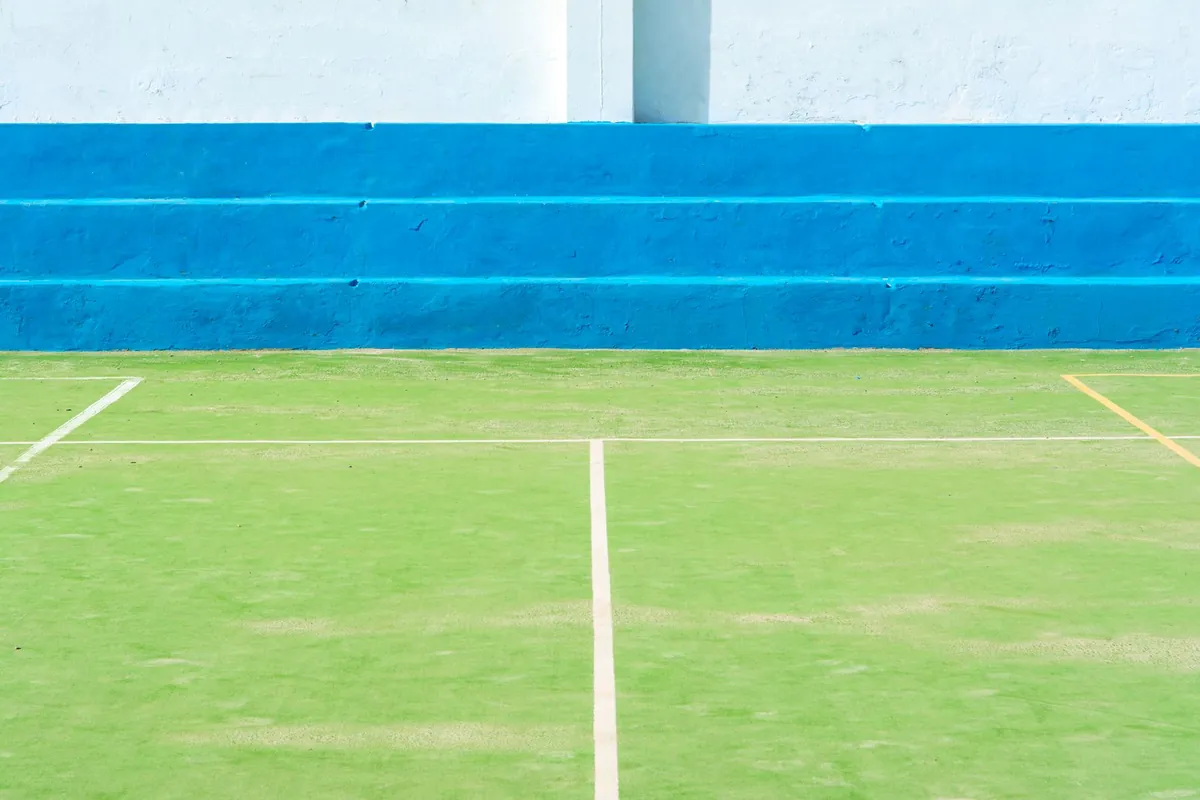
One more note before we leave pile behind. A thicker pile is not automatically better, and a taller pile can trap more sand and slow brushing. Pick the height that fits your player level, then lock density to match it.
Fibrillated vs Monofilament vs Textured (KDK): A Three-Way Cut
Fibrillated yarn is the value pick. It is a flat tape split into strands, cheap to make and kind to a leisure budget. Expect about six to eight years of service before the tips mat down. We suggest it for low-traffic community courts where the invoice matters more than the wear path.
Monofilament is the commercial club default. Single filaments stand up, return the ball cleanly, and last about eight to ten years. It is the safe middle where most members cannot tell the difference from premium yarn until year six.
Textured KDK is knit, heat-set, then curled to remember its shape. Under heavy play it holds the curl and lasts about 10 to 12 years, four to six years longer than fibrillated. On a four-court site the lower replacement rate usually beats the cheaper first invoice. A seam is like a suture line: placement matters more than the stitch, and the same is true of yarn choice under load.
| Yarn | Cost | Density | Lifespan | Ball behavior | Sand hold |
|---|---|---|---|---|---|
| Fibrillated | Low | Medium | 6-8 yrs | Soft, loose | High |
| Monofilament | Mid | Medium-high | 8-10 yrs | Clean return | Medium |
| Textured KDK | Mid-high | High | 10-12 yrs | Stable, fast | Lower |
The verdict is a three-axis call, not a simple upgrade ladder. Match cost ceiling, play frequency and target lifespan, then read ball behavior and sand hold from the same row. We keep all three in our line so the spec follows the court, not the warehouse.
Backing, Drainage, and How the Field Behaves After Rain
The backing is the part you never see and always pay for. We run PP plus net cloth as the workhorse base, with a PU coated option for sites that want extra pull-out strength. All three tiers share one job: hold the tufts and move water down, not sideways.
Perforation is the drainage decision. A perforated, coated backing lets rain fall through and the court returns to play in 30 to 60 minutes. Skip the holes only when the court is fully indoor and never sees weather; there the cost-down backing is a fair trade. Coastal and high-humidity sites should still ask how the backing resists mildew over time. We spec the backing and the seam plan together on every artificial turf for padel stadium project, because the two fail together if either is wrong.
Backing also sets the seam life. A stiff, well-coated base keeps the join flat through heat cycles, while a thin base curls at the edge first. We treat the backing and the seam as one purchase so the floor stays flat past the first summer.
Roll Width and Seam Placement Around the Lines
Roll width decides where your seams land, and seams decide your first service call. The 4 m by 25 m roll is the safe default: it covers most courts and ships from the widest stock. The 5 m by 25 m roll covers a 10 m court with just two lengths and a single centre seam.
A tailor-made width removes seams entirely, but it is a premium, low-volume option we reserve for flagship builds. On a standard court the real question is not the roll, but where the join meets the lines. We plan the seam on paper before the first roll unloads.
Three placement schools exist. One hides the seam under a white line, where brushing keeps it flat. One drops it into open run-off space with light traffic. The common error drops it across the service box, where lateral moves lift it within six months. Line choice also matters: factory-inlaid lines beat paint for wear, and inlaid beats taped for cost.
Indoor vs Outdoor: Six Differences That Change the Spec Sheet
Buyers often treat indoor and outdoor as the same product with a roof. They are not. Six variables move when the sky closes, and each one rewrites a line on the spec sheet. The table below is the short version we send to every artificial turf for padel stadium buyer before they commit.
| Variable | Indoor | Outdoor |
|---|---|---|
| UV stabilizer | Minimal | High dose required |
| Backing | Cost-down ok | Must perforate |
| Heat swing | AC controlled | -20 to 50 C |
| Humidity | Anti-mold + pad | Block ponding |
| Cleaning | Dry vacuum | Wash + weekly brush |
| Sand | Anti-cake coat | Standard silica |
The takeaway is simple. An indoor court lets you save on UV and backing, then spend that budget on a shock pad and anti-mold care. An outdoor court spends it on stabilizer and drainage instead. We size both from the same measurement sheet so the only differences are the six lines above.
One trap: a semi-open court with a roof but open sides still sees UV and rain at the edges. Treat it as outdoor for the spec, indoor for the cleaning plan. Mixed sites are where a lazy “indoor is fine” answer costs the most later.
Batch Consistency When You Buy Four Courts at Once
Ordering artificial turf for padel stadium in four-court lots looks efficient, but it hides a risk. Different production batches can leave the fiber height, shade and sheen a shade apart, and members notice the seam between court one and court two first. We have seen a club reject a floor over a tone shift no ruler could measure.
Lock the batch before you pay. Write the dye lot, the tuft line and the production date into the purchase order, and ask for one continuous yarn run per court. Request a pre-shipment photo of the sample roll so the colour is agreed in writing, not memory, before the containers leave.
The seam plan from the last section scales to four courts: keep every join off the service boxes and mirror the layout across all venues. A single approved seam map means the crew lays court four the same way they laid court one, and the whole site reads as one floor.
Padel Court Playing Slower Than It Should?
The wrong pile kills rebound and grip. We make padel carpet to match your game. Factory-direct pricing, typically 30–50% below market on like-for-like specifications.
Sand Infill: How Much, What Type, and How to Brush
Sand is the silent half of the surface. It weights the yarn, sets the ball speed and protects the fiber root from the wear of sliding feet. Get the grade wrong and the court loses years, not months, of life. We weigh the infill rate against the yarn type on every artificial turf for padel stadium order instead of quoting one number for all surfaces.
Fibrillated and monofilament turf take about 8 to 15 kg of sand per square metre, while textured KDK needs only 7 to 8 kg because its curl already holds shape. A busy commercial club usually lands near 8 to 10 kg per square metre, the midpoint that keeps pace lively without burying the fibers. More sand is not safer; it only slows the ball and buries the yarn tips under a heavy layer.
Particle size closes the deal on wear. The trade now favors rounded, washed silica in the 0.4 to 0.8 mm band, a clear step up from the older 0.2 to 0.5 mm grade. Round grains roll between filaments and drain instead of packing into a hard mat. We sample the sand on site before we approve the infill rate, because local supply varies more than the printed spec sheet admits and a bad batch fails the court.
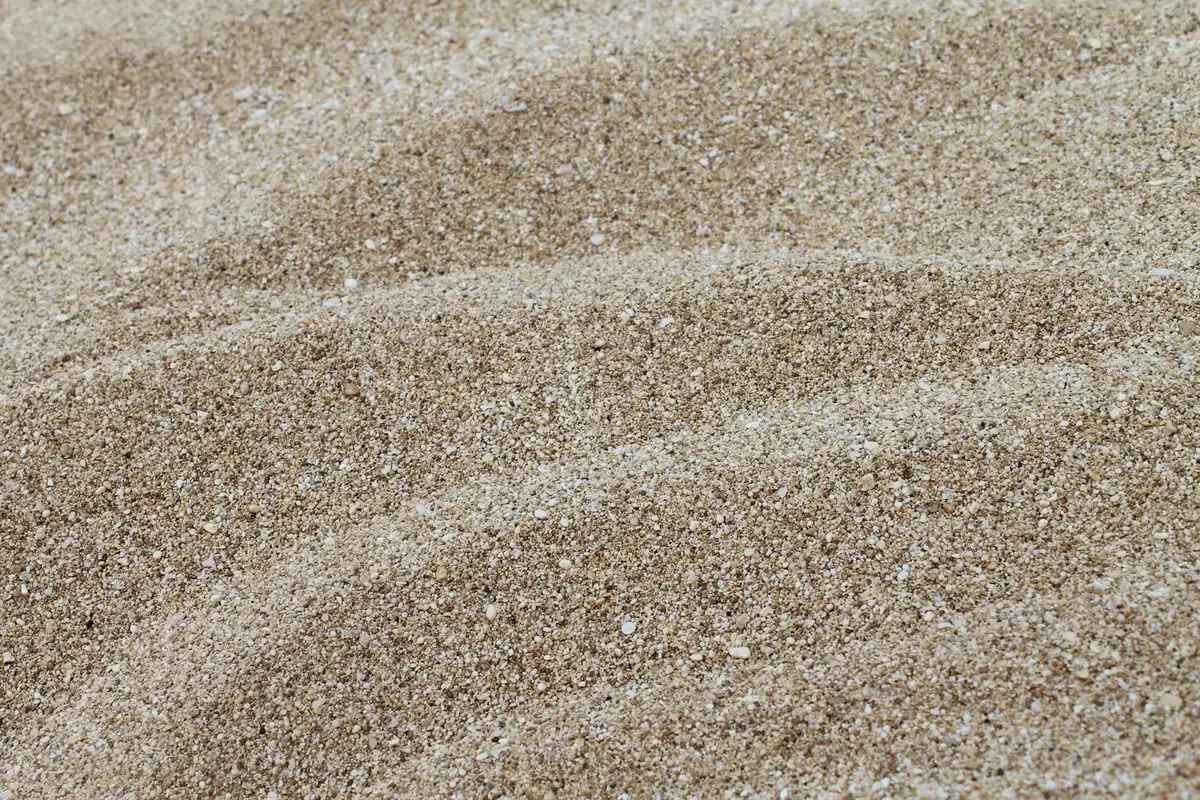
Only kiln-dried quartz silica belongs in the pile. Construction sand, beach sand or playground sand has sharp edges that cut the yarn root and clog the backing, and that mistake shortens the court by years. We reject those at intake and note the grade on the delivery docket so the crew cannot substitute.
Brushing keeps the grade honest. Run a power brush weekly through the busy season and top up the service boxes first, because lateral moves strip that zone fastest. Recheck levels every four to six weeks in the first playing season, then settle into a monthly rhythm once the sand stops migrating. The brushing log is the cheapest insurance a four-court site can keep.
From Sample to First Serve: Confirm Before You Pay
Samples close the gap between a spec sheet and a real artificial turf for padel stadium floor. Our standard swatch is 20 by 20 cm, and we usually send three or four pieces so you can feel the yarn and check the shade under your own light. DHL or FedEx delivers in four to six days, or seven to nine days to remote sites; a custom swatch adds ten to fifteen days of production.
The sample is also your proof point. Press a ball on the swatch, rake the sand, and confirm the rebound feels like the number you agreed. We keep the sample roll photo on file so the bulk order matches what your hand approved, not a brighter showroom piece.
Before you pay, lock the purchase order fields: dye lot, yarn batch, backing model, pile height, stitch rate, sand rate and seam plan. Sign the spec sheet, confirm the pre-shipment photo, and agree the freight terms. Budget-wise, turf material alone runs about $8 to $15 per square metre installed, while a full court with base and install typically lands between $5,000 and $25,000. See the sports artificial grass product page for the full range, and review our artificial turf installation guide so the sub-base matches the turf you choose.
Frequently Asked Questions
What pile height is most common for a padel stadium court?
Most commercial clubs run 12 mm turf because the bounce feels predictable. Tournament venues drop to 10 mm for speed. Softer 13 to 15 mm reads gentler underfoot. Match the number to your player level, not a catalog default.
Is textured KDK yarn worth the extra cost?
KDK keeps its curl shape under heavy play and lasts 10 to 12 years, four to six years longer than fibrillated. On a four-court site the lower replacement rate beats the cheaper invoice. Pick it where uptime beats price.
Can ordinary sand be used as padel turf infill?
No. Only kiln-dried quartz silica with rounded grains protects the fibers and drains. Construction, beach or playground sand has sharp edges that cut the yarn root and clog the backing. That mistake shortens the court by years, not months.
Should the seam sit under the service line?
Avoid the service box. The busiest lateral moves pack that zone first, so a seam there lifts within six months. Run the seam down a centre line or into open space where traffic is light.
How do I keep four courts the same colour?
Lock one dye lot and one tuft line per project, then ship all rolls from that batch. Ask for a pre-shipment photo of the sample roll before you pay. Matching at delivery beats repainting faded lines later.
How much sand goes on a padel court?
Fibrillated and monofilament turf take 8 to 15 kg per square metre; textured KDK needs 7 to 8 kg. Brush weekly in busy months and top up the service boxes first. Recheck levels every four to six weeks.
 English
  Arabic
  French
  German
  Portuguese
  Russian
  Spanish