

Two courts stand next to each other at a club, same glass walls, same 20 by 10 metre footprint, yet one plays slow and heavy while the other skids. Both were laid by the same crew in the same week. The difference is invisible until you kneel down: pile height, sand sitting deep or proud, yarn that has flattened a season early.
We tuft artificial turf for a living, and the padel court turf surface is the spec we are asked to rescue most often. Judge it as a system of yarn, sand and base rather than a single carpet, and four choices decide whether it plays true for a decade or dies young.
What a Padel Court Turf System Includes
Three layers carry every padel rally. The yarn sets texture and pace, the backing holds the fibre and lets water through, and the sand locks the pile upright. Take one layer out of the spec and the other two cannot compensate.
British construction guidance describes a padel court turf surface as a single-colour, sand-dressed or sand-ruffed carpet, loose laid over a porous asphalt base. A full court measures 20 by 10 metres, which is 200 square metres of carpet before run-offs. That area usually arrives as a handful of wide rolls rather than many narrow strips, so roll width is part of the system decision too. Our padel turf systems are tufted to a stated pile, density and backing so the carpet and its design fill rate arrive as one written spec.
An artificial turf installation can then be checked line by line on delivery, before the sand goes anywhere near the pile.
Pile Height Sets the Pace of Play
SAPCA’s Code of Practice for padel courts puts pile height between 10 and 15 millimetres, and trade guides keep pointing at 12 millimetres as the working standard. In an artificial turf installation for padel, pace follows pile height, because the ball rides on sand-filled fibre rather than on fibre tips.
Shorter carpet plays faster and lower. Padel Underground describes 10 to 12 millimetre carpet filled heavily with sand as quick and firm, while 14 to 16 millimetres with a lighter fill cushions the bounce.
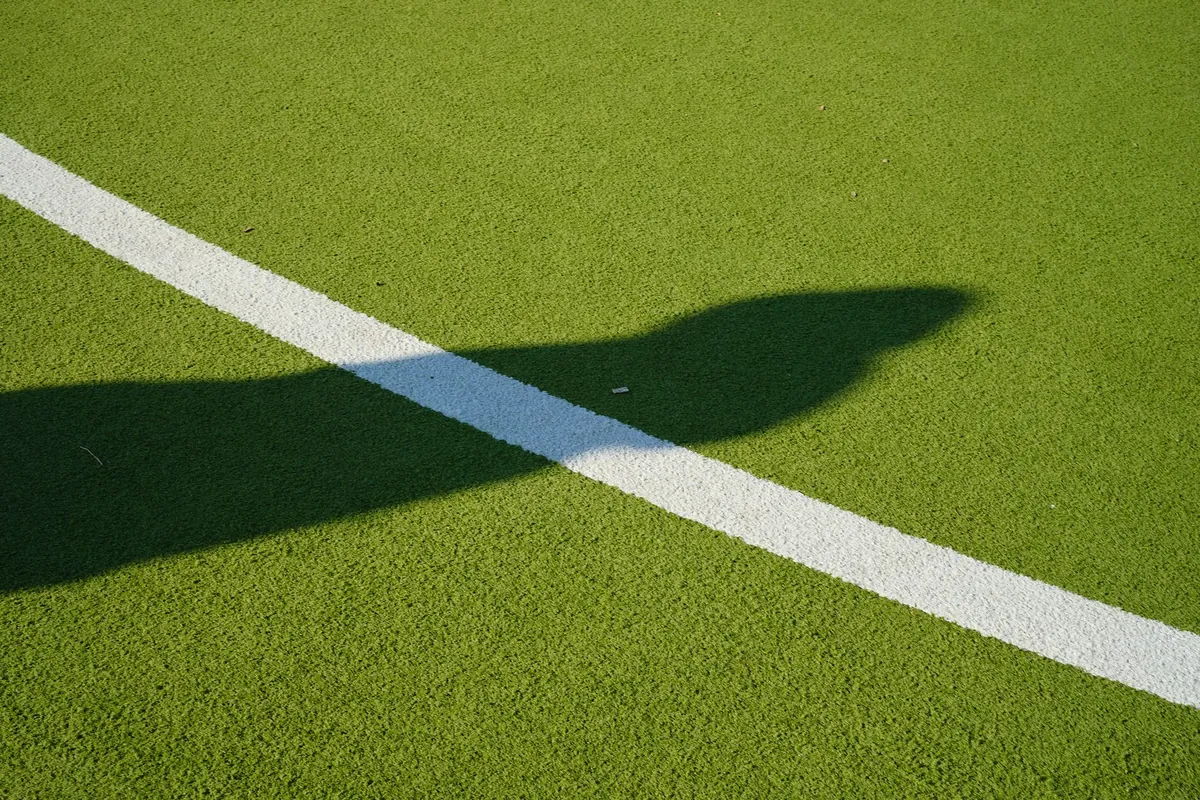
Court speed is a programming choice, not a fashion. Clubs that host long rallies want the forgiving end of the band; competition venues that want fast exits sit at the short, densely filled end. The padel court turf surface you end up with is really decided here, at the pile-and-sand pairing, long before anyone talks about brands.
Measure pile height the way the spec means it: the finished carpet with sand worked in, not the bare fibre off the roll. Ask which figure sits on the datasheet, because a bare-fibre number and a filled number are not the same number.
Choosing Between Monofilament and Fibrillated Yarn
The SAPCA code lists monofilament yarn as preferred and fibrillated yarn as acceptable for padel. Monofilament is a single extruded fibre that stands up on its own; fibrillated tape opens into a lattice as it wears. The two behave differently once sand is added, which is why the yarn choice and the sand rate are one decision, not two.
Fill rates differ by construction. One premium court builder quotes 8 to 10 kilograms of sand per square metre for texturised monofilament carpet against 12 to 15 for traditional fibrillated turf. Texturised monofilament sits between the two: a single fibre with a structured profile that holds sand the way fibrillated tape does, without the lattice. Dtex, the yarn’s weight per 10,000 metres, is the other half of the equation. SAPCA puts yarn weight at 9,000 to 10,000 dtex, and that is the band to hold a supplier to on the datasheet.
Numbers on paper do not settle feel. Order samples and slide a hand across them before your artificial turf installation is fixed, because two carpets at the same pile height can play differently under a racket. We send free 20 by 20 centimetre samples so the decision happens on your bench, not in a brochure.
Silica Sand Infill Does the Real Work
Sand is the least glamorous line in the spec and the one that does the heaviest lifting. No padel court turf surface holds its shape without it: the grains prop fibres upright, control ball bounce and stop the carpet from compacting into a mat.
Rates cluster around 8 to 10 kilograms per square metre in most trade guidance, with grain sizes from 0.2 to 0.8 millimetres. One Indian supplier working in full-sun conditions spans 8 to 15 kilograms per square metre with 0.2 to 0.5 millimetre grain. Kiln-dried, rounded silica sand is the common recommendation, because crushed or damp sand abrades fibres and clumps instead of flowing into the pile.
Distribution matters as much as quantity. Sand left sitting on top of the carpet makes the court play like an ice rink; brushed down into the pile, it grips. Builders expect the rate to be checked across zones and topped up as play displaces it. That is also why standard roll widths matter: fewer seams mean fewer edges for sand to work loose.
Rounding and dryness are not pedantry. Angular sand with sharp edges saws at fibre over thousands of ball impacts, and damp sand bridges instead of flowing, leaving shallow patches that show as shiny, unsupported carpet. That is why the purchase order should name the sand profile, not just the tonnage.
Base, Fall and Drainage Beneath the Carpet
The carpet is the most visible part of an artificial turf installation and the least decisive on its own. British guidance calls for the carpet to sit loose on a porous asphalt base, with the fall built into the base rather than the carpet. Water that cannot leave a padel court turf surface quickly turns a playable evening into a cancelled booking.
Three site numbers deserve attention. One build standard keeps the base fall at about 0.5 per cent for drainage, while another guide allows no more than about 1 per cent, since padel punishes slope. Both figures describe the same problem: a court that tilts enough to drain is a court that feeds every ball to one glass wall. Federation rules cited in flooring guidance expect the surface to sit level within 3 millimetres over any 3 metre span.
Drainage capacity is judged on the clock. The SAPCA code expects a new permeable surface, once weathered in, to shed standing water within 15 minutes of rain stopping. Ask how the base achieves that before you talk about carpet, because no pile height rescues a court that ponds.
Performance Numbers to Demand in Writing
Written performance targets separate a spec sheet from a sales sheet. The reference in European build guidance is UNE 147301:2018, a Spanish standard whose requirements the International Padel Federation has adopted. Testing covers both dry and wet states in the laboratory, because a court that only passes dry has not met the brief.
| Property | Test method | Requirement |
|---|---|---|
| Shock absorption (force reduction) | EN 14808 | 15 to 25% |
| Ball rebound | EN 12235 | Above 80% |
| Rotational resistance | EN 15301-1 | 25 to 50 Nm |
| Water permeability | EN 12616 | Above 500 mm per hour |
| Test condition | UNE 147301:2018 | Dry and wet laboratory states |
Ask which side of each band a proposed carpet sits on and why. One artificial turf installation can pass all four rows in a laboratory and still play badly on site when the sand rate drifts. Treat the table as a floor, not the whole answer. The padel court turf surface you accept should arrive with these four rows, plus pile height, dtex, stitch rate and backing, on one page.
Worried the Roll Won’t Match Your Spec Sheet?
A mismatched pile or density sends ball bounce off spec and shortens surface life. We build each roll to written spec: yarn, pile height, density, backing and roll size.
Common Mistakes That Shorten Surface Life
Most early failures in artificial turf installations trace back to a handful of decisions made before the first roll is delivered. Every one of them is avoidable on paper, which is the cheapest place to avoid it.
Buying on pile height alone
A carpet chosen by millimetres alone ignores density, dtex and yarn type. Low-density carpet flattens into bald patches, bounce turns unpredictable, and the court pays for a full resurface years ahead of plan.
Accepting a UV promise without a datasheet
A verbal UV claim is not a grade. Full-sun sites can see surface temperatures of 55 to 65 degrees Celsius. Guidance for hot climates asks for a UV rating of at least 5,000 hours with named stabiliser packages in writing.
Treating the sand rate as a one-time fill
Sand settles, migrates and leaves with play. Skip the top-up rhythm and fibres lie flat along the busiest lines. Brushing that redistributes sand becomes the difference between a court that ages and one that simply wears out.
Building the base as an afterthought
Ponding, soft spots and a fall that fights the game all start below the carpet. The 15-minute drainage expectation and the 3-millimetre levelness figure are base tests as much as surface tests.
Laying carpet in the wrong weather
Adhesive joints may not fully bond in cold or damp conditions, and sand needs to flow into a dry pile. The SAPCA code expects both the carpet and the sand to be dry at installation, so the weather window belongs in the programme.
Signing off without a written spec
A delivery with no documented pile, dtex, stitch rate, backing and UV grade cannot be checked against anything. Make the paper part of the order, because the roll is only as verifiable as the sheet it ships with.
Matching Specifications to Your Facility Type
The right padel court turf surface is the one matched to how many hours the court plays and who plays on it. Four common profiles cover most briefs; the differences live in pile, fill rate and UV grade rather than in branding.
| Facility profile | Pile height | Sand infill | Roll width fit | Notes |
|---|---|---|---|---|
| Club commercial play | 12 mm | 8 to 10 kg/m² | 4 m or 5 m | The working standard for mixed programmes |
| Fast match venue | 10 to 12 mm | Full fill | 4 m | Quick, firm ball exit |
| Community comfort court | 14 to 16 mm | Lighter fill | 4 m | Cushioned, slower bounce |
| Full-sun, hot climate | Within the 10 to 15 mm band | 8 to 15 kg/m², 0.2 to 0.5 mm grain | 4 m or 5 m | UV grade of at least 5,000 hours with named HALS |
Indoor halls add a ceiling check: guidance for standard courts expects at least 6 metres of clear height above the playing surface. Our custom pile heights, densities and backing systems exist precisely because these profiles mix. A club in a hot region may need the UV package and the comfort pile in one carpet. Broader sports artificial grass range options cover the neighbouring sports when one facility runs several codes.
Whatever the profile, an artificial turf installation is judged by its tenth year, not its first week. Maintained courts are reported to reach 8 to 12 years of service, and the spec you lock in now is what the maintenance crew will be preserving.
Frequently Asked Questions
How much sand does a padel court turf surface need?
Most trade guidance clusters around 8 to 10 kilograms per square metre, with grain sizes of 0.2 to 0.8 millimetres. Hot-climate specs sometimes span 8 to 15 kilograms, so follow the rate your carpet was designed around.
What pile height should a padel court have?
The SAPCA code works within 10 to 15 millimetres, and 12 millimetres is the common choice. Shorter, heavily filled carpet plays quick and firm; longer carpet with a lighter fill cushions the bounce.
How long does a padel turf surface last?
With regular brushing and sand top-ups, maintained artificial grass is reported to serve 8 to 12 years. Skipped maintenance shortens that badly, which is why the fill rate belongs in the upkeep plan.
Can padel turf be laid in any weather?
No. Adhesive joints may not fully bond in cold or damp conditions, and the SAPCA code expects both carpet and sand to be dry when the surface is installed.
Which performance numbers should a padel surface meet?
UNE 147301 sets shock absorption at 15 to 25%, ball rebound above 80%, rotational resistance at 25 to 50 Nm and drainage above 500 mm per hour.
What UV grade should padel turf have in hot climates?
Guidance for hot, high-sun regions asks for a UV rating of at least 5,000 hours with named HALS stabilisers on the datasheet. Verbal promises without documentation are the failure pattern behind early fading.


 English
  Arabic
  French
  German
  Portuguese
  Russian
  Spanish