
A single rectangle of multi sport athletic turf has become the whole athletics department at many schools. Morning physical education, afternoon hockey, evening soccer and a weekend tournament all land on the same field, and everybody expects it to be ready again by Monday.
We build artificial grass rolls on our own line, and multi-use projects teach us fast that the surface has to be specified around that pressure instead of around one sport. Multi sport athletic turf earns its reputation when the compromise between those sports is written into the roll before anything is cut.
Why One Field Has to Do Everything
Land is the constraint that starts most of these projects. Where space allows one field and one court, a single multi-sports surface can carry tennis, netball, basketball, hockey, football, futsal, rugby and junior cricket without a second build.
Hours follow the same logic. A synthetic field delivers more playing hours per field than grass, especially once lighting extends the usable day, so a region can meet its sports demand with less developed land. Our sports artificial grass systems are quoted against that kind of brief: the sport mix first, the roll second.
Scheduling Around a Calendar Not the Weather
Natural grass needs recovery time, and a busy calendar never gives it enough. The water-permeable structure of a multi-sports pitch is what changes that equation, because it keeps the surface playable virtually all year instead of closing it after heavy rain. For a calendar shared by several sports, an artificial turf installation removes the recovery window that grass cannot escape.
Speed of recovery is measurable. One supplier of multi-sport systems states that its drainage design uses 60 or more holes per square metre. The same drainage returns the pitch to play within 30 minutes of rain. Operators who switch from grass commonly report enough extra capacity to triple annual use.
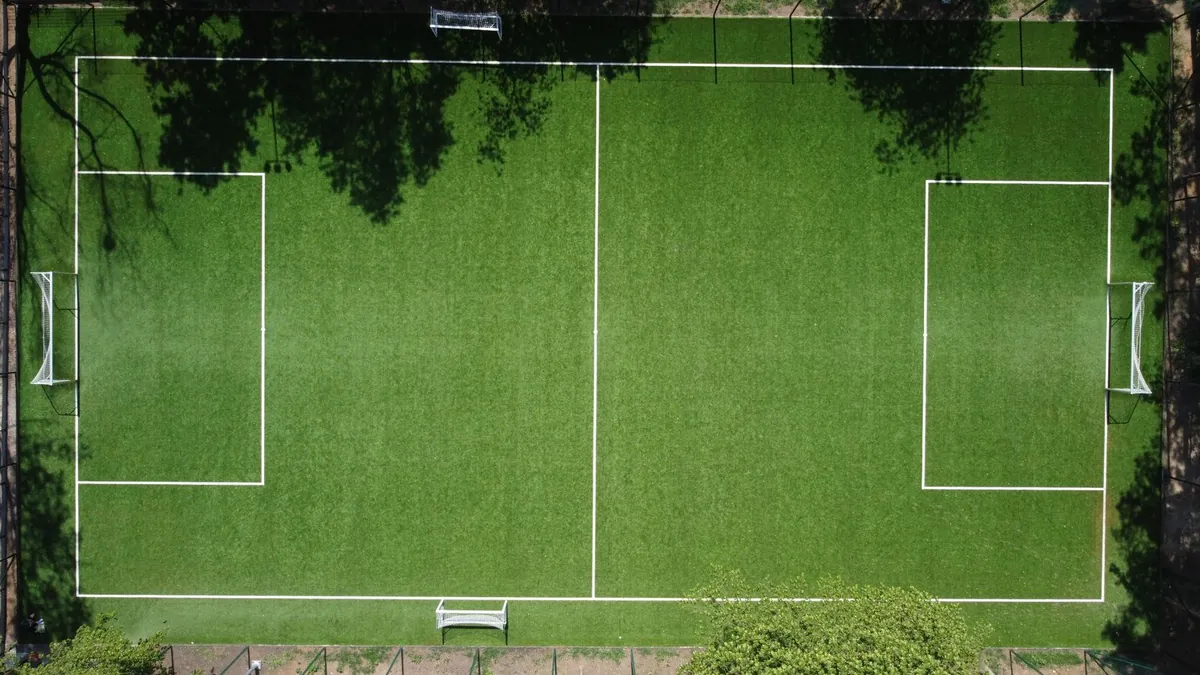
Cancellations then stop being a scheduling variable. Artificial turf installations turn a weather risk into a booking, which is the first reason a multi-sport programme looks at them at all.
How Pile Height Balances Competing Sports
Pile height is where the compromise becomes real, because multi sport athletic turf must accept one fibre length for every sport on the calendar. For fields hosting several activities, published guidance puts the ideal fibre height between 20 and 25 millimetres, chosen as the balance point rather than the optimum for any single sport.
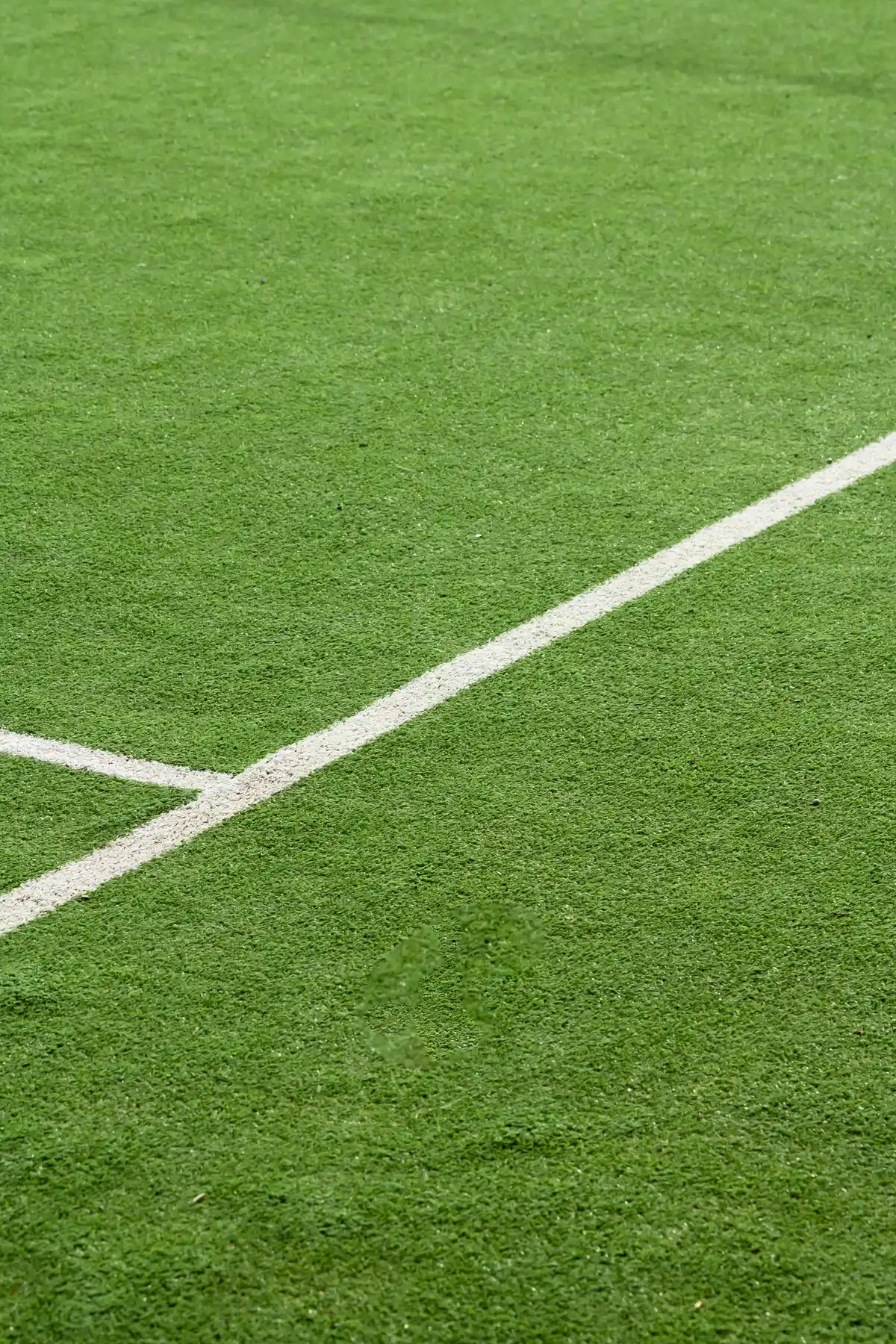
Each sport pulls in a different direction. Hockey wants a short, smooth pile so the ball glides fast, while football relies on deeper infill for shock absorption and soccer wants cushioned, even ball roll. Compare how soccer tiers split on pile and backing and how blade profile changes recovery under traffic before you settle either number.
Markings Decide Whether the Compromise Holds
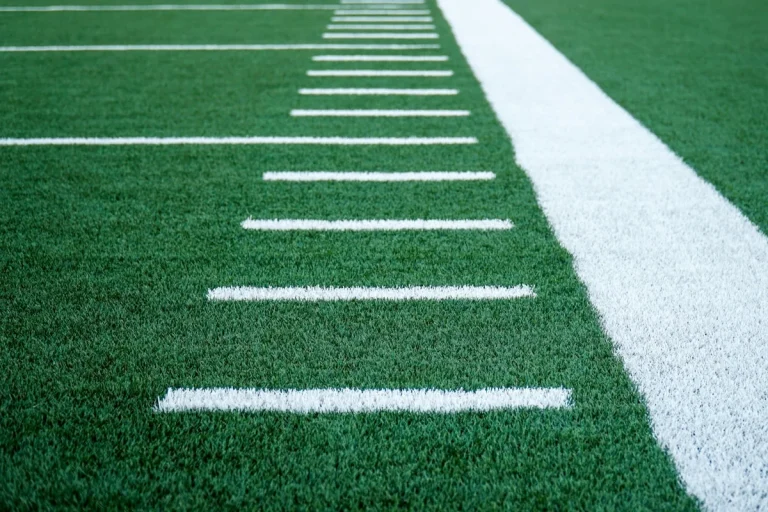
Markings are the visible half of the compromise. With grass, re-applying marking paint is simply another maintenance task, and a week of rain can erase the lines between two events. A synthetic surface can instead carry permanent markings in different colours, with each colour delineating zones for another sport.
That decision has to be made before cutting. Inlaid lines arrive with the roll and stay legible for the life of the surface. Painted lines can be reconfigured later, at the cost of a repainting cycle and a few lost sessions. Plan one primary set in white and a secondary set in a contrasting colour, then check that no run of paint sits directly on top of a planned seam.
Where Wear Concentrates on Shared Fields
Shared fields wear in places single-sport fields never do. Beyond the obvious threats of goal mouths and centre lanes, extra wear shows up at player entrances, warm-up zones and along the sidelines where teams gather with their equipment.
The responses are cheap if they are planned and expensive if they are not. Brush those strips more often, top off infill where depth drops, and rotate training drills so one line does not shine. Accept a partial resurface only when wear is truly advanced. Roll layout plays a part too, since standard rolls come 2 m, 4 m and 5 m wide at 25 m long, and width choice decides where seams fall.
Maintenance Follows the Hours Not the Season
Frequency should follow an hours log, not a calendar habit. Define the tier from weekly playing hours and the sport mix, then read the intervals off that figure.
| Use tier | Brush | Decompaction and levelling | Infill depth check | Deep condition |
|---|---|---|---|---|
| Light use or single-team practice | Every 1 to 2 weeks | Every 3 to 4 months or every 150 to 200 hours | Quarterly | Pre-season and post-season |
| Typical high school or club | Weekly | Every 2 to 3 months or every 100 to 150 hours | Every 6 to 8 weeks | At least twice per year |
| Heavy multi-sport or tournament venue | 2 to 3 times per week, plus post-event touch-ups | Monthly or every 60 to 100 hours | Monthly | 3 to 4 times per year |
The staffing side of an artificial turf installation is predictable once the tier is known. A weekly brush runs 30 to 60 minutes on a full-size field. A monthly deep groom takes 2 to 4 hours, and a quarterly decompaction and level takes 3 to 5 hours. On top of that, 2 to 4 professional visits a year cover most high-use sites.
One Field Running Four Sports All Week?
Back-to-back fixtures turn into grooming hours nobody budgeted for. We match pile height, backing and roll width to your sport mix, then send 20 by 20 cm samples.
Reading a Multi-Sport Turf Spec Sheet
A usable sheet lets two quotes for multi sport athletic turf be compared row by row. A 4 m roll covers 100 square metres and a 5 m roll covers 125 square metres, so width is a material line, not a footnote.
| Row | What it decides | Where multi-sport work usually lands |
|---|---|---|
| Pile height | The compromise between every sport on the calendar | 20 to 25 mm for mixed use, raised where one sport dominates the hours |
| Roll width | Seam count, offcut waste and handling weight | 2 m, 4 m or 5 m by 25 m, with 4 m covering most layouts |
| Line method | Whether lines are permanent or repainted every season | Inlaid lines in contrasting colours, drawn before cutting |
| Backing and perforation | How fast water leaves the surface after rain | Perforated backing checked against the drainage design |
Face weight deserves its own line on the same sheet, because fibre mass predicts recovery better than height does. Face weight on the spec sheet explains why the trade matters most when several sports share one surface.
Three Mistakes That Shorten Shared Fields
Three decisions cut the life of most artificial turf installations long before the fibres are worn out.
Choosing Pile Height for the Loudest Programme
The sport with the loudest supporters rarely fills the most hours. Set height against the compromise band and against your actual weekly mix, then adjust rather than starting from whichever team complained last.
Budgeting by Season Instead of Hours
Maintenance follows usage, and heavy multi-sport venues reach their decompaction trigger every 60 to 100 hours. A budget built around four tidy seasons usually runs out of grooming capacity halfway through the first busy period.
Leaving the Seam Map to the Installer
A seam that runs through a goal mouth or under a penalty spot becomes the first thing that fails. Fix widths, inlay positions and seam runs on one drawing before the artificial turf installation begins.
A Handover Checklist for Multi-Sport Fields
Log the Sport Mix and Weekly Hours First
List every activity with its weekly hours. That total picks the maintenance tier, which in turn sets the grooming budget for the whole year.
Walk the Field and Mark Every Wear Zone
Mark entrances, warm-up strips, benches, goal mouths and centre lanes on a plan. These are the areas that need extra brushing and top-offs from day one.
Agree the Line Package Before Cutting
Confirm colours and positions while the roll can still be made to order. Late additions mean paint, and paint means recurring cost on a schedule you cannot always protect.
Keep a Retained Sample With the Batch Number
Request a 20 by 20 cm sample from the delivered batch and file it. Three to four pieces travel by courier in 4 to 6 days, and you pay the freight rather than someone else.
What the Numbers Look Like Over Time
Honest numbers keep this decision credible. Initial cost for a synthetic field runs about twice that of natural turf. The argument rests instead on the lower long-term cost over 10, 12 or 15 year life spans, not on the opening invoice.
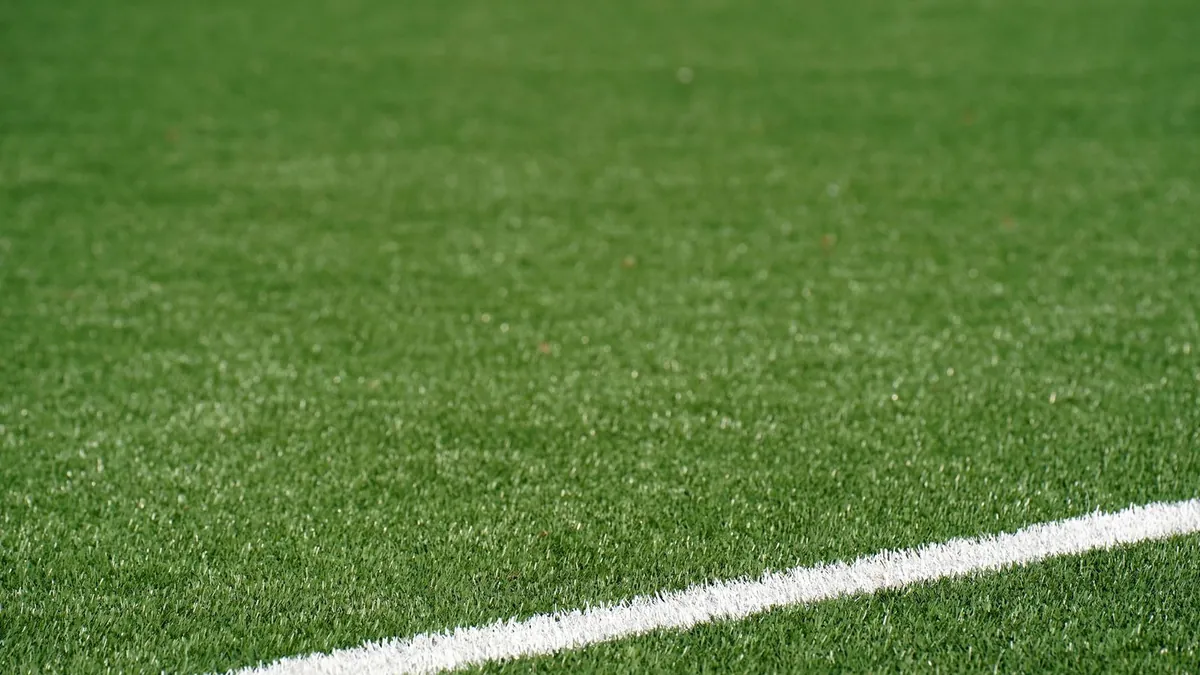
Water is the other side of the ledger. A reduction in water use of 80 percent is common on all-weather fields. Natural turf typically needs 15 inches of irrigation on top of local rainfall. Our own commercial reference is a service life of up to 10 to 15 years. Read more background in published work on synthetic field water savings.
Heat deserves a line of its own. Cooling infills and heat-reducing fibres can bring peak surface readings 15 to 20 F below older systems in direct sun, which matters most on heavily booked summer evenings. Professional venues deal with the same trade-offs: see how professional venues plan their playing surface.
Frequently Asked Questions
Can one synthetic field really host several sports?
Yes. One surface can carry football, hockey, futsal, basketball and community sessions in one week, and permanent markings in different colours keep each set readable.
What pile height suits a multi sport athletic turf field?
Between 20 and 25 millimetres suits mixed calendars. Raise it towards the higher end only where one contact sport fills most of the weekly hours.
How often should a heavy multi-use pitch be groomed?
Brush 2 to 3 times weekly plus post-event touch-ups, decompact and level monthly or every 60 to 100 hours, and deep condition 3 to 4 times a year.
Does a shared field still need watering?
No irrigation is needed to stay playable, and a reduction in water use of 80 percent is common. Water is used only to rinse dust or cool the surface.
How long does a multi-sport turf surface last?
Commercial turf carries a service life of up to 10 to 15 years. Where a shared field lands depends on weekly hours, grooming discipline and base drainage.
How do I check a roll before ordering a full field?
Request a 20 by 20 cm sample, usually three to four pieces. They travel by courier in 4 to 6 days with the freight covered by the buyer.
 English
  Arabic
  French
  German
  Portuguese
  Russian
  Spanish