
A contractor emails us photos eight weeks after handover: a ripple across the middle of a lawn and water sitting at one corner. The roll performed exactly as specified. The layer under it moved, and the surface copied every dip.
Green yarn hides a weak layer for weeks, which is why base materials matter more than most specification sheets admit. We build rolls for contractors, distributors and landscape buyers, and the same three failures reach our bench again and again: wrong gradation, thin compaction, no verified fall.
What the Base Does Under a Turf Roll
A tidy artificial turf installation starts with a layer nobody photographs. That layer carries load, passes water downward, resists settlement and holds a plane for seams to sit flat against.
Stated another way, why base materials matter is not philosophy. A base that drains, locks and stays level buys years of service from the carpet above. One that fails any of those three sends its defect pattern upward within a season.
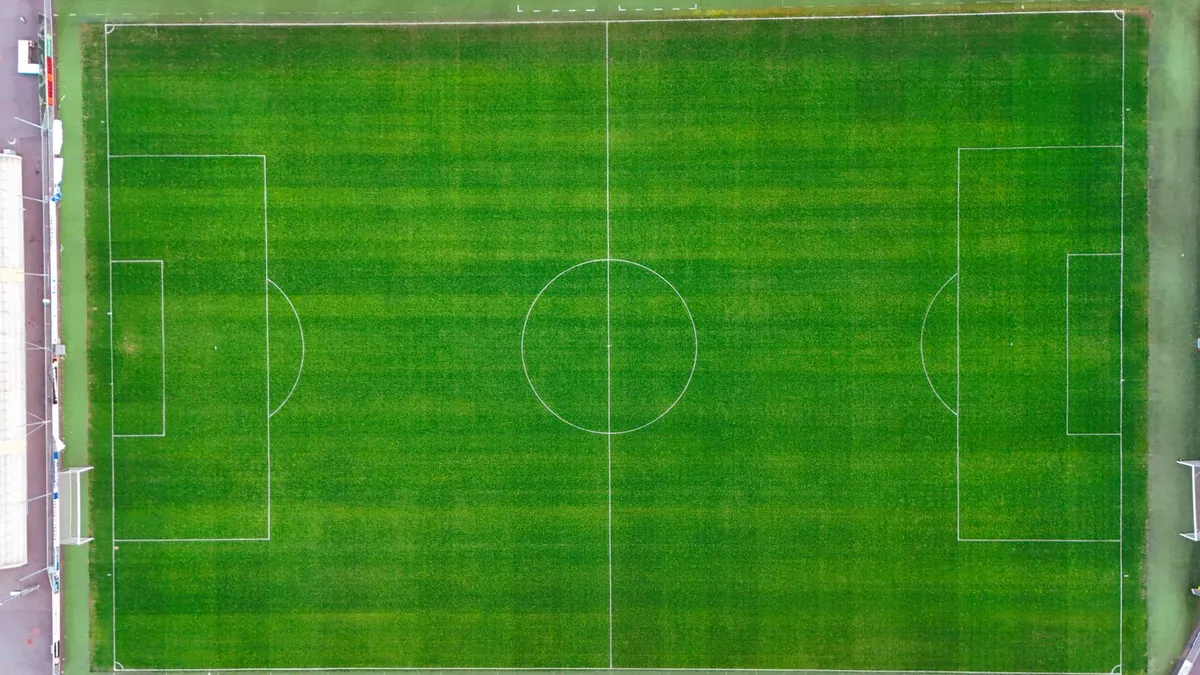
Buyers who write those three jobs into a subcontract document spend far less time arguing about blame later. Measurements replace adjectives, and the conversation moves from opinion to evidence.
Choosing Aggregate Base Materials That Hold Shape
Start from particle shape, not from the cheapest local ticket. Angular particles interlock under load; rounded ones roll. Most yards stock some version of 3/4 inch minus crushed stone or Class II road base, and those two names cover the majority of jobs.
| Material | What it gives | Where it fits | Watch out |
|---|---|---|---|
| Crushed stone with fines | Interlock plus high permeability | Default for lawns, commercial areas and fields | Needs thin lifts and moisture to reach density |
| Class II road base | Predictable gradation batch to batch | Municipal and contractor bids | Confirm the regional equivalent name |
| Decomposed granite | Smooth finish, tight surface | Dry regions and final fine grading | Holds moisture in wet climates |
| Coarse sand | A leveling pass only | Top screed under the carpet | Never used as the structural layer |
| Recycled concrete aggregate | Lower embodied impact | Large commercial areas | Must arrive clean and well graded |
In commercial artificial turf installations, traffic decides the material before drainage does. Rounded stone cannot lock, so pea gravel belongs inside French drains and decorative borders rather than under a wearing surface.
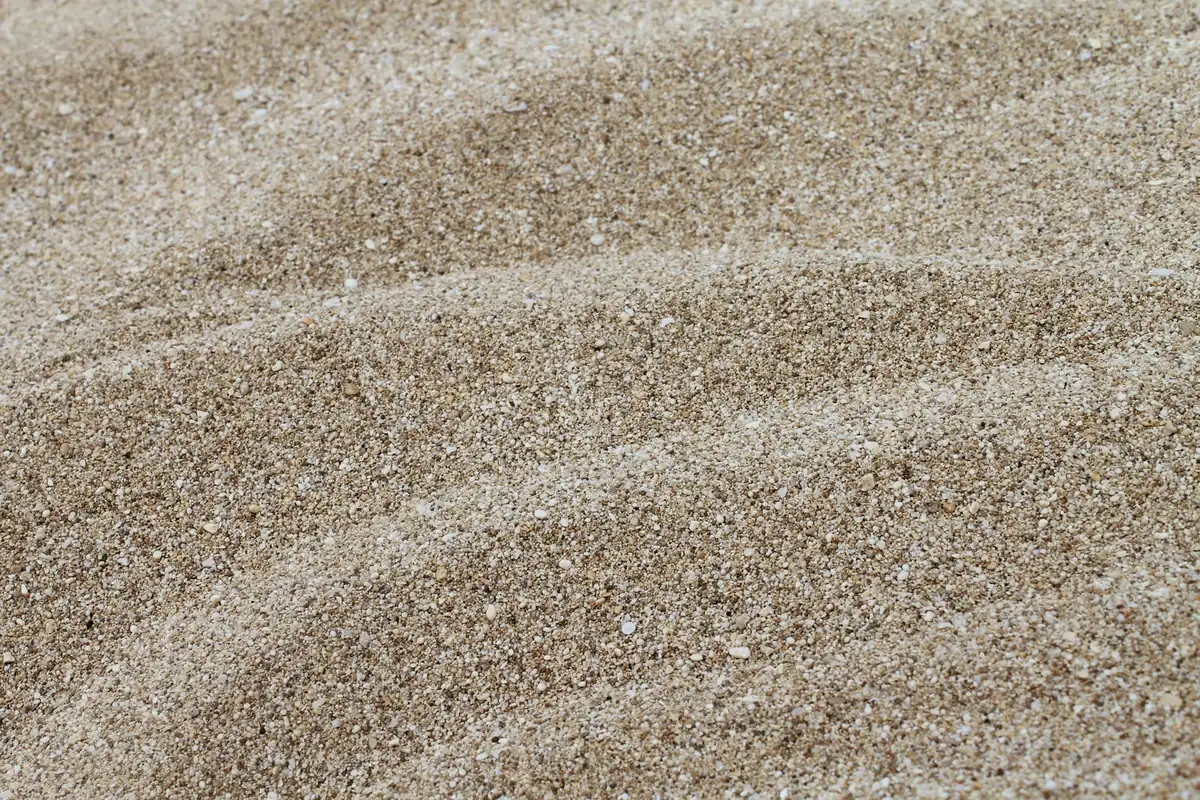
Recycled supply works when it is clean. Wire fragments, oversize chunks and dust-heavy loads are all rejection criteria you can put on the delivery note before the first truck arrives.
Specifying Gradation, Fines and Compaction Targets
Put the numbers in the subcontract instead of leaving them to site habit. Aggregate around 10–20 mm with fines is widely cited, and installers also quote a 70:30 balance of solid mass to fines where free drainage is the priority.
Placement discipline matters as much as the material itself. Lifts thicker than the compactor can work leave a hard skin over loose fill. The evidence arrives later, with furniture, footfall or a service vehicle.
- Set targets on paper: about 95 percent of maximum dry density for landscape work, 95 to 98 percent Modified Proctor on full field builds.
- Cap each pass: lifts no thicker than 2 inches on landscapes, typically 4 to 6 inches on heavy field sections.
- Specify plant as vibratory plate compactors, 200 pound class or better, rather than leaving the size to whoever turns up.
- Screed the finish at 1/2 inch or less of fine material, then verify the plane before anything is unrolled.
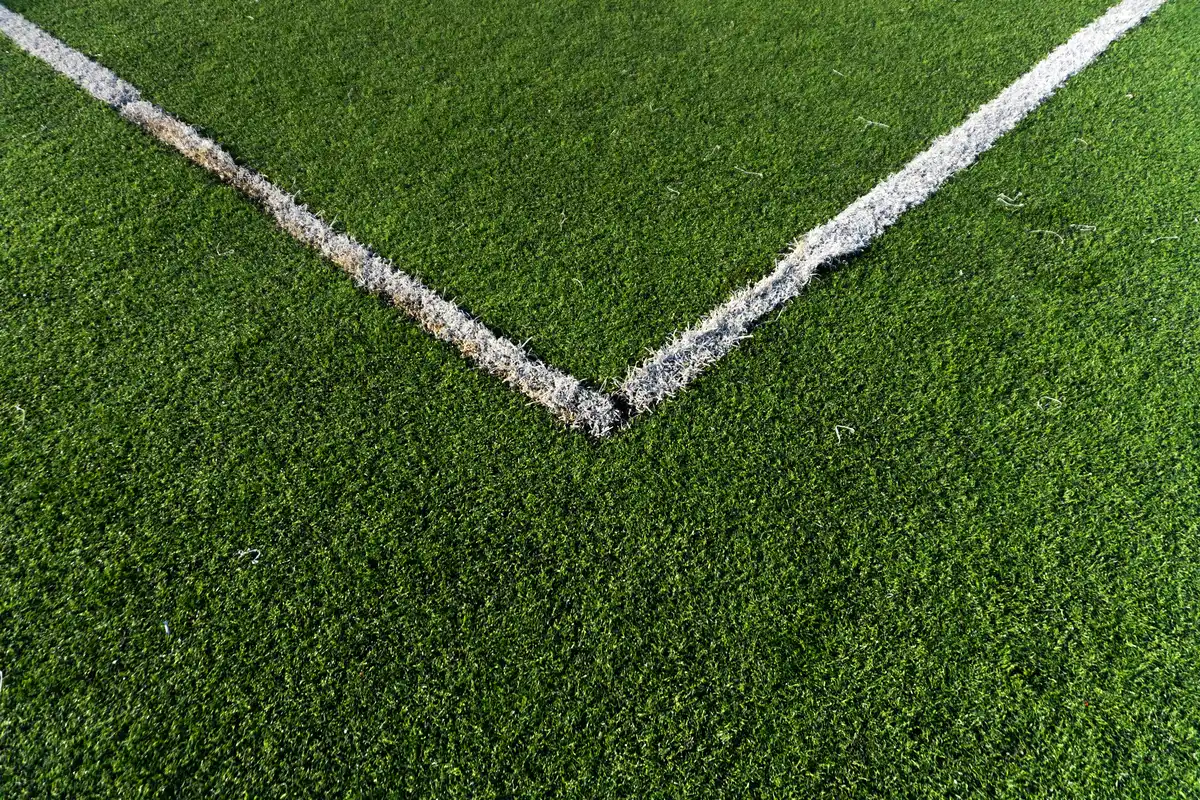
Compaction is the step most likely to be trimmed when the schedule tightens, and it is also the step whose absence costs the most later. Dampen lightly, work in passes, and record it.
Calculating Base Depth and Material Quantities
Depth follows soil and traffic, then turns into a number you can order against. The bands below are published practice; where local geotechnical advice disagrees, local advice wins.
| Scenario | Compacted depth | Note for the take-off |
|---|---|---|
| Stable soil, light foot traffic | 3–4 inches (8–10 cm) | Default residential specification |
| Clay soil, pets or heavier use | 4–6 inches | Add separation fabric over a weak subgrade |
| Pet areas with frequent rinse-down | 4–5 inches | Steeper fall at 1.5–2 percent |
| Play areas and sports build-ups | 15–20 cm (6 inches or more) | Deeper section plus any required shock layer |
| Rooftop or balcony, light build-up | 3–5 cm | Only where the deck carries the load |
| Freeze-thaw regions | Add 1–2 inches | Drainage takes priority over depth alone |
Order loose volume rather than compacted volume. Area multiplied by thickness gives the loose figure, then add 10–15 percent for compaction and grading losses, and keep 5–10 percent extra length and width for trimming and seam allowance.
A quick check keeps everyone honest: 100 square metres at 10 cm of finished base needs 10 cubic metres of material before losses. Ask for that quantity in writing before the last truck leaves site, not after. Budget reviews are another place where why base materials matter shows up, because depth drives tonnage.
Roll planning runs on the same arithmetic, because wider rolls remove seams across open rectangles. Review our residential roll options and layouts before you fix dimensions.
Setting Drainage Slope and Moving Water Away
Drainage faults in artificial turf installations almost always trace back to fall or to a low spot. Keep 1–2 percent running away from buildings, and never below 0.5 percent on any surface that carries regular foot traffic.
Clay and existing low points need more than a surface grade. Separation fabric over the subgrade plus a drain layer tied to a real outlet is the standard answer; see our drainage build-ups for artificial grass for layered alternatives.
Perforation belongs to the same calculation. Athletic specifications commonly ask for polyurethane or latex backing delivering at least 30 gallons/min/sq yd, so compare backing options and perforation behaviour against local rainfall before fixing the product.
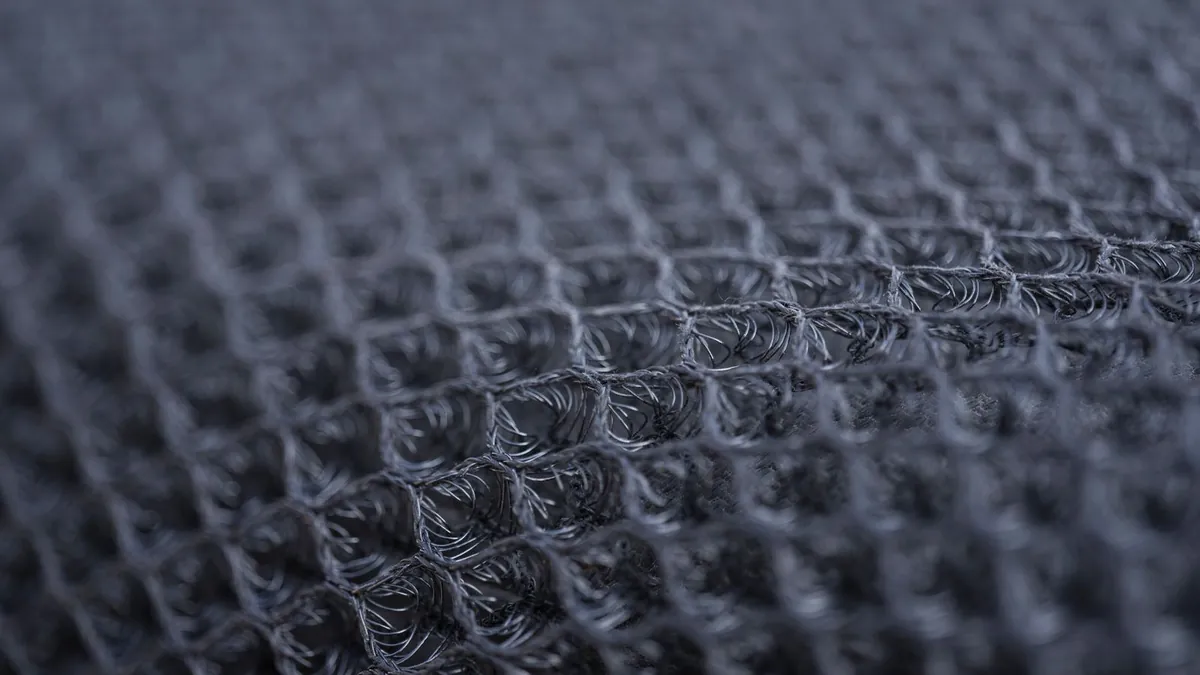
Finish with practical checks: no ponding after a hose test, no reverse fall toward a threshold, and an identified discharge point that is not a neighbouring planted bed.
Why Base Choices Shape Roll Width and Seams
Seams fail where the plane beneath them fails. Standard rolls arrive in 2 m, 4 m and 5 m widths at 25 m long. The wider the roll, the more it demands of the surface beneath it.
Treat that as tolerance stacked on tolerance. A wide roll bridges a broad area in one piece, so one high spot becomes a ridge across the whole run. Narrower pieces let a crew work around local error, at the cost of more joins. Joins cost labour and material to lay and check; ridges cost the relationship that follows.
That is the quiet reason why base materials matter to roll planning: tolerance below decides how wide a roll you can sensibly carry above it. Custom widths shift the arithmetic again by removing joins on awkward shapes, so check current roll widths and product formats against your layout before ordering.
Base Failed Before Your Rolls Arrived?
A soft base leaves ripples and puddles blamed on the turf. Factory-direct rolls are built to your stated pile, density and backing. Request a 20 by 20 cm sample.
Five Base Mistakes Buyers Spot Too Late
These five account for most callbacks on artificial turf installations that reach us. Each one is cheap to prevent on day one and expensive to open up once the carpet is down.
1. Rounded stone carrying structural load
Rounded particles roll under load and leave shallow dips that read as shade lines across the finished surface. Round gravel is fine inside drains and borders, never under a wearing layer.
2. Full depth placed in one pass
Compaction energy falls away fast with depth, so one thick layer gives a hard skin over loose fill. Lifts are not optional, whatever the programme pressure says.
3. Organics left under the aggregate
Roots, turf and topsoil break down and leave voids that settle for years. Strip them, proof-roll the subgrade and repair soft spots before the first load lands.
4. Fall built towards the building
A reversed grade sends water to thresholds and keeps the carpet wet along the edge, which is where odour complaints usually begin. Check slope direction before compaction starts.
5. No trim allowance in the take-off
Short material forces a second delivery and an argument about batch matching. Carry 5–10 percent extra length and width as a standing rule in every order.
Wrinkles are often this same story retold, with movement below and waves above. Our note on why wrinkles form after laying covers the mechanism.
Accepting a Finished Base Before Rolls Land
Acceptance is a short list, and one site visit covers it: straightedge, spirit level, hose, camera. Photograph everything, because the agreement you want rests on evidence rather than opinion. Every artificial turf installation gets signed off somewhere; do it here, before material is unrolled onto someone else’s judgement.
Density evidence first
Ask for a density result rather than a verbal assurance, with published practice around 95 percent of maximum dry density for landscape work. Inconsistent density shows up later as ruts following regular traffic lines.
Plane and tolerance
Run a straightedge across the finished course and allow no more than 1/4 inch of deviation. Levelled field work is commonly specified to plus or minus 1/4 inch over a 10-foot radius.
Fall and outlets
Confirm the direction of the fall and where the water actually goes. Any pool still standing ten minutes after the hose stops is a defect, not a damp patch waiting to dry.
Cleanliness and edge restraint
Fines should not pump under load, and the perimeter must be contained. An unrestrained base creeps outward, taking edge fixings and seam alignment along with it.
By handover time, why base materials matter is obvious to everyone standing on site: whatever sits above reproduces what lies below. Better to reopen the base now than to unroll turf over it.
Frequently Asked Questions
Which base material suits most turf jobs?
Angular 3/4 inch minus crushed stone with fines, often sold as road base. It locks under compaction while still passing water, and most yards stock it.
How deep should the base be?
Most lawns need 3–4 inches of compacted base, while clay, pet areas or sports build-ups run 4–6 inches or more. Depth follows soil and traffic.
Do I need a shock pad under landscape turf?
Only where safety or impact requirements call for one. Playgrounds and athletic builds add a pad; most decorative and residential lawns are specified without it.
Can turf go straight onto concrete?
It can, but you lose vertical drainage, so water has to travel sideways. Specify a drainage layer or dimpled mat and confirm where the water leaves.
How much extra material should I order?
Add 10–15 percent to the loose volume for compaction and grading losses, and keep 5–10 percent extra length and width for trimming and seams.
How do I test drainage before rolls are laid?
Run a hose over the finished base and watch where water travels. It should infiltrate and follow the fall, with nothing left standing once the hose stops.

 English
  Arabic
  French
  German
  Portuguese
  Russian
  Spanish