
Two pallets of artificial turf can come off a container looking identical — same pile height, same color, same stitch rate. Eighteen months of sun later, one still looks like grass while the other has faded into a claim dispute with your installer. The difference won’t show up in a golden sample. It lives in the certifications, and most buyers never learn to read them.
At Relyir Grass, we put every yarn batch through 5,000-hour UV weathering testing before a single roll ships. That’s not paperwork for the wall. It’s the line between a lawn that holds color for a decade and a fade claim you can’t enforce from 10,000 kilometers away.
The sections ahead break down what each of the seven certifications actually attests — which ones a tender demands and which are expensive wallpaper. You’ll see how to verify a certificate number with its issuing body and match a test report to your own production batch. Do that before the container ships, and you never have to take a supplier’s word for quality again.
What Actually Proves a Supplier’s Quality?
In artificial turf procurement, the only proof that survives scrutiny is verifiable documentation — certificates traceable to an issuing body, reports bound to the production batch, and an audited factory behind them. Everything else measures the seller, not the product.
Why Touch, Price, and Photos Mislead
Every buyer eventually learns the same lesson: the three tools most people use to judge artificial grass — hand feel, price, and pictures — are the three that fail first. They all evaluate presentation, and turf failure is a durability event, not a presentation event. A showroom tells you how a product was staged; it cannot tell you how a compound was formulated.
- Touch: Hand feel is easy to engineer on a sample — a softer pile, a denser inline. What your fingers cannot detect is the UV stabilizer loading inside the masterbatch, the heavy-metal content of the pigment, or the adhesion quality of a backing hidden beneath the yarn.
- Price: A quote sitting far below the market band usually reflects something removed, not something efficient — reduced yarn behind the coating, recycled compound, a lower stitch rate. Nothing on an invoice discloses which lever was pulled.
- Photos: Lighting, angle, and post-processing manufacture vibrancy. A warehouse photograph cannot reveal the resin grade of the yarn inside it, and a video walkthrough cannot prove the building on screen is the mill that will actually run your order.
Across eighteen years of exporting, the disputes we have watched rarely began with a fake certificate — they began with a decision made on a showroom sample. Fade, flattening, and pile loss all surface one to three seasons after installation, which places them permanently outside the reach of a hand, a price tag, or a camera. Documentation is the only evaluation instrument that operates on the same timeline as the failure modes it predicts.
The Seven Certifications at a Glance
The industry’s answer to that gap is a proof framework built on seven instruments. They are not interchangeable stamps, and they do not carry equal weight for every buyer. What matters first is the map: two of them audit the producer, four of them test the product, and one certifies a finished sports surface as an installed system.
- ISO 9001 — the factory’s quality-management system
- ISO 14001 — the factory’s environmental-management system
- CE — conformity with applicable EU directives
- REACH — chemical content against EU-restricted substances
- RoHS — hazardous-substance limits, a framework borrowed from the electronics sector
- ASTM lab testing — method-based performance results on a submitted sample
- FIFA Quality — system-level sports performance of a surface as installed
Note the pattern: system certificates, product-level instruments, and one field-system standard. Where a document sits in that split determines what it can honestly promise — and what it silently cannot. The sections that follow examine each instrument in depth.
Product-Level Tests vs Factory-Level Audits
A test report and a management-system certificate answer fundamentally different questions. A product-level test asks: does this material, as submitted, meet this limit or achieve this figure? A factory-level audit asks: can this organization produce the same result next month, and the month after, without the buyer standing on the floor?
The distinction is commercial, not academic. A passing lab report is a snapshot of a single specimen; an ISO audit cycle is a recurring examination of the whole operation. Neither one alone guarantees that the container arriving at your port matches the sample on your desk. That gap — between the tested specimen and the shipped goods — is where most quality loss in this industry actually lives, which is why the scope of a document matters more than the number of logos on a quote sheet.
Scope also decides accountability. When compounding, extruding, twisting, tufting, and coating happen inside one facility, a system certificate and a product report ultimately describe the same factory — one entity answers for both. Split that chain across a yarn trader, a subcontracted tufting mill, and a third-party coating shop, and the same two documents now describe three companies, none of which fully owns the specification. It is the quiet engineering reason we have kept every production stage in-house from the start: a certificate is only as strong as the entity that must answer for it.
What Each Certificate Actually Attests
Every document in the stack can be interrogated with three questions: Who issued it — an accredited certification body, a testing laboratory, or the manufacturer itself? What was examined — a management system, a submitted sample, a product family, or an installed field? And most critically, what does it deliberately not cover? A certificate’s value is defined by its boundary as much as by its name.
- ISO 9001 attests that a documented, externally audited quality system governs production. It does not certify that any individual roll is defect-free.
- ISO 14001 attests that environmental risk is managed at the site level. It says nothing measurable about the turf inside the container.
- CE attests the manufacturer’s own declaration of conformity with the EU directives applicable to the product. In many categories it is a self-signature, so the technical file underneath is what carries the weight.
- REACH attests that the product’s chemistry complies with EU restrictions on substances of very high concern. It is a safety document, not a durability one.
- RoHS attests limits on hazardous substances — originally written for electronics, adopted by turf buyers as heavy-metal evidence. It makes no claim about UV life or tuft strength.
- ASTM-based lab reports attest how a submitted specimen performed under defined test methods. Until the result is bound to a production batch, it belongs to the sample — not to your order.
- FIFA Quality attests the performance of a sports surface as a complete system — carpet and infill as installed. Yarn-level laboratory data, however impressive, is not a field certification.
1. ISO 9001: Does the Factory Stay Consistent?
ISO 9001 is a quality-management certification issued by accredited registrars under the International Organization for Standardization, and it audits the factory as a system — not any single roll of turf. For a B2B buyer, its value answers one question: will order #10 match order #1? The standard validates documented process control across raw-material intake, extruding, twisting, tufting, and coating, plus batch repeatability, corrective-action discipline, and contract-compliance records over time.
Certification runs on a three-year cycle with annual surveillance audits, so a current certificate signals ongoing discipline rather than a one-time snapshot. Auditors trace non-conformances end to end: a yarn lot missing denier tolerance or a backing coat below weight spec must trigger documented root-cause analysis and verified closure. Crucially, ISO 9001 says nothing about product performance — it does not measure UV retention, face weight, or ball-roll, which demand product-level lab reports. A factory without it can still ship good turf, but reorder consistency becomes a gamble instead of a managed process.
Key Takeaways
- Proves system-wide process discipline, not a cherry-picked sample
- Annual surveillance audits keep the QMS current across the three-year cycle
- Lowers batch-to-batch drift risk on high-volume reorders
- Gives buyers contractual recourse when deliveries deviate from agreed spec
- Attests nothing about UV hours, face weight, or sports performance
- Scope may cover one production line, not the entire plant
- Manages defect response; it cannot guarantee zero defects
2. ISO 14001: The Environmental Check Tenders Demand
ISO 14001 certifies a manufacturer’s Environmental Management System (EMS) — the documented controls governing waste disposal, air emissions, and chemical handling across the plant. Issued by the same accredited ISO registrars that audit management systems generally, it has shifted from a differentiator to a gating requirement: public tenders and EU corporate procurement frameworks increasingly list it as a prequalification condition, and bids are commonly screened out at the administrative stage simply for lacking it.
The standard audits process, not product. A registrar verifies the plant maintains procedures for storing and dosing masterbatch pigments and UV stabilizers, tracks coating and latex waste from the backing line, and holds discharge permits for emissions. Certificates run on a three-year cycle sustained by annual surveillance audits, so buyers should confirm the scope statement names the actual production site rather than a head office. Critically, ISO 14001 says nothing about the turf itself — a certified plant can still ship batches that fail chemical or UV testing, which only product-level reports can prove.
Key Takeaways
- Clears a hard prequalification threshold in public tenders and EU corporate procurement
- Demonstrates documented control of chemical handling, waste streams, and emissions
- Surveillance audits keep the system under ongoing third-party review
- Attests factory processes, not product — no performance, safety, or durability guarantee
- Scope may name one plant or an office, not the line producing your order
- Cannot substitute for batch-level test reports on the turf itself
3. CE Marking: What the Logo Actually Guarantees
CE marking on artificial turf is not an independent approval stamp issued by a testing laboratory — it is the manufacturer’s self-declaration that the product meets the EU directives applicable at the point it is placed on the market. The logo can be printed on any roll, carton, or website; the legally meaningful evidence sits behind it in the form of a technical file and a signed Declaration of Conformity (DoC). For procurement teams, this distinction is critical: without a valid DoC, the logo itself carries no enforceable weight.
A compliant DoC must identify the manufacturer’s full legal entity and address, the turf type or model it covers, and the specific EU legislation referenced. In most turf categories, conformity is self-assessed — no third-party body inspects the grass before the logo goes on — so the credibility of a CE claim rests entirely on the technical documentation behind it. The practical pre-order check is straightforward: request the DoC and confirm that the legal entity named on it matches the company issuing the quotation or contract, because a logo displayed on a supplier’s website alone proves nothing.
Key Takeaways
- Legally required for turf entering EU markets, so every compliant roll traces back to a named legal entity
- The DoC provides a written, contract-ready reference point for compliance claims
- No independent laboratory tests the product before the logo is applied
- A CE claim is only as strong as the technical file supporting the DoC
4. REACH: Proving the Turf Is Free of Banned Chemicals
REACH — the EU regulation on Registration, Evaluation, Authorisation and Restriction of Chemicals, enforced by the European Chemicals Agency (ECHA) — is the benchmark for proving artificial turf contains no banned substances. It validates that the yarn, backing, and factory-applied coatings are free of Substances of Very High Concern (SVHC), with lead being the most notorious offender in low-grade turf. For schools, playgrounds, and municipal projects, this compliance acts as the core liability shield against heavy-metal exposure claims.
Compliance is not a one-time event. ECHA revises the SVHC Candidate List roughly twice a year — it now exceeds 240 entries — so a report dated several years back says little about turf produced today. Credible evidence is a third-party test report from an accredited lab tied to a specific production batch, confirming SVHC content below the 0.1% w/w disclosure threshold. Buyers should match the report’s batch number against the actual shipment before releasing final payment or signing off installation.
Key Takeaways
- Liability protection for child-facing and public-sector installations
- Per-batch, third-party verified evidence instead of self-declaration
- Prerequisite for EU market access and public tenders
- SVHC list revisions require periodic retesting, adding cost
- A factory-level certificate may not cover your specific batch
5. RoHS: Keeping Heavy Metals Out of the Turf
RoHS (Restriction of Hazardous Substances) is an EU directive that caps heavy-metal content in manufactured components, and turf buyers now apply it as a screening benchmark for yarn pigments and backing compounds. It matters because green colorants historically relied on lead and chromium-based pigments. A compliant report keeps lead, mercury, hexavalent chromium, and PBB/PBDE below 0.1% by weight, with cadmium capped at 0.01% — hard thresholds that leave no room for “low-heavy-metal” marketing language.
Verification belongs with accredited laboratories running XRF screening followed by ICP-MS quantification under IEC 62321 methods — performed on the finished yarn or backing, not on a raw-material declaration. Tie every report to your production batch number, since pigment lots can change between runs. The real limitation: RoHS measures total content, not what leaches out. For playground installations, pair it with EN 71-3 migration testing, which simulates gastric extraction and covers elements RoHS ignores, such as arsenic and antimony.
Key Takeaways
- Numeric limits (1,000 ppm / 100 ppm) make compliance objectively verifiable
- Recognized across EU tenders and supply chains
- Batch-matched ICP-MS reports catch pigment-lot drift
- Written for electrical products — a benchmark, not a turf-specific certificate
- Total-content only; no migration data for hand-to-mouth contact
- Excludes arsenic and antimony — playgrounds still need EN 71-3
6. ASTM Lab Tests: Proof the Turf Won’t Fail
ASTM lab tests are the product-level evidence that a turf specification will survive real field conditions. Instead of relying on factory self-declarations, samples are shipped to independent accredited laboratories and evaluated against published ASTM test methods. The battery targets the failure modes that actually generate warranty claims: UV fade, pile loss, accelerated wear, drainage failure, and head-impact risk on playground surfaces. For B2B buyers, these reports convert supplier marketing language into measurable, comparable numbers.
Key metrics include UV resistance, where accelerated weathering exposure of up to 5,000 hours predicts long-term color and fiber stability; tuft bind strength, reported in Newtons, which shows how firmly yarn anchors to the backing; and Lisport simulated wear, which grades fiber condition after mechanical abrasion cycles. Drainage testing verifies water flow through the backing, while ASTM F1292 measures impact attenuation (HIC and G-max) against required critical fall height, and ASTM F1951 evaluates surface system accessibility on playgrounds.
Key Takeaways
- Verified by an independent accredited lab, not the factory’s own QC
- Numeric results allow direct comparison between competing suppliers
- Reports can be matched to a specific batch and specification
- Testing adds cost and lead time of days to weeks per sample
- A report only covers the tested sample, so verify it matches your ordered spec
7. FIFA Quality: Is Your Turf Actually Sports-Grade?
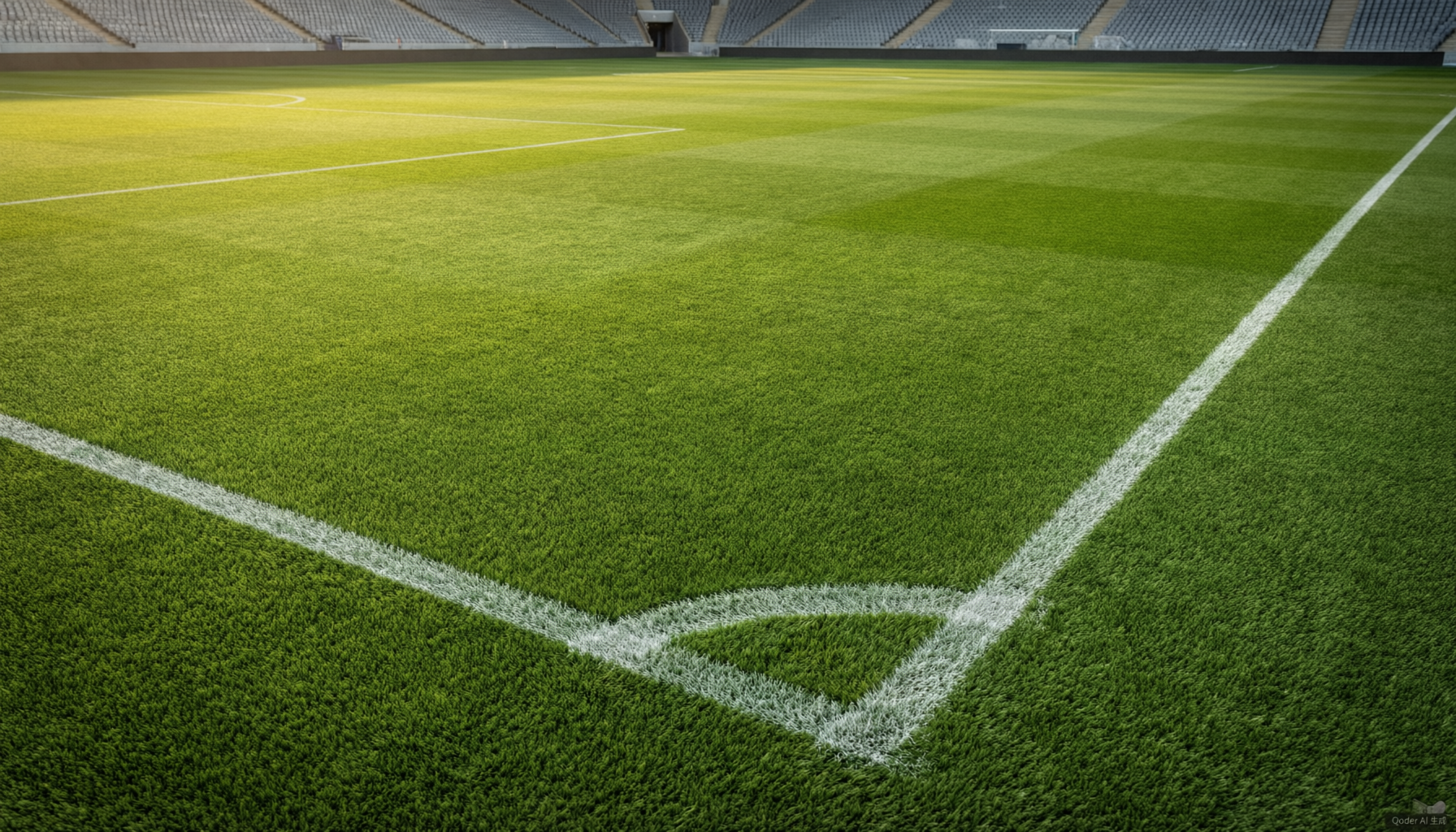
FIFA Quality certification is the clearest line between a genuinely sports-grade surface and a landscape roll with a thick face weight. Operated by FIFA through licensed independent test institutes, the program validates sports-specific performance — ball rebound, ball roll, shock absorption, and durability under simulated wear. A roll without it may look identical on the pallet, but no lab has ever verified how a ball behaves on it or how the surface absorbs player impact.
FIFA introduced its turf standard in 2001, and the program now runs three tiers — FIFA BASIC, FIFA QUALITY, and FIFA QUALITY PRO — with each step raising test thresholds and retest frequency. Since February 2004, when the International Football Association Board approved surfaces meeting FIFA Quality Pro for international competition, that tier has defined match-grade acceptance. For buyers, the commercial logic is blunt: FIFA-tier pricing funds sports-specific testing, so specifying it under a landscape contract is a specification mismatch, not a quality upgrade — while match-play fields built on uncertified turf will not pass league acceptance.
Key Takeaways
- Independent verification of ball roll, rebound, and shock absorption through licensed labs
- FIFA Quality Pro clears the threshold for international competition since 2004
- Simulated wear testing predicts end-of-life performance, not just day-one condition
- Applies only to sports-grade products; landscape, pet, and playground rolls sit outside its scope
- Premium testing costs are baked in — paying them on a landscape project wastes budget without adding value
Must-Have vs. Nice-to-Have: Picking the Right Certs
Every use case has one or two certificates that genuinely gate the outcome — market access, a governing body, or the dominant liability. Pay for those as hard requirements. Everything else is a price negotiation, not risk coverage.
On any artificial turf project, certification spend should track project risk, not badge count. A FIFA mark on a residential lawn quote covers no additional risk; an OEKO-TEX label on a stadium pitch gates nothing. Yet both appear constantly in sales documents, because decorative certificates are cheap to collect and easy to quote. The result is predictable: buyers pay twice — once for badges the project never needed, and later for the exposure created by the certification they actually missed.
The mismatch cuts in both directions. Over-specification drains budget that could have funded infill quality, a shock pad, or proper installation. Under-specification is the expensive one: a landscape-grade carpet installed under climbing equipment fails the one test that matters — impact attenuation — and no REACH report compensates for a head-injury liability. The discipline is to identify, before quoting, which certificate carries legal or regulatory force for the specific installation, and which ones merely decorate the proposal.
The Use-Case Decision Matrix
The matrix below maps the common buying scenarios to the certificates that actually gate each one — the non-negotiables a buyer should write into the tender as pass/fail criteria — alongside the certifications that are genuinely optional and best treated as scored bonuses during supplier evaluation.
Sports Field Minimums: FIFA and World Rugby
When a pitch will host sanctioned matches, the governing body’s certification stops being optional. Football venues competing under federation or FIFA competition rules require a FIFA Quality — or, for professional and international venues, FIFA Quality Pro — certified system, and most public tenders copy that requirement verbatim. FIFA-grade product testing is demanding for a reason: yarn weathering resistance is verified across 5,000 hours of simulated light exposure, alongside player-surface interaction and durability testing. Rugby is stricter still — World Rugby Regulation 22 requires the completed pitch to be tested on-site by an accredited laboratory, including head-injury-criterion (HIC) impact assessment and skin-injury evaluation. A certificate issued for carpet in a shipping container proves nothing about the field that actually gets built.
The decision logic here is binary. If sanctioned competition is part of the field’s stated purpose, these certifications are the project gate — a supplier without them should be disqualified, not discounted. If the surface is a training area, a school field, or a multi-use community ground where no sanctioned matches will ever be played, the mandatory floor drops back to product-level durability and safety testing, and a FIFA-certified system there buys prestige rather than risk coverage.
Playground and Child-Safety Certification Thresholds
The threshold in this use case is fall height. The moment turf is specified beneath play equipment, impact-attenuation standards become the true gate: EN 1177 in Europe, which scores the surface by the head injury criterion at a measured critical fall height, and ASTM F1292 in North America, which does the same with HIC and g-max limits. These tests evaluate the installed build-up — turf, infill, and shock pad combined — so no component-level document can substitute for them.
How Each Cert Cuts Your Downstream Failure Costs
Read as a prepaid insurance policy rather than a compliance tax, each certificate buys down one named failure mode before it can reach your P&L. Each maps to a distinct exposure — premature replacement, liability, field closure, or warranty claims — whose real-world cost typically runs one to two orders of magnitude above the documented fee. The Golden Data already substantiates the two heaviest of those: sub-3,000-hour UV packages are precisely the ones that fade within 2–3 seasons and force a full resurfacing, while the 20,000-cycle Lisport wear requirement at the FIFA Quality tier is what keeps a field open for scheduled play instead of closed for repair. That is the arithmetic the rest of this section runs, cert by cert.
Read as a badge list, certifications look like a compliance tax. Read as a risk instrument, each one maps to a specific downstream failure mode — premature replacement, liability, field closure, or warranty claims — whose real-world cost typically runs one to two orders of magnitude above the documentation fee that eliminates it. That arithmetic, not logo count, is what should decide which certificates are non-negotiable in a tender.
UV Certification vs Premature Fade Replacement Costs
Ultraviolet degradation is the most common premature-failure mode in outdoor turf — and the most expensive to learn late. Yarn without validated UV stabilization does not merely fade; polymer breakdown cuts tensile strength at the same time, so fibers turn brittle, shed, and fracture under traffic long before the surface reaches its amortized life. The aesthetic complaint and the structural failure arrive together.
The cost chain is brutal because the only remedy is a full re-purchase. Once fade and fiber breakage appear — often within a few seasons on under-stabilized product — the buyer pays for material, installation labor, and disposal a second time. On a multi-thousand-square-meter area or perimeter project, that combined invoice can reach six figures, none of it budgeted. A 5,000-hour xenon-arc weathering report — the benchmark serious buyers now demand for outdoor installations, ideally paired with a minimum post-exposure grey scale rating (4 is a common contractual floor) — retires that risk for a testing fee in the hundreds or low thousands of dollars. It also makes warranty enforcement possible: a fade claim against a vague “UV-stabilized” promise is unresolvable; a claim against a specified tested-hours threshold is not.
Heavy-Metal Compliance and Liability Exposure
Heavy-metal non-compliance is the only entry on this list that converts a commercial problem into a legal one. Restricted substances — lead, cadmium, hexavalent chromium, mercury — hide in pigments and backing compounds, invisible in a hand sample until a laboratory screens it. The exposure scales with where the failure is caught:
- Customs rejection: a batch failing REACH-aligned screening at an EU or US port means demurrage, re-export or destruction, and a missed delivery date on a signed contract.
- Post-install regulatory action: children’s-product thresholds run as low as 100 ppm for lead; a playground installation above that line faces mandatory removal, fines, and re-installation at full cost.
- Tort exposure: lead-bearing turf in a school or daycare converts a materials defect into personal-injury claims that can exceed the entire contract value many times over.
- Reputational contagion: the contractor or distributor named in the recall inherits the supplier’s defect as their own.
A current heavy-metal test report retires this tail risk — low probability per batch, catastrophic magnitude — for a fraction of what a single rejected shipment or one legal defense costs. It is the certificate where “nice-to-have” thinking is most expensive when wrong.
Sports Performance Certs and Field Closure Risk
On a sports surface, performance certification is not a quality tier — it is the difference between an open field and a closed one. A surface that cannot demonstrate compliant shock absorption, vertical deformation, ball roll, and rotational resistance cannot be certified for sanctioned play, and prudent operators will not open it to users at all.
Closure costs stack faster than any materials saving. A community field booked 30–40 hours per week loses every one of those bookings during remediation; leagues relocate fixtures and may not return; and if play continued on a surface with inadequate shock absorption, the operator carries injury liability on top of everything else. Remediation itself — infill correction, carpet replacement, and a second round of field testing — routinely consumes a full season. This is the core value of the sports-grade certification path: it shifts discovery of performance shortfalls from the installed, in-use field, where failure is most expensive, to the production and laboratory stage, where it costs almost nothing.
ISO 9001 and Defect-Driven Warranty Costs
The three failure modes above are specific; ISO 9001 addresses the meta-cause behind most warranty claims: batch-to-batch variance. A factory running a certified quality management system controls process drift, applies corrective action, and retains traceability records. One without it ships excellent product and defective product in the same year — and the buyer cannot predict which container is arriving.
Defect-driven warranty costs are always larger than the claim itself, because the true bill includes inspection and negotiation, replacement freight, the installer’s standing time, and — for distributors — the warranty reserve that must sit against every square meter sold. Two mechanisms decide whether a claim settles for hundreds or tens of thousands: batch traceability and a retained golden sample. A batch-numbered finished-goods test report lets both parties compare the shipped product against reference material and resolve the dispute on evidence. Without that chain, a color-drift or delamination claim defaults to argument — and argument is where warranty costs multiply.
Read this way, the certificate list stops being paperwork and becomes a procurement instrument: line up each cert against the failure it retires, estimate the replacement, liability, closure, or warranty exposure it removes, and it becomes the cheapest line item in the project’s lifecycle-cost model.
Conclusion
Conclusion generation failed.
Prove Quality With Rolls, Not Paperwork
What lands in the container matters more than what hangs on the wall. We are a factory-direct supplier with 18 years of export experience, producing commercial artificial grass with PP+Net and PU backings for contractors and distributors worldwide. Our team will match pile, density and backing to your project volume and cut a free 20x20cm sample from the same production run, so you test the exact goods you order. Request an exact quote for your project volume.
Frequently Asked Questions
Does artificial turf need fire safety certification?
Many markets require documented flame resistance, especially for indoor installations, event venues, and landscaping attached to public buildings. Common evidence includes an EN 13501-1 fire classification in Europe or an ASTM E648 critical radiant flux result in North America. Requirements differ between indoor and outdoor applications, so confirm the fire class your project or local code demands before ordering. A supplier who cannot produce a fire test report for the exact product is a genuine risk in tender situations.
Does the infill need separate certification?
In most regulated applications, yes — the infill is assessed separately from the turf carpet. Recycled rubber (SBR) infill faces particular scrutiny in the EU, where REACH restrictions limit PAH content in rubber granules, and several jurisdictions are reviewing broader limits. EPDM, TPE, and organic infills each carry different compliance profiles. When sourcing a complete system, request documentation covering turf and infill together, because certified turf installed over non-compliant infill can still fail an inspection.
Do certification requirements differ by country?
Yes, and the differences are significant. The EU leans on CE marking, REACH, and EN standards; the US relies on ASTM methods plus state-level rules such as California Proposition 65; Australia and Gulf states frequently specify FIFA or World Rugby standards for sports surfaces. Some importers also face compliance documentation requirements at customs. Confirm destination-market requirements before production, because a product compliant in one region may need additional testing for another.
What is PFAS testing for artificial turf?
PFAS are persistent ‘forever chemicals’ historically used in some surface treatments and increasingly restricted worldwide. Testing is typically performed by liquid chromatography–mass spectrometry, often combined with total organic fluorine screening to catch unknown compounds. Several US states and EU regulators are moving toward limits that affect consumer, playground, and landscaping products. Buyers should request written PFAS-free confirmation covering both fibers and backing, not a verbal assurance.
Do certifications apply to customized turf orders?
Not automatically — a test report applies only to the exact specification tested, including fiber polymer, color pigments, backing, and density. Changing pile height, color, or backing creates a new product whose compliance must be reassessed. Reputable manufacturers map custom specifications against existing reports and commission additional testing where gaps exist. At Relyir Grass, for example, custom orders are checked against current certifications during the specification stage so buyers know what carries over before production starts.
How long does independent certification testing take?
Standard chemical and performance screens — REACH, RoHS, UV aging, and similar — typically take two to four weeks per report. Full FIFA Quality certification involves both laboratory and field testing and can run two to three months from start to finish. For custom specifications, add testing time to the production schedule rather than assuming it runs in parallel. Suppliers holding current reports on similar products can often shorten the path by identifying which existing evidence applies.
Who pays for product testing and certification?
Manufacturers normally hold and fund their baseline certifications, meaning ISO system audits and standing product test reports. Buyers typically fund anything project-specific, such as independent retests, batch verification, or fresh testing for a custom specification. For tenders, allocate testing costs explicitly in the contract before production begins to avoid disputes later. Suppliers confident in their quality control will usually welcome buyer-commissioned verification rather than resist it.

 English
  Arabic
  French
  German
  Portuguese
  Russian
  Spanish