





Category

Sports Field Turf

Practical guides and technical insights from Relyir Grass, an artificial grass manufacturer in China since 2006.

Replacing an Artificial Turf Field: Signs and Timing

Replacing an Artificial Turf Field: Signs and Timing

Worn fibres rarely announce themselves before a fixture list forces the issue. A grounds team notices that one goalmouth stays slick after rain. Brushing no longer lifts the pile, and the infill order keeps growing. Deciding when to replace your artificial turf field should not depend on who argues hardest in a budget meeting. Our ...

Read Article

G-Max Testing for Turf: How It Reduces Injury Risk

G-Max Testing for Turf: How It Reduces Injury Risk

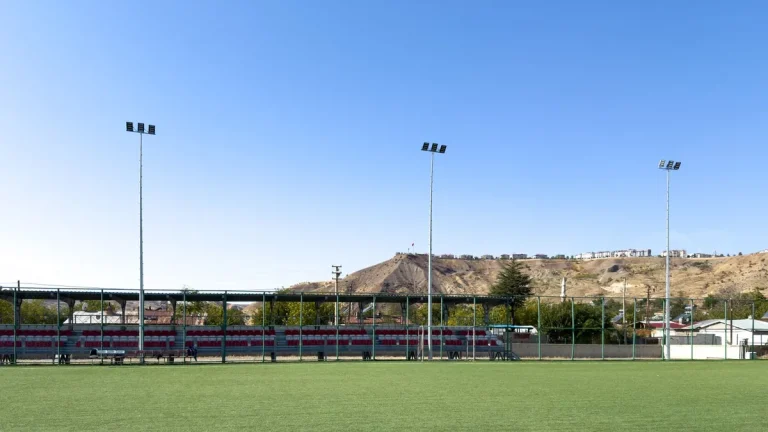
A storm cancels Friday training and the grounds crew starts doing the arithmetic on lost bookings. For a school, club or municipal venue the playing surface is a safety and budget decision, not just a line item. What is g max is the question behind most of those decisions. We build artificial grass rolls on ...

Read Article
Artificial Grass for Hockey: Choosing the Right One

Artificial Grass for Hockey: Choosing the Right One

How to choose the right artificial grass for hockey is not about picking a turf type by name. It is about matching the level of play, surface category, pile height, backing, irrigation, and roll width to how your facility will actually be used. When those variables drift apart, the first signs are slow ball roll, ...

Read Article
Artificial Grass for Cricket Fields: What to Know

Artificial Grass for Cricket Fields: What to Know

A club groundsman reads the forecast the way a trader reads a price feed. One wet weekend can wipe out a fixture list, refund a block of pitch hire, and leave the square needing a week of repair before anyone plays again. Artificial grass for cricket fields changes that arithmetic, because the surface stops being ...

Read Article
Building a Synthetic Turf Field: A Guide for Schools

Building a Synthetic Turf Field: A Guide for Schools

The most expensive problems on a new turf field hide underground. On delivery day the surface looks flawless either way, and nothing at the fence line tells you how the base was built. The difference shows up in the first real storm, as standing water, soft spots or seams under strain. That is why schools ...

Read Article
Installing Artificial Turf at School: The Timeline

Installing Artificial Turf at School: The Timeline

School boards rarely open with a question about fibre density. They ask what is the timeline, because a field that opens in November has already lost a season of fixtures. We cut school sports rolls every week, and the schedule question always arrives before the specification question. On-site work is the short part. Approvals, term ...

Read Article
5 Reasons Clubs Choose an Artificial Rugby Pitch

5 Reasons Clubs Choose an Artificial Rugby Pitch

A club secretary opens the fixture list and does the same arithmetic every October. Two Saturdays are gone to standing water and a block of pitch hire has been refunded. A training night moves onto a surface that has already taken four sessions that week. An artificial rugby pitch changes that arithmetic, because the surface ...

Read Article
Real Grass or Synthetic 3G Turf? Rugby Pitch Surfacing

Real Grass or Synthetic 3G Turf? Rugby Pitch Surfacing

One question reaches our factory from rugby clubs more than any other: is rugby pitch surfacing real grass or 3G turf the right call? Clubs, schools and contractors ask it with a fixture list and a budget already in hand. Both surfaces can host great rugby; what differs is everything that happens around the game. ...

Read Article
What Goes Into a Synthetic Turf System for Match Play

What Goes Into a Synthetic Turf System for Match Play

A competitive field is not a carpet purchase. Synthetic turf systems stack fibre and backing, infill, an elastic layer in many builds, a stone base, drainage and a compacted subgrade. Each layer answers a different demand from match play, and a shortcut in any one of them shows up underfoot. We build the surface layer ...

Read Article
Back to top