
Here is the counterintuitive part: a basement is the easiest room in the house to turn into a proper training surface. There is no weather to fight and no drainage to grade. There is no grass to keep alive either, which removes most of the cost and complexity of an outdoor pitch before you spend anything.
Indoor soccer turf is the product that does the job: a short-pile synthetic grass fitted over a dry, level slab. The one thing that can sink the project is moisture, and it is entirely manageable when you deal with it first. This guide sets out the moisture rule, the layer stack, the fitting choices and the sizing sums, in the order a contractor would run the job.
Why Basements Are Natural Soccer Venues
Imagine a February evening. The pitch outside is frozen, and a young player still gets an hour of touches downstairs before dinner. That scene is the whole value of indoor soccer turf in one image. Training does not pause for the season, and the repetition a player gets at home compounds across a year in a way a weekly session never will.
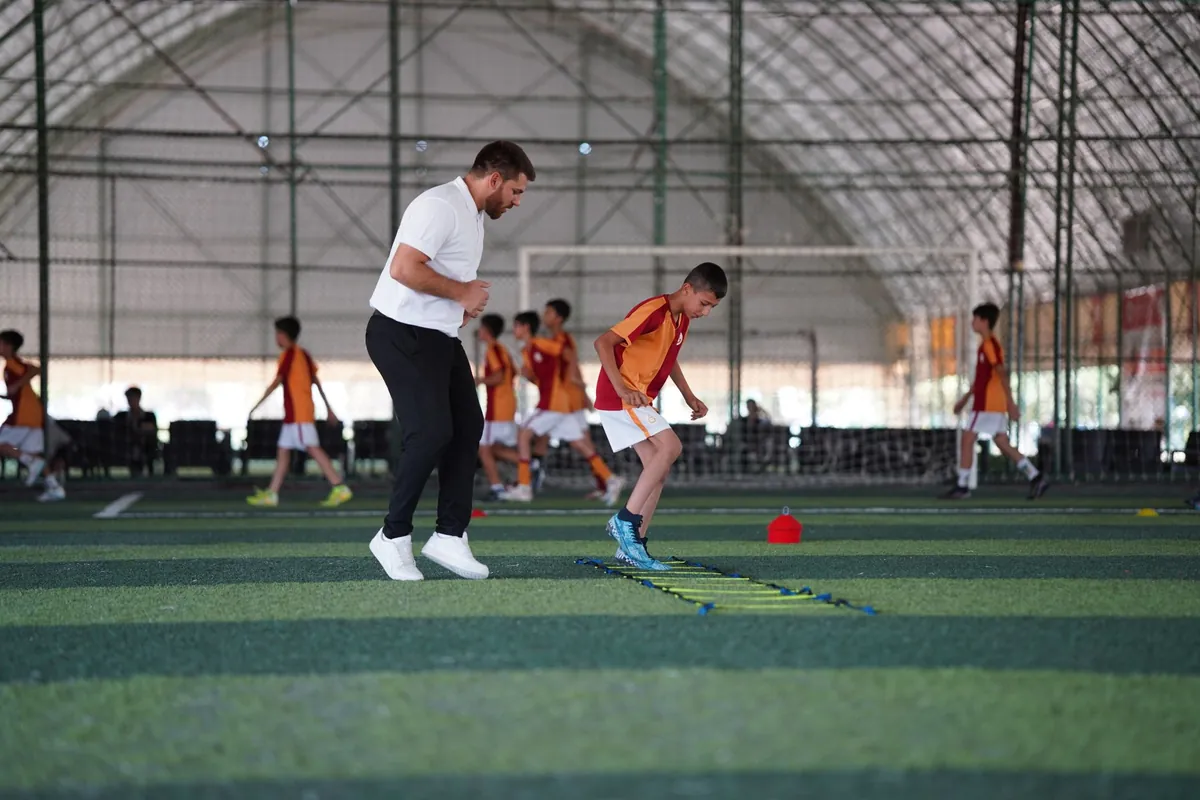
The room helps too. Solid walls act as rebound boards for wall passes, and the confined space forces tighter close control. The floor area of an average basement covers everything one player needs for cone work, shooting practice and footwork ladders. Note any low beams or ducts before shooting practice starts, because a ceiling that eats lofted shots changes the drills that fit the room. Families notice a second benefit within weeks: boots on turf downstairs mean less wear on carpets and fewer scuffed floors above.
The Moisture Rule That Decides Everything
Mold needs moisture to grow, and basements are where homes hold moisture first. That is why the environmental protection agency treats dampness control as the foundation of mold prevention. Before any turf is quoted, the slab gets tested. A simple plastic-sheet test or a moisture meter reading tells you whether the floor is dry, seasonal or genuinely damp, and the result decides the build-up.
A dry slab needs a vapour barrier and standard prep. A damp one needs the moisture source fixed first, because covering a wet floor only hides the problem until the smell starts. As a rule we would rather quote a slower job on a dry floor than a fast job on a wet one. Any contractor who skips the test is telling you how the rest of the project will go.
See the EPA’s mold resources for the moisture and mold relationship in homes. Treat dehumidification as part of the room’s design rather than an afterthought. A typical setup runs a dehumidifier in humid months and keeps air moving, which protects the turf and everything else stored down there.
What Goes Under the Turf Downstairs
An artificial turf installation indoors is really a flooring job, and the build-up over the slab is short and honest. First the floor gets levelled: cracks are filled, and low spots take a self-levelling compound so the turf never bridges a dip. Then comes the vapour barrier, a thin membrane that stops residual slab moisture from reaching the surface from below.
The top layer is comfort. A foam or rubber underlayment adds give under running feet. It takes the chill out of the concrete and softens the acoustics of a training session for the rooms above. The indoor soccer turf then rolls out over this stack. Because the floor indoors is already firm, the heavy base work an outdoor pitch demands simply does not exist here.

Contractors who also build outdoor pitches notice the contrast immediately. Outdoors, the surface sits on excavated soil and a compacted stone base. Indoors, the slab did that work a decade ago. So the quote gets built like a flooring job, not like civil works.
The Benefits That Matter Most
Every supplier lists benefits, so this section only names the three that change how the room gets used day to day. Each one comes with the check that proves it at handover.
Training That Never Checks the Forecast
The surface is there in January and in July, after school and before breakfast. Players who train on their own schedule accumulate touches all year. The room’s walls extend the session into rebound work that no outdoor lawn allows. The acceptance check is simple: the pitch is usable on the worst weather day of the year, with no setup beyond putting the cones away.
A Floor That Stops Taking the Punishment
Bare concrete is hard on knees and ankles, and carpets downstairs lose that argument within a season. Turf cushions the space and gives kids a defined play zone. It also keeps divots, scuffs and mud out of the rest of the house. At handover, the check is underfoot: even firmness across the room and no edge movement when someone changes direction at full speed.

Cleanliness the Whole House Notices
Indoor soccer turf is played unfilled, so there is no loose sand to migrate upstairs in shoe treads. Spills wipe and crumbs vacuum, and the room starts to feel like a club facility rather than a basement. The check here is visual after the first week of real use: blades still upright, colour holding under the room’s lighting, and no odour with the door closed.
Choosing Pile Height for Indoor Play
For soccer training the practical range is about 19 to 25 mm, roughly three quarters of an inch to an inch. That height gives a natural touch on the ball while staying short enough that a training ball rolls true instead of bogging down. Decorative turf in the 10 to 15 mm range suits gym strips but plays too fast for ball work. Above 30 mm, the pile needs infill to stand upright, and infill indoors means sand in the house.
That is why indoor installations skip infill entirely. The slab beneath does the firming job that sand fills do outdoors, so the surface stays clean and low maintenance. Because we manufacture to order, the pile can be tuned to the player. Denser sheets suit ball-control work, colours run from classic green to club stripes, and everything is built on a stable PP+Net or PU backing. Facility buyers can see the range of indoor sports turf we produce for exactly these rooms.
Loose-Lay Versus Glue Down Installations
Fitting is the step of an artificial turf installation where the room’s future matters more than the floor. Loose-lay installations hold the turf at the edges and seams. Fasteners or nails go around the perimeter at 3 to 6 inch spacing, and double-sided tape or adhesive closes the joins. Installers let the turf acclimatise in the room for a few hours first, so it lies flat without fighting its roll memory.
| Situation | Recommended fitting | Why |
|---|---|---|
| Family home, long-term | Glue down or full perimeter fix | Zero movement under sprint drills |
| Rental or temporary setup | Loose-lay with taped seams | Lifts cleanly when you move out |
| Multi-use room | Loose-lay in panels | Turf can be lifted for events |
| Shared or evolving space | Perimeter fix, no adhesive | Secure edge, reversible floor |
The table is guidance rather than gospel. Any installer worth hiring will ask who uses the room and for how long before quoting. Choose the reversible option when the answer might change in two years. Turf that comes back up costs little, while adhesive on a borrowed floor hands a decision to the next tenant.
Get a Basement Turf Layout Plan
Send us the room dimensions, ceiling height and a photo. We will return a roll width selection, seam placement, pile recommendations and indicative material pricing for your space.
Sizing a Basement Pitch with Standard Rolls
Sizing is where an artificial turf installation gets its material budget. Turf ships in rolls 2, 4 or 5 metres wide by 25 metres long, and the width you choose decides how many seams cross the room. A 2 metre roll covers 50 square metres. A 4 metre roll covers 100 square metres, and a 5 metre roll covers 125 square metres.
Most basements solve neatly with one or two lengths of 2 or 4 metre roll run down the long axis of the room. Custom sizes can be made to order, so a rectangular room takes no internal seams at all.
| Roll width | Area per 25 m roll |
|---|---|
| 2 m x 25 m | 50 square metres |
| 4 m x 25 m | 100 square metres |
| 5 m x 25 m | 125 square metres |
Material pricing runs from $7 to $60 per square metre depending on pile, density and backing, quoted as an indicative range until the specification is fixed. Measure the room’s length and width and send the two numbers with a photo. A layout plan with seam positions comes back before anything is cut. Want to see how the outdoor version of this job differs? Our guide to artificial turf installation before, during and after covers the heavy groundwork that basement rooms are lucky to skip.
Keeping Indoor Turf Clean and Fresh
Maintenance indoors is a ten-minute habit rather than a chore list. A weekly vacuum, with the beater bar off, lifts crumbs and hair out of the pile. The occasional damp mop with mild detergent handles the marks a training session leaves. Nothing here needs the feeding, watering or mowing that the lawn outside demands, which is rather the point of having turf downstairs.
Freshness comes back to the moisture rule. Keep the dehumidifier running through humid months and leave air circulating on closed-door days. Give the room its first deep clean after a month of heavy use, when the new surface has met every boot in the house. Pet owners add one habit: blot accidents promptly and rinse the spot, because the turf cleans up but the slab beneath rewards dryness.

Handled in that order, the project protects itself. The build-up is a tested dry slab, a barrier and pad above it, a pile chosen for ball work, and a reversible fitting if the room’s future is uncertain. Moisture is the only way an artificial turf installation like this fails. Spend your inspection budget there. The indoor soccer turf downstairs will then outlast the boots that train on it, and a sample set is the fastest way to feel the surface before the rolls ship.
Frequently Asked Questions
Can artificial turf get moldy in a basement?
Only if moisture is trapped beneath it. Test the slab first, install a vapour barrier, and keep the room ventilated; a dry installation does not support mold growth.
What pile height suits basement soccer turf?
About 19 to 25 mm gives a natural touch and a true ball roll. Shorter turf plays too fast for ball work, and taller pile needs infill that indoor rooms should avoid.
Does indoor basement turf need infill?
No. The concrete slab provides the firmness that sand would add outdoors, so basement turf is installed unfilled, which keeps the room clean underfoot.
How much turf does a basement need?
Multiply room length by width, then match the roll width. A 2 metre by 25 metre roll covers 50 square metres, and a 4 metre roll covers 100 square metres.
Can you glue turf to a basement concrete floor?
Yes, on a tested dry slab. For rentals or multi-use rooms, perimeter fixing with taped seams holds the turf securely and lifts cleanly when the room changes purpose.
How do you stop basement turf from smelling?
Keep moisture out and air moving. Run a dehumidifier in humid months, vacuum weekly, rinse spills promptly, and the surface stays fresh with no special treatment.
 English
  Arabic
  French
  German
  Portuguese
  Russian
  Spanish